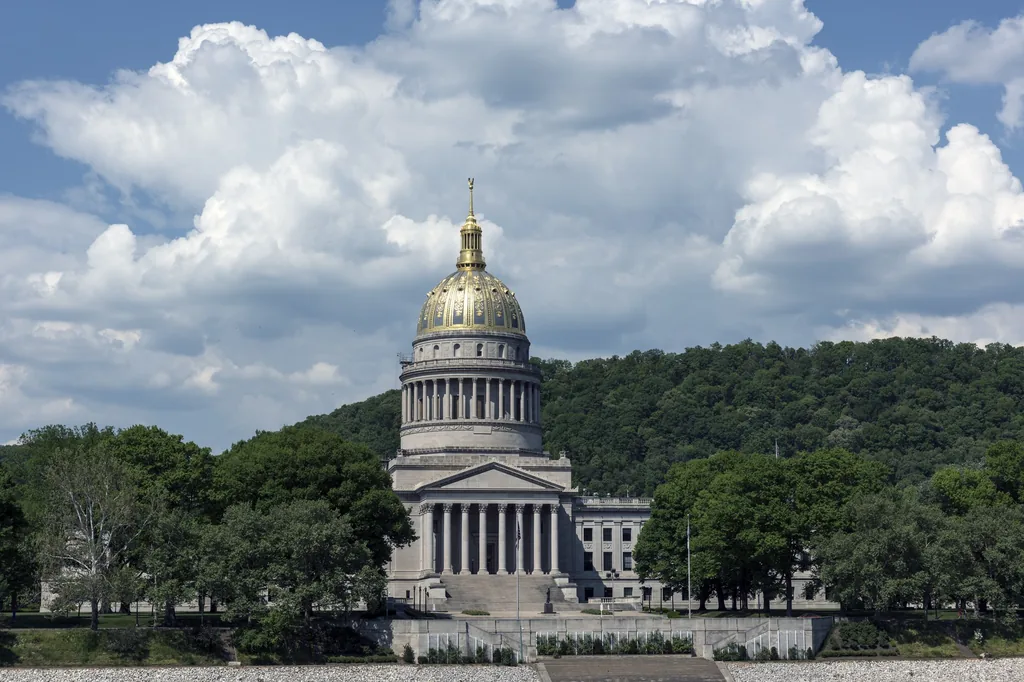
Charleston, WV Solar Panels
In This Guide
- 01 Solar Energy in Charleston
- 02 Solar Cost Calculator
- 03 Charleston Reviews
- 04 Key Takeaways
- 05 Charleston Electricity Prices
- 06 West Virginia Solar Incentives
- 07 Charleston Solar Production
- 08 Solar Installations in Charleston
- 09 Choosing an Installer
- 10 Leasing Solar Panels
- 11 Frequently Asked Questions

Solar Power in Charleston
Considering solar panel installation in Charleston, WV? A home’s roof direction and shade from nearby trees can affect how much sunlight its panels receive, while seasonal daylight changes can shape production through the year.
Learn what to expect from installation, which factors to compare, and how home solar panels work before deciding whether solar fits your household.
WEST VIRGINIA by the Numbers
How Much Do Solar Panels Cost in Charleston, WV?
See what solar installation may cost in Charleston, WV, with an estimate informed by Palmetto’s real installation data from across West Virginia. The calculator offers a useful local starting point for homeowners in Charleston and nearby communities like South Charleston, Dunbar, and St. Albans.
System
- No upfront investment
- Palmetto handles all maintenance
- 90% Production Guarantee
- Comprehensive protection program included
Key Takeaways
- Solar panels can work in Charleston, but roof direction, tree shade, and seasonal daylight affect how much electricity they produce.
- Compare cash and lease estimates: the guide models a 13.2-kW system at about $37,525 cash or $168 per month to lease.
- Utility rules affect solar value: West Virginia export credits depend on your utility tariff, so check current rates and approval requirements before installation.
Charleston Electricity Prices
For Charleston households, state and national electricity trends offer useful context for understanding how solar may fit into a long-term energy plan.
West Virginia’s average residential electricity rate rose from 12.2¢ per kilowatt-hour in 2021 to 15.1¢ in 2024, a state-level trend—not a Charleston-specific rate. The national average climbed from 13.7¢ to 16.5¢ over the same period.
For Charleston homeowners, rooftop solar can generate some of the electricity a household uses, potentially reducing the amount purchased from the utility. Actual bill effects depend on system output, household use, and utility billing rules.
Over time, producing part of a home’s electricity can help limit exposure to changing grid prices. Solar does not guarantee savings or eliminate utility bills, but its long-term value depends on installation cost, output, and ongoing electricity rates.
Price of Energy: West Virginia vs National Average
Charleston Area Utility Providers
In Charleston, WV, Appalachian Power supplied electricity at 16.0¢ per kWh in 2023, the latest utility data available. That matched the 2023 national average and exceeded West Virginia’s 14.10¢ average.
These figures put Appalachian Power 1.90¢ per kWh above the state average and level with the national average. The comparison shows the difference, but the supplied data does not explain its causes. 2024 figures are not yet available.
For Charleston households, electricity rates are one factor to consider when evaluating solar: generating some power at home may help offset purchases from the utility. The value depends on household circumstances, and 2023 rates should not be treated as current prices.
Charleston Utilities Electricity Rates
West Virginia Solar Incentives
Charleston homeowners may find state and utility incentives that help offset solar costs. Review the solar incentives in West Virginia listed below.
West Virginia customer-generators may receive bill credits for exported electricity; terms depend on the utility tariff and interconnection status. Eligible Appalachian Power residential customers may receive up to $55, limited to the purchase price, for a portable power station—not a permanently installed battery.
Solar leasing through LightReach can simplify incentives: Palmetto handles the commercial ITC and passes savings through as lower monthly payments, while state and utility programs remain available.
| Incentive | Type | Description | Source |
|---|---|---|---|
| West Virginia Net Metering and Utility Export Credits | Net Metering / Net Billing | West Virginia customer-generators may receive utility bill credits for exported electricity, with compensation and legacy treatment determined by the serving utility’s tariff and interconnection status. | Learn More |
| Appalachian Power Go Electric Portable Power Station Rebate | Battery Rebate | Eligible Appalachian Power residential customers may receive a rebate of up to $55, limited to the purchase price, for a portable power station; it does not apply to a permanently installed home battery. |
West Virginia law requires participating electric utilities to offer net metering to eligible customer-generators, subject to utility tariffs, interconnection approval, and a statewide utility-capacity limit of 3% of prior-year aggregate customer peak demand, with at least 0.5% reserved for residential customer-generators. This is an ongoing bill-credit policy, not an upfront rebate; solar power used in the home can reduce electricity purchases, while exported power is credited under the applicable tariff.
Compensation and grandfathering differ by utility. Appalachian Power’s tariff provides a 25-year legacy treatment for qualifying customers or applications from by March 1, 2026; the residential completion deadline for those applicants was September 1, 2026. Its posted residential secondary-voltage export credit for newer systems is $0.1241/kWh.
Customers should confirm the current tariff, system eligibility, and interconnection requirements with their utility before signing a contract; systems must receive required approval before operating in parallel with the grid. Official tariff reference: Appalachian Power.
Appalachian Power’s Go Electric program lists a $55 rebate for an eligible portable power station. The rebate is limited to the equipment’s cost, so it cannot exceed the amount paid for the qualifying product.
This offer is for residential customers of Appalachian Power and applies to a portable power station—not a permanently installed home battery, a solar-plus-storage system, or rooftop solar panels. Check the current program rules, eligible product requirements, and application process before purchasing, since program terms and availability may change.
Ready to start saving with solar?
Speak with a Palmetto solar expert to find out exactly how much you can save with West Virginia incentives.
Get a Free QuoteCharleston Solar Irradiance
Solar panel production varies throughout the year based on daylight hours, weather patterns, and sun intensity. Understanding how seasons affect your solar system helps set realistic expectations for your investment.
Charleston’s seasonal clouds and shorter winter days can reduce production, while long summer days boost it. With the right system, solar can still perform well year-round.
Solar Production in Charleston by Month
What Can Your Solar System Power?
Summer Production (July)
In July, your 10 kW system could power:
- 3.6 average homes (15 kWh/day per home)
- or Run central AC for 18 hours AND power all other appliances
- or Fully charge 5.4 Tesla Model 3 electric vehicles
Winter Production (December)
In December, your 10 kW system could power:
- 2 average homes (15 kWh/day per home)
- or Keep your home heating system running for 15 hours
- or Fully charge 3 Tesla Model 3 electric vehicles
Annual Production
Over a year, your 10 kW system could:
- Offset 10 tons of carbon dioxide emissions
- or Equal the environmental benefit of planting 175 trees
- or Save approximately $4,234 in electricity costs
Want to know exactly how much solar can power your home?
Get a personalized solar analysis based on your actual home, energy usage, and roof characteristics.
Get My Custom EstimateSolar Panel Systems in Charleston
We’ve organized solar installation data across the country and are glad to share this interactive map of Charleston, West Virginia. Explore the hexagons to see how many installations are in each area and discover the neighbors and communities around Charleston that have made the switch to solar.
How to Choose a Solar Installer in Charleston
Verify the license
West Virginia generally requires a contractor license for residential installation contracts worth $5,000 or more. The West Virginia Contractor Licensing Board oversees licensing, with administrative and enforcement duties performed by the Division of Labor. No separate solar-installer license was found in the official sources reviewed. Paid electrical work generally also requires a license or certificate issued by the State Fire Marshal, so ask which credentials cover the electrical work on your project.
Ask for the contractor’s license information and check it through the state contractor lookup. The lookup returned a 404 when checked, so whether it is functioning is unknown; confirm requirements and status with the state if you cannot verify online.
Look for certified installers
Ask whether the people designing and installing your system hold NABCEP certification, and what each credential covers. Certification can help you assess relevant training, but it is not a substitute for any required state contractor or electrical credential. Ask which manufacturer certifications the installer or crew holds, which equipment they apply to, and whether the named credentials affect warranty eligibility. Verify credentials with the issuing organization or manufacturer.
Compare quotes the same way
Request written proposals with the same assumptions and compare:
- System size: total capacity in kilowatts (kW), and the proposed panel and inverter brands and models.
- Price per watt: total system price divided by system watts, alongside the full cash price.
- Production: estimated electricity output in kilowatt-hours per year (kWh/year), plus the assumptions behind the estimate.
- Warranties: panel product and performance, inverter, workmanship, and roof penetrations; note who backs each one and for how long.
- Project responsibilities: who obtains permits, schedules inspections, and submits the utility interconnection application.
- Payment terms: total cost or monthly payment, financing or lease terms, and any payment escalator.
Permits, interconnection and your HOA
Ask the installer to identify the permits and inspections for your address and say who will arrange them. Building-code enforcement is local, so check with your county or city building/code office. Your electric utility handles the interconnection application. Depending on your service area, that may be Appalachian Power Co, Monongahela Power Co, The Potomac Edison Company, or Wheeling Power Co; confirm the utility on your bill.
West Virginia’s solar-covenant law makes some HOA provisions that effectively prohibit or restrict solar systems void and unenforceable. It applies to documents executed or recorded after the law’s effective date, allows an association to establish or remove a restriction by member vote, and excepts reasonable restrictions and limits on systems in common areas or structures. It is not a general guarantee of sunlight or a standalone solar-easement right. Review your governing documents and ask the association about applicable rules.
Red flags
- Pressure to sign the same day or claims that you must decide immediately.
- An installer cannot document credentials, or will not identify the crew. Out-of-state crews are not automatically a problem, but verify licensing and who is responsible for the work.
- A vague production estimate, or no clear written explanation of the equipment, warranties, or total cost.
- A large upfront deposit without clear written terms for what it covers and when work will occur.
- A promise of federal homeowner tax credits for purchases in 2026; homeowner credits ended December 31, 2025.
If you suspect deceptive sales practices or home-improvement fraud, you can contact the West Virginia Attorney General’s Consumer Protection Division; license-related complaints may also be relevant to the Contractor Licensing Board.
Leasing Solar Panels
In Charleston, WV, a solar lease is available to customers of AEP (Appalachian and Wheeling Power) and FirstEnergy (Monongahela and Potomac Edison). Palmetto’s listed option is a lease; a power purchase agreement (PPA) is not listed for these utilities.
A lease generally sets a fixed monthly payment based on estimated system production. A PPA instead charges for each kilowatt-hour the panels generate, so payments can vary with seasonal production. Learn more about buying or leasing solar.
With a lease, you can avoid paying the full system cost upfront. Unlike a cash purchase, where you own the equipment and arrange maintenance, the leasing provider owns the system and handles maintenance under the agreement. Review LightReach details and contract terms to understand what’s included.
Go solar without the investment
With LightReach, there are no investment costs to recoup, loan payments to manage, or maintenance needs to take on. As soon as your panels are active, your solar savings are too!
Explore LightReach LeasingFrequently Asked Questions
Yes. Charleston homeowners can receive bill credits for excess solar electricity, but terms depend on the utility. New systems generally use net billing, not full 1:1 net metering.
With AEP/Appalachian Power, grandfathered customers retain 1:1 credits; new residential customers get 12.41¢/kWh for exports. FirstEnergy customers who applied by Dec. 31, 2024 retain 1:1 credits for 25 years; later applications receive 9.343¢/kWh. Credits roll over without expiring. Check your utility’s tariff.
Owned solar panels may increase a home’s value in Charleston, WV. A Zillow study found homes with solar sold for about 4.1% more on average, but that national finding does not guarantee a similar increase locally. System condition, energy production, roof direction, and tree shade can affect buyer interest.
This potential value increase applies to systems the homeowner owns, not leased or third-party-owned (TPO) systems. With a lease, a buyer may need to assume the agreement, which can affect resale differently.
In Charleston, WV, homeowners can go solar with a LightReach lease for a low fixed monthly payment and no upfront cost. The calculator estimates $168 per month for a medium home; payments vary by home size.
A cash purchase is another option: the calculator estimates about $37,525 for a medium home, with system prices from $27,510 to $52,700. The federal 30% tax credit is no longer available for residential cash purchases following the 2025 federal law change. See the calculator above for your estimate.
With Palmetto’s LightReach lease, Palmetto owns the solar system, and one monthly payment covers the panels, installation, monitoring, maintenance, and comprehensive protection, including a 90% Production Guarantee. There is no upfront cost to the homeowner.
For a typical 13.20 kW system in Charleston, the estimated lease payment is about $168 per month, based on West Virginia’s 1,234 kWh/kW annual production ratio and a $0.124/kWh rate. Actual costs and savings vary; if the payment is below your current electricity bill, you may save from the start.
There isn’t one best solar installer for every Charleston home. Compare system designs, total costs, financing terms, warranties, and who handles permits and installation. Roof direction, tree shade, seasonal sunlight, and your utility’s export-credit rules can all affect a system’s value.
At Palmetto Solar, we serve West Virginia homeowners through our installation network and offer cash-purchase and lease options. Review a home-specific production estimate and contract terms to see whether our approach fits your Charleston home.
Yes. Solar panels work in Charleston, WV, which averages about 4.6 peak sun hours per day. They can still produce electricity on cloudy days, though output is lower when clouds block sunlight.
Production changes with the seasons: Charleston’s longer summer days generally bring more power, while shorter winter days and seasonal clouds reduce output. Roof direction and shade from nearby trees also affect how much electricity a system generates.
Solar panels in Charleston, WV, are low maintenance. They may need occasional attention if debris builds up or severe weather causes damage.
With LightReach, Palmetto owns the system and handles maintenance, monitoring, and repairs at no extra cost. The plan includes a 90% Production Guarantee.