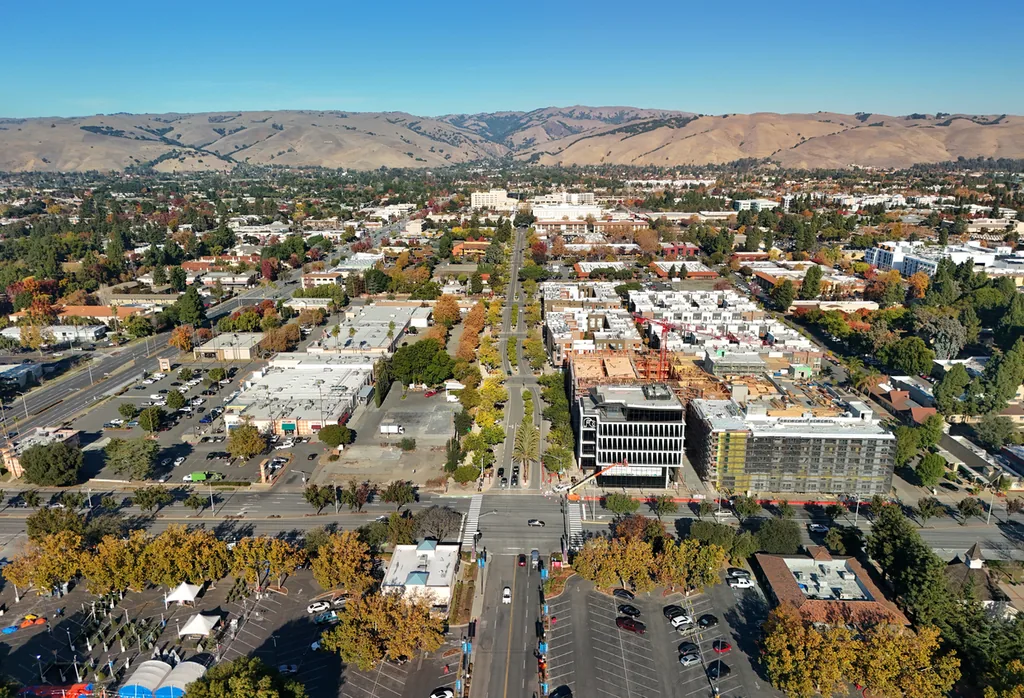
Fremont, CA Solar Panels
In This Guide

Solar Power in Fremont
Solar installation in Fremont, CA starts with understanding your home’s energy use, roof space, and PG&E electricity plan. These details help determine what a system could look like for your household.
Learn what to expect from system sizing, panel placement, permits, and utility billing. For the basics, explore our guide to home solar panels.
CALIFORNIA by the Numbers
How Much Do Solar Panels Cost in Fremont, CA?
Estimate solar installation costs in Fremont using Palmetto’s firsthand data from completed California installations. See how local pricing compares across Fremont neighborhoods and nearby communities like Mission San Jose, Warm Springs, and Irvington, then explore the factors that can shape a home’s cost.
System
- No upfront investment
- Palmetto handles all maintenance
- 90% Production Guarantee
- Comprehensive protection program included
Key Takeaways
- A solar system should fit your home in Fremont: energy use, roof space, and PG&E billing all affect sizing and value.
- Fremont solar costs depend on system size; the article’s calculator estimates $19,288 for a typical 6.67 kW cash system, before personal factors.
- Solar production changes with the seasons, and PG&E export credits vary; eligible households may also find California incentives worth exploring.
Fremont Electricity Prices
Electricity costs in Fremont can make household energy use a bigger budget concern.
California’s average residential electricity price rose from 22.8 cents per kWh in 2021 to 31.9 cents in 2024, according to the figures shown in the chart.
For comparison, the U.S. average reached 16.5 cents per kWh in 2024. A properly sized solar system can supply some of a home’s electricity and reduce how much it draws from the grid.
Solar’s long-term value depends on the home, system costs, energy use, and utility billing rules. Comparing those factors can help Fremont homeowners assess whether solar may offset some future electricity purchases.
Price of Energy: California vs National Average
Fremont Area Utility Providers
For Fremont, CA residents served by PG&E, understanding electricity rates can help put solar installation costs in context. The latest figures provided are for 2023; 2024 utility data is not yet available.
In 2023, PG&E’s rate was 34.0¢ per kWh, compared with California’s average of 29.50¢ and the national average of 16.0¢. These figures show PG&E electricity cost more than both benchmarks; no cause is specified here.
When electricity rates are higher, producing some power at home with solar may be more valuable. The effect on a Fremont household’s bills depends on its energy use, solar system, and utility terms; savings aren’t guaranteed.
Fremont Utilities Electricity Rates
California Solar Incentives
Fremont households may be eligible for California programs that help offset solar costs. Explore the solar incentives in California listed below.
Options include income-qualified rebates for solar and batteries, affordable-housing incentives, electricity-bill discounts, financing, property-tax and sales-tax exclusions, and export credits under California’s Net Billing Tariff. Eligibility and funding vary.
Leasing through LightReach may simplify incentives: Palmetto handles the commercial investment tax credit (ITC) and passes savings through lower monthly payments.
| Incentive | Type | Description | Source |
|---|---|---|---|
| SGIP — Residential Solar and Storage Equity (RSSE) | Solar and Battery Rebate | Income-qualified California households may receive up to $1,100 per kWh of eligible battery capacity and $3,100 per kW of paired solar, subject to program rules and available funding. | Learn More |
| Disadvantaged Communities — Single-Family Solar Homes (DAC-SASH) | Solar Rebate / No-Cost Solar Program | Eligible income-qualified homeowners in qualifying disadvantaged communities may receive rooftop solar supported by a $3 per CEC-AC watt program incentive. | Learn More |
| Solar on Multifamily Affordable Housing (SOMAH) | Solar and Battery Incentive | Eligible affordable multifamily properties can receive incentives for tenant-serving and common-area solar, with additional incentives for qualifying integrated solar-and-storage projects where funding remains available. | Learn More |
| Disadvantaged Communities Green Tariff (DAC-GT) | Electricity Bill Discount / Community Solar | Eligible customers in participating disadvantaged communities can receive a 20% discount on their applicable electricity rate through a utility clean-energy tariff, rather than a payment for rooftop equipment. | Learn More |
| GoGreen Home Energy Financing — Solar Plus Battery | Financing | Eligible homeowners and renters may access participating-lender financing for solar bundled with battery storage, with program materials describing loan principal up to $75,000 for solar-plus-battery projects. | Learn More |
| Active Solar Energy System New Construction Exclusion | Property Tax Exclusion | Qualifying active solar energy systems generally are excluded from adding assessed value to a California property, with the state exclusion scheduled to sunset January 1, 2027. | Learn More |
| CAEATFA Sales and Use Tax Exclusion (STE) for Approved Projects | Sales and Use Tax Exclusion | Approved participating parties may receive a sales/use-tax exclusion for qualifying alternative-energy, distributed-generation, or storage property purchased for an approved project; it is not a general household solar exemption. | Learn More |
| California Solar Billing Plan / Net Billing Tariff | Net Billing / Solar Export Credits | New eligible rooftop solar customers in PG&E, SCE, and SDG&E territories receive bill credits for electricity exported to the grid under the Net Billing Tariff, with credit values varying by export timing rather than matching retail rates one-for-one. | Learn More |
SGIP’s Residential Solar and Storage Equity (RSSE) offering provides incentives for eligible residential solar-and-battery projects. Published maximum rates are up to $1,100 per kWh of battery storage and $3,100 per kW of paired solar; the actual incentive is limited by eligible project costs, system-sizing rules, and program requirements.
Eligibility is generally for income-qualified California households, including households at or below 80% of area median income or customers who qualify through specified programs such as CARE, FERA, ESA, SASH, or DAC-SASH. Funding, applications, waitlists, and reservation availability vary by utility and program administrator, so confirm current availability with the SGIP administrator before signing a contract.
DAC-SASH supports rooftop solar for qualifying single-family homeowners with an incentive of $3 per CEC-AC watt. The program is designed to make solar available at no cost to eligible households, although project costs, program rules, and funding availability determine whether a particular installation can proceed. The incentive is administered through the program and is not necessarily paid as cash directly to the homeowner.
Applicants generally must own and occupy their primary residence, meet applicable CARE or FERA income criteria, and live in an eligible disadvantaged community or other qualifying area identified by the program. DAC-SASH is a solar program; do not assume that a battery is included. Check current program eligibility and enrollment status with the CPUC or its administrator.
SOMAH provides solar incentives for qualifying affordable multifamily rental housing. Published solar rates can reach $3.50 per AC watt for tenant-serving capacity and $1.19 per AC watt for common-area capacity, with lower rates applying in some circumstances when projects use specified tax credits. Eligible integrated solar-and-storage projects may receive a storage incentive of $1.10 per Wh, subject to program rules and adjustments for other incentives.
Properties generally need at least five rental units and must meet SOMAH’s affordable-housing and tenant-benefit requirements in a participating utility territory. Storage funding is not available everywhere: as of the supplied 2026 status information, storage incentives were paused in PG&E and SD&E territories, while funds were reported available in SCE, Liberty Utilities, and Pacific Power territories. Confirm the current funding status and project eligibility with SOMAH before relying on an incentive.
DAC-GT provides qualifying residential customers a 20% discount on their otherwise applicable electric rate through a clean-energy tariff associated with a shared renewable-energy project. It is a bill discount—not a rooftop-solar or battery installation rebate—and can be relevant to renters or households that cannot install their own system.
Eligibility generally depends on meeting CARE or FERA income requirements and living in a designated disadvantaged community within a participating service area. Enrollment arrangements and availability vary by utility or community choice aggregator, so contact the electricity provider to check whether the program is offered at your address.
GoGreen Home uses credit enhancements to help participating lenders offer financing for eligible home energy improvements, including solar paired with battery storage. Program materials describe a loan-principal ceiling of up to $75,000 for solar-plus-battery projects; this is financing, not a rebate or grant, and borrowers must repay the loan.
Homeowners and renters may qualify for eligible properties and measures when served by a participating utility or community choice aggregator and using an enrolled contractor. Interest rates, fees, approval criteria, and loan terms are set by participating lenders. Confirm that the proposed solar-and-storage project and contractor qualify before applying.
California’s Active Solar Energy System New Construction Exclusion generally prevents the value attributable to a qualifying active solar energy system from increasing the property’s assessed value. This can reduce the property-tax impact of adding qualifying solar equipment, but it is an assessment exclusion rather than an upfront rebate.
The exclusion is scheduled to sunset on January 1, 2027, so it is relevant to qualifying projects in 2026. Treatment can depend on the equipment and how it is installed; the exclusion should not be assumed to cover a standalone battery. Contact the county assessor to confirm how the rules apply to a specific property and project.
California’s Sales and Use Tax Exclusion can reduce or eliminate sales/use tax on qualifying property purchased by an approved participating party or its construction contractor for an approved project. Eligible project categories can include specified alternative-energy, distributed-generation, and energy-storage technologies.
This is a project-approval program, not a blanket sales-tax exemption for a homeowner buying rooftop panels or a battery. Applicants must satisfy the program’s project, party, and approval requirements, so homeowners should not assume a residential purchase qualifies. Consult CAEATFA’s current program materials before including a tax exclusion in project economics.
The Net Billing Tariff, also called the Solar Billing Plan, governs export compensation for most new rooftop solar customers in PG&E, SCE, and SDG&E territories. Customers receive bill credits for electricity sent to the grid, but the credit value varies by when the power is exported and generally is not the old one-for-one retail-rate net-metering credit.
This tariff is a billing policy, not an installation rebate. A battery may allow a household to store solar generation and use it later instead of exporting it, but the financial result depends on the customer’s usage, rate plan, equipment, and export timing. Existing customers may remain on a legacy tariff subject to its rules; other utility territories may have different arrangements.
Ready to start saving with solar?
Speak with a Palmetto solar expert to find out exactly how much you can save with California incentives.
Get a Free QuoteFremont Solar Irradiance
Solar panel production varies throughout the year based on daylight hours, weather patterns, and sun intensity. Understanding how seasons affect your solar system helps set realistic expectations for your investment.
Fremont’s sunny, dry summers support strong solar output, while winter rain, morning coastal fog, and shorter days can reduce it; a well-sized system can still produce year-round.
Solar Production in Fremont by Month
What Can Your Solar System Power?
Summer Production (July)
In July, your 10 kW system could power:
- 3.6 average homes (15 kWh/day per home)
- or Run central AC for 18 hours AND power all other appliances
- or Fully charge 5.4 Tesla Model 3 electric vehicles
Winter Production (December)
In December, your 10 kW system could power:
- 2 average homes (15 kWh/day per home)
- or Keep your home heating system running for 15 hours
- or Fully charge 3 Tesla Model 3 electric vehicles
Annual Production
Over a year, your 10 kW system could:
- Offset 10 tons of carbon dioxide emissions
- or Equal the environmental benefit of planting 175 trees
- or Save approximately $4,234 in electricity costs
Want to know exactly how much solar can power your home?
Get a personalized solar analysis based on your actual home, energy usage, and roof characteristics.
Get My Custom EstimateSolar Panel Systems in Fremont
We’ve organized solar installation data from across the United States and are excited to share this interactive map of Fremont. Explore the hexagons to see how many nearby homes have gone solar and discover the neighborhoods and communities helping shape Fremont’s energy future.
How to Choose a Solar Installer in Fremont
Verify the license
In California, the contractor or contracting business doing the solar work must hold an active license from the California Contractors State License Board (CSLB) in a classification authorized for that work. Authorized photovoltaic classifications include C-46 Solar and C-10 Electrical, as well as certain other classifications, including A and, within its scope, B. Check the license status and classification using the CSLB license lookup, and confirm that the name on your contract matches the licensed business. A permit-required project is not eligible for the small-work licensing exemption.
Look for certified installers
NABCEP certification is one credential you can ask about. Use the NABCEP website to understand its certifications, then ask which person on the project holds a relevant credential and what work it covers. Also ask whether the proposed equipment’s manufacturers have certified or trained the installer, and what that status means for your project. Compare the specific credentials and scope rather than relying on a badge alone; certifications do not replace the required CSLB license.
Compare quotes the same way
Ask each installer to itemize the same system and contract details. A lower monthly payment may not mean a lower total cost, so compare the full terms, not just the headline price.
- System and price: system size in kW, total price, and price per watt.
- Equipment: panel and inverter brands and models.
- Expected output: estimated production in kWh per year, and the assumptions behind the estimate.
- Coverage: panel product and performance warranties, inverter warranty, workmanship coverage, and coverage for roof penetrations. Ask who backs each warranty and how to make a claim.
- Project responsibilities: who obtains permits and utility interconnection approval.
- Payment terms: total cost or monthly payment, plus any escalator and how it affects payments over time.
Permits, interconnection and your HOA
Local building-permit review and inspections—including structural, electrical, and fire-code review—are handled by the city or county enforcing agency, usually its building department; the state does not issue the individual project permit. Utility interconnection approval is separate, and the installer must obtain it. Confirm which utility serves your address. California utilities include Southern California Edison, Pacific Gas & Electric, Los Angeles Department of Water & Power, and Sacramento Municipal Utility District. For CPUC-jurisdictional utilities, Electric Rule 21 describes interconnection requirements, but the process is not the same for every utility.
California Civil Code Sections 714 and 714.1 limit HOA restrictions that effectively prohibit or restrict a solar energy system, while allowing reasonable restrictions that do not significantly increase cost or reduce efficiency; an association cannot adopt a general policy prohibiting household rooftop solar on an owner’s residence or assigned garage or carport. Review your association’s process and ask the installer who will coordinate any required review. Read the cited code section.
Red flags
- Pressure to sign the same day, before you can compare quotes and review the contract.
- An unlicensed contractor or unclear answers about who holds the California license and is responsible for the work. Ask who will perform and supervise the installation, including any out-of-state crews.
- A vague production estimate with no annual kWh figure, or reluctance to explain it.
- A large upfront deposit without a clear written schedule of payments and project milestones.
- A promise of homeowner federal tax credits for a 2026 purchase: those credits ended December 31, 2025.
Leasing Solar Panels
Fremont homes served by Pacific Gas & Electric (PG&E) can choose Palmetto’s solar Power Purchase Agreement (PPA). A solar lease is not listed as available for this utility. Availability may depend on your address and utility service.
With a PPA, you pay an agreed price for each kilowatt-hour your system produces, so payments can change with seasonal production. A lease instead typically has a fixed monthly payment. Learn more about buying or leasing solar.
A PPA can let you use solar without paying the full system cost upfront. Unlike a cash purchase, where you own the equipment and arrange maintenance, Palmetto owns and maintains the system under LightReach. Review the agreement for payment terms and coverage details. Explore LightReach.
Go solar without the investment
With LightReach, there are no investment costs to recoup, loan payments to manage, or maintenance needs to take on. As soon as your panels are active, your solar savings are too!
Explore LightReach LeasingFrequently Asked Questions
Yes. Fremont residents served by PG&E can receive bill credits for excess solar electricity sent to the grid. New interconnection applications from April 15, 2023 generally fall under California’s Net Billing Tariff (NEM 3), where export-credit values vary by hour and are based on the utility’s avoided costs—not the full retail electricity rate.
Some PG&E customers with complete interconnection applications submitted by April 14, 2023 may retain NEM 2.0, subject to system-change rules. Check your PG&E account or interconnection documents to confirm your tariff.
Yes, an owned solar panel system can increase a Fremont home’s value. Zillow’s study found homes with solar sold for about 4.1% more on average. That is not a guaranteed increase for every Fremont property.
This finding applies to purchased systems the homeowner owns, not leased or third-party-owned (TPO) systems. A leased system may affect resale differently because the buyer may need to assume the lease agreement; check its transfer terms.
In Fremont, homeowners can go solar with a LightReach lease for a low fixed monthly payment and no upfront cost. The calculator above estimates $88 per month for a typical 6.67-kW system; payment and system size vary by home and energy use.
As a cash-purchase alternative, the calculator estimates $19,288 for a typical system. The federal 30% tax credit is no longer available for residential cash purchases following the 2025 federal law change.
In Fremont, a typical 6.67-kW system is estimated at $88/month, based on California’s 1,440 kWh/kW/year production ratio and $0.11/kWh. LightReach has no upfront cost; one payment covers panels, installation, monitoring, maintenance, comprehensive protection, and a 90% production guarantee.
Fremont PG&E homes may receive a PPA instead of a lease; its production-based charges can vary seasonally, so $88 is an estimate. Savings may start immediately if payments plus remaining PG&E costs are below your current bill.
Yes, solar can make sense in Fremont, CA. Strong summer sun and relatively high PG&E electricity rates can make generating power at home valuable. The article estimates a typical 6.67 kW cash system at $19,288, with a 6.4-year payback and about $100,000 in 25-year savings; actual results vary by home and utility billing.
Winter rain, fog, roof conditions, energy use, and export-credit rules affect the outcome. LightReach, Palmetto’s solar lease program, removes the upfront cost barrier entirely: homeowners can go solar with no money down and start saving from day one.
There isn’t one best solar company for every Fremont home. The right installer should size a system around your electricity use, roof, and PG&E plan, and clearly explain equipment, warranties, permits, and total costs.
Palmetto Solar is one option for Fremont homeowners: we’ve completed 13,826 installations in California since 2020 and work with an installation network. Compare our financing choices and project terms with your needs before deciding.
Yes. Solar panels work in Fremont, which averages about 5.7 peak sun hours per day. They also produce electricity on cloudy days, though less than under direct sun.
Production varies by season: Fremont’s sunny, dry summers generally bring more output, while winter rain, morning coastal fog, and shorter days reduce it. The article estimates a 10 kW system produces about 58.7 kWh per day in July and 26.3 in December.