What can a home battery back up? Choosing emergency loads
Last edited
Author
Andrew Blok
Electrification and Solar Writer and Editor
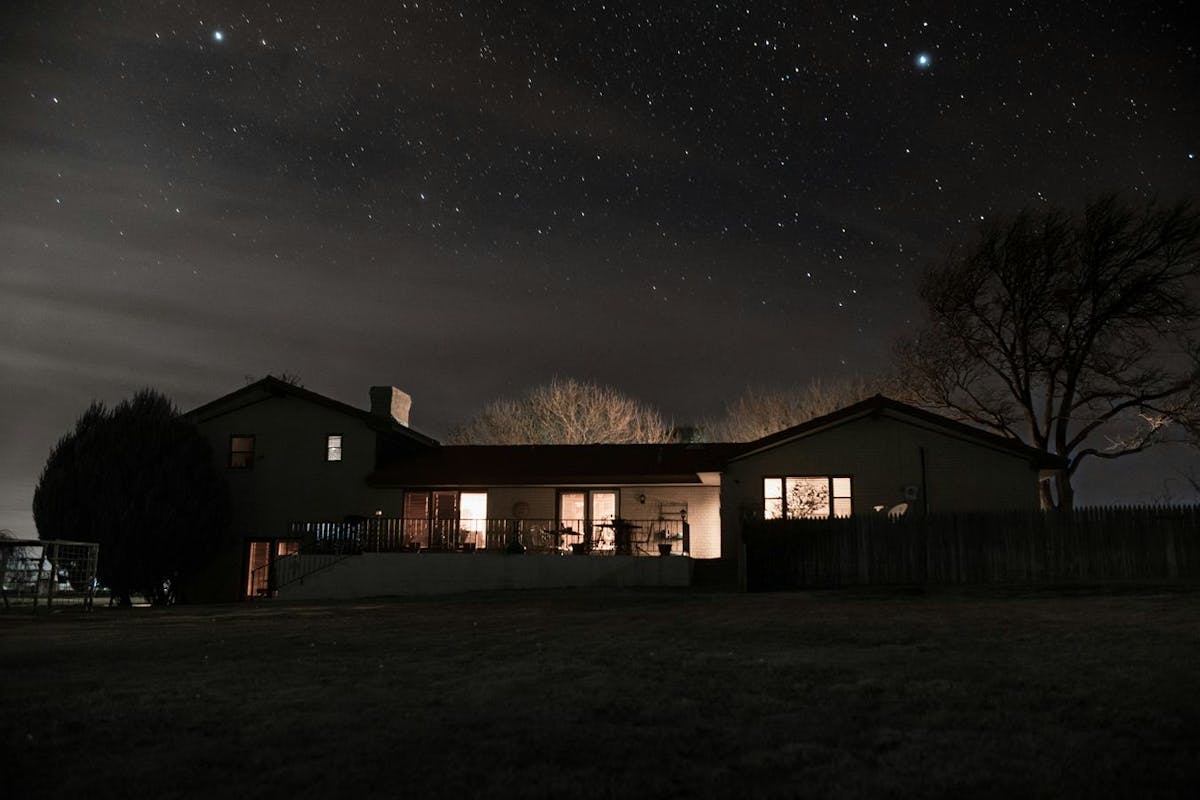
When a storm knocks out the grid, you want to know your essential appliances will stay on.
Choosing the right emergency loads for your home battery ensures your power lasts when you need it most. We’ll help you balance your home’s energy priorities, stretch your battery life, and pick the best setup for your budget and peace of mind.
See what home electrification can do for you:
What should you back up?
Not all appliances are equal when it comes to battery backup. Some draw so much power they can drain a battery in hours; others sip electricity and barely make a dent. Here's a practical way to think about your options:
Tier 1 — Almost always backed up: Refrigerator, lighting, phone chargers, WiFi router, medical devices
Tier 2 — Common choices: Microwave, TV, laptops, security cameras
Tier 3 — Think carefully: Heat pumps, window AC units, well pumps
Tier 4 — Rarely backed up: EV chargers, electric dryers, electric water heaters, central AC
Heating and cooling equipment sits in Tier 3 for a reason: it has an outsized impact on how long your battery lasts. More on that below.
Why not back up everything?
There are three reasons most homeowners focus on essential loads rather than whole-home backup.
Cost: Sizing a system to run your entire home normally can dramatically increase installation costs since you’ll need more batteries than for just emergency loads. Focusing on essential loads gets you the most resilience for your dollar.
Capacity: Batteries store a finite amount of energy, measured in kilowatt-hours (kWh). High-draw appliances can deplete that supply quickly.
Surge power: Some appliances, especially motors like those in heat pumps, require a large burst of power to start up. Your battery needs to handle that instantaneous peak, not just the average draw.
See what home electrification can do for you:
How long will a battery actually last?
Honestly, it depends on what you're running and whether your solar panels are generating power. Here's how one planning software estimates different choices will play out in practice.
| Setup | Sunny weather | Cloudy weather |
|---|---|---|
| Small battery (5 kWh) + heat pump | 9+ hours | 7 hours |
| Small battery (5 kWh), no heat pump | 7+ days | 18 hours |
| Large battery (10+ kWh), no heat pump | 7+ days | 49 hours |
| Large battery (10+ kWh) + heat pump | 7+ days | 19 hours |
Estimated runtimes based on backing up a refrigerator, WiFi, phone chargers, television, microwave, lighting, and two laptops. kWh means kilowatt-hour, the standard unit for measuring an amount of electricity.
Removing the heat pump from a small battery system more than doubles your cloudy-weather backup time from 7 hours to 18. A larger battery can handle a heat pump more easily, which is why homeowners who want heating and cooling backup typically size up.
Here’s another reference point: Tesla estimates that a Powerwall 3 (13.5 kWh) paired with 5.7 kW of solar provides an estimated 7+ days of backup in sunny weather and up to 18 hours during an average winter.
Is a battery right for you?
A backup battery makes the most sense if any of these apply:
- You live somewhere prone to outages. Wildfires, hurricanes, and aging grid infrastructure all make resiliency more valuable.
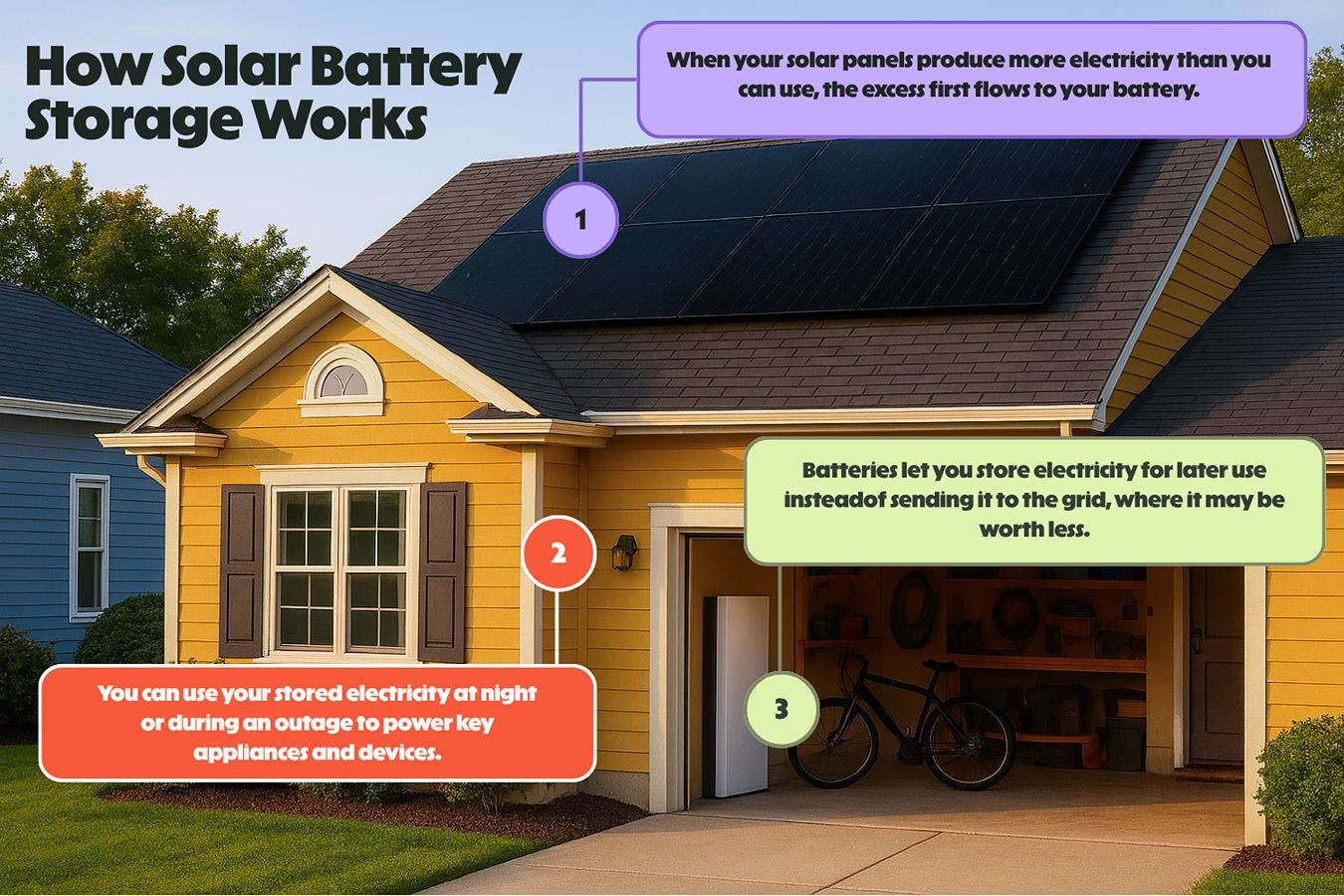
- Your utility charges time-of-use rates. A battery lets you power your home from stored energy when grid electricity is most expensive.
- You have solar and want to use all of it. Without a battery, excess solar generation goes back to the grid. With one, you use it yourself.
The best way to understand what a battery can do for your specific home is to talk to an expert. Palmetto advisors can help you figure out how much capacity you need, whether a battery is the right fit at all, and whether purchasing or leasing a battery is a better option for you. You should always get multiple quotes for a major home upgrade. Get one from Palmetto today.
See what home electrification can do for you:
Frequently asked questions
Can I add more backup loads later?
It's usually easier to decide on your critical loads during initial installation. Adding circuits later can require additional electrical work and added cost.
Will my solar panels work during a blackout if I don't have a battery?
No. Standard solar systems automatically shut down during outages to prevent electricity from back-feeding into the grid while utility workers make repairs. You need a battery and a transfer switch to keep your home powered independently.
What is a home battery's lifespan?
Most modern lithium-ion home batteries come with a 10-year warranty and are designed to retain about 70% of their original capacity by the end of that period.
Disclaimer: This content is for educational purposes only. Palmetto does not provide tax, legal, or accounting advice. Please consult your own tax, legal, and accounting advisors.