Can you get a rebate for a smart thermostat?
Last edited
Author
Andrew Blok
Electrification and Solar Writer and Editor

If you're about to buy a smart thermostat and wondering whether you can get some money back, the answer is probably yes. Utility rebates for smart thermostats are common across the country and can cut your out-of-pocket cost by $50 to $150 or more. The trick is knowing where to look before you buy.
See what home electrification can do for you:
Where to find smart thermostat rebates
Your utility company is the first place to check. Most electric and gas utilities offer rebates through their energy efficiency programs. A few reliable tools can help you find what's available in your area:
Your utility's website: Search your utility's name plus "rebates" or "smart thermostat." Most have a portal where you can confirm current offers and see qualifying models.
ENERGY STAR's rebate finder: The Energy Star rebate finder lets you search by product type and location.
Manufacturer rebate pages. Brands like Google Nest and Ecobee list active utility rebates by zip code.
Here's a snapshot of major programs active in 2026. Verify details directly before purchasing, as amounts and availability can change.
| Program | Utility / area | Approximate rebate | Link |
|---|---|---|---|
| Mass Save | Eversource, National Grid, others (MA) | $100 for an Energy Star certified thermostat | Explore |
| Con Edison smart thermostat program | Con Edison (NY) | $85 for enrolling in demand response program | Explore |
| PPL Electric Utilities | PPL Electric (PA) | $50–$100 for an Energy Star certified thermostat | Explore |
| Xcel Energy smart thermostat | Xcel Energy (CO, MN) | ~$50 | Explore |
| NV Energy PowerShift | NV Energy (NV) | Free thermostat when you participate in the PowerShift demand response program | Explore |
| APS Marketplace | Arizona Public Service (AZ) | Up to $160 | Explore |
| Smart Energy Program | Southern California Edison (CA) | $75 and up to $50 a year when you enroll in the demand response program | Explore |
California note: The statewide Golden State Rebates program has concluded. Rebates are still available through individual utility demand response programs. Check with your utility directly.
Demand response programs
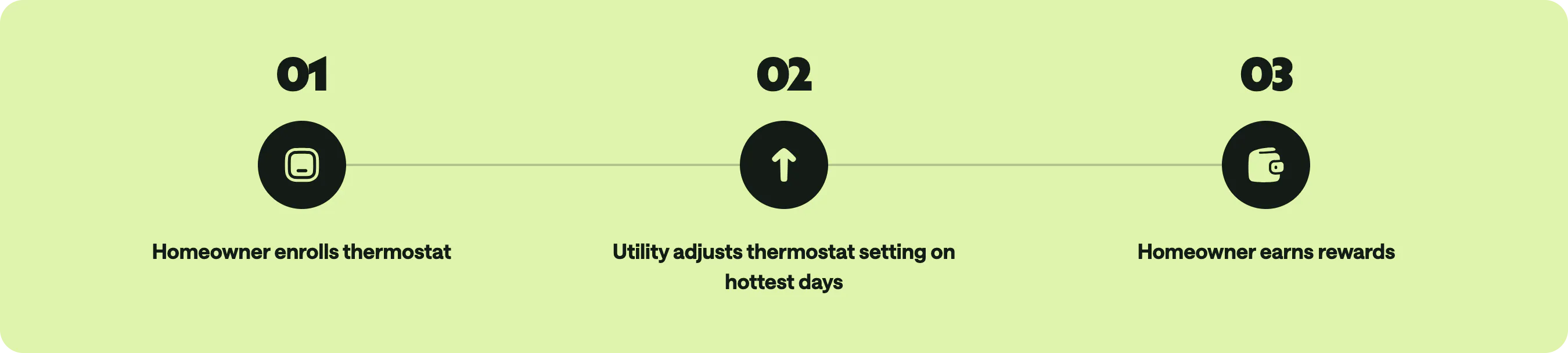
Some rebates (and program rewards) require participation in demand response programs. In these programs, you allow the utility to adjust your thermostat to an energy saving setting for a few hours at a time over the course of the heating or cooling season. You can override the adjustments and many participants don’t even notice the shifts. (I just received $50 from my utility, Consumers Energy, for participating in a similar program over the summer.)
Which thermostats qualify for a rebate
Most programs require an Energy Star-certified thermostat.
Popular qualifying brands include Google Nest, Ecobee, Honeywell Home, and Emerson Sensi. Basic programmable thermostats without Wi-Fi or learning features typically don't qualify.
Some programs also require purchase from an approved model list or installation by a participating contractor. Check your utility's current list before you buy.
See what home electrification can do for you:
How to claim your smart thermostat rebate
The process is similar across most programs:
- Confirm eligibility. Visit your utility's rebate portal and verify your account type and address qualify.
- Buy a qualifying model. Purchase from the approved list and keep your receipt.
- Install within the required window. Most programs require installation within 60 to 90 days of purchase.
- Submit your application. This might be an online form, a mail-in application, or an instant rebate through a utility marketplace. You'll typically need your receipt, model number, and utility account number.
- Wait for payment. Most programs issue a check or bill credit within 4 to 8 weeks.
Why do utilities offer thermostat rebates?
It might seem odd for a company that sells electricity to pay you to use less of it. A few things explain it.
Utilities are often required by state regulators to meet energy savings targets, with rebate programs funded through existing customer rates. Smart thermostats enrolled in demand response also help utilities avoid running expensive backup power plants during peak demand. Paying a rebate is cheaper than building more infrastructure, and a more manageable grid is more stable for everyone.
Ready to make the most of your home's energy? Palmetto's Energy Advisor can help you find upgrades that make sense for your home and budget.
See what home electrification can do for you:
Frequently asked questions
Are smart thermostat rebates still available in 2026?
Yes. Utility rebates are widely available. Check your utilities website for details.
How much is a typical rebate?
Most fall in the $50 to $100 range, though some programs offer more. Amounts vary by program and can change, so check before buying.
Do I need a professional to install it to qualify?
It depends. Some utilities offer a higher rebate for professional installation and a lower one for self-install. Check your program's requirements before deciding.
Can I combine a utility rebate with a manufacturer discount?
Often, yes. Many programs allow stacking. Always confirm the terms of any offer you want to claim.
Why do utilities pay rebates on products that help you use less energy?
Utilities are typically required by state regulators to meet energy savings targets, funded through existing customer rates. Smart thermostats also help utilities manage peak demand more cost-effectively than running backup generation, so the rebate reflects practical economics.
Disclaimer: This content is for educational purposes only. Palmetto does not provide tax, legal, or accounting advice. Please consult your own tax, legal, and accounting advisors.