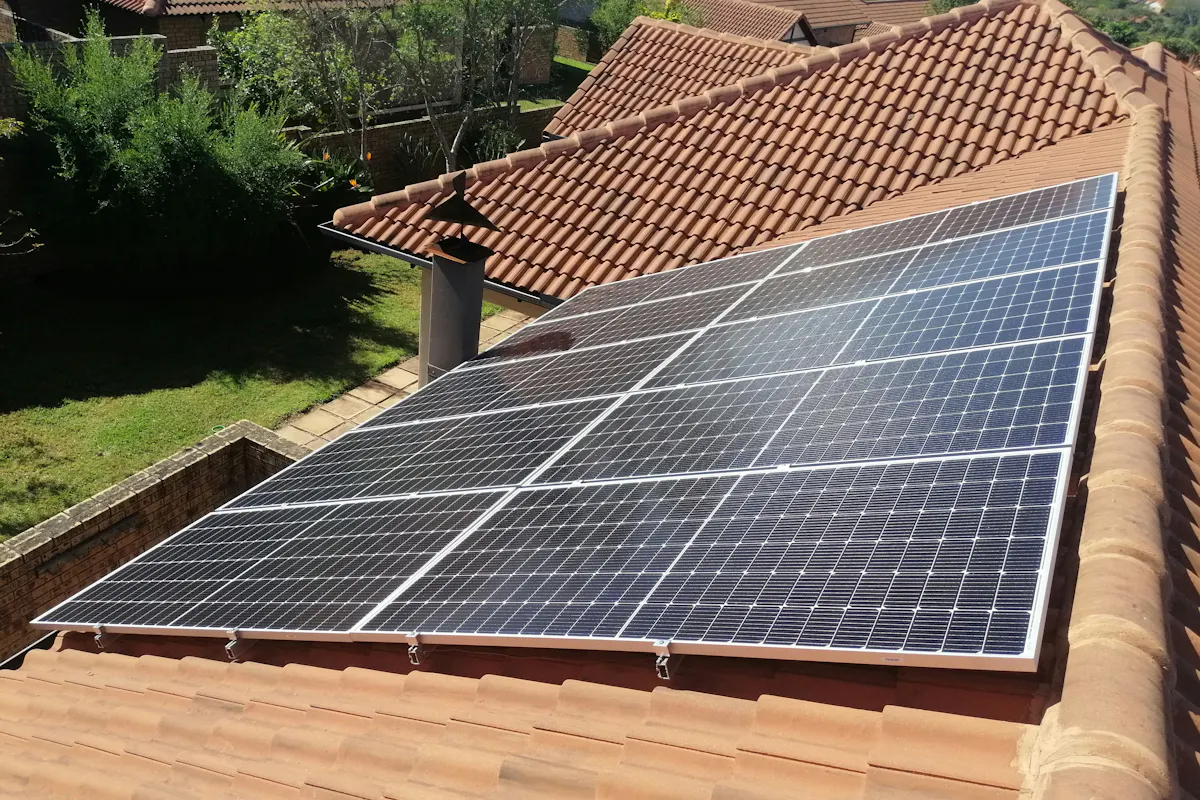
Selling a House With Solar Panels (Guide)
Last edited
Author
Andrew Blok
Electrification and Solar Writer and Editor
Editor
Andrew Giermak
Solar and Electrification Writer and Editor

Your home solar panels are designed to power your home for decades, but what happens if you decide to move sooner than expected?
While selling a house with solar might feel like a hurdle, solar can be a major selling point. Research shows that owned solar installations can boost your property value and help your home stand out in a crowded market. Here’s a primer on selling a house with solar panels.
See how much you can save by going solar with Palmetto
Tips for selling your house with solar panels
Solar power systems are gaining popularity across the country, especially as the cost of solar panels decreases, solar panel efficiency increases and energy prices rise sharply in some places. That means solar panels on your roof may make your home more attractive to potential buyers.
So how do you capitalize on the demand? These tips will help you talk to realtors and potential buyers about the real benefits of buying a home with solar panels.
Communicate the financial benefits of solar panels
Although the sale price of a home with solar panels might be higher than a home without them, solar panels often offer buyers immediate and long-term savings as well.
- Reduced energy bills: Solar panels can reduce your energy bills by providing electricity right from your roof.
- Protection from rising energy costs: Electricity rates keep rising, so a solar power system can help shield you from future price increases.
- Net metering credits: If you receive net metering credits for sending electricity to the grid and a buyer could get the same deal, communicate those benefits to potential buyers.
- Increased home value: Owned solar panels improve home values by 4.1% on average, according to research from Zillow.
Note: Policies like net metering vary and are not available everywhere. Check with your electricity provider to see how rates are structured for your home. The above dynamics vary by location.
Communicate the warranties and service agreements
When selling a house with solar panels, you should introduce the buyer to your solar provider and assist the transfer of any contracts, service agreements, and solar warranties.
The following warranties should transfer to the new homeowner.
- Panel product and performance warranty
- Inverter warranty
- Workmanship warranty
- Roof penetration warranty
You can also provide the potential homebuyer with your installation contract that describes your warranty and protection plan such as Palmetto Protect.
Get an appraisal for your home
Work with a real estate agent or appraiser who has experience selling homes with solar panels, based on any of these valuation methods.
Fannie Mae has specific guidelines for how the value of owned solar systems should be considered in an appraisal. Notably, leased solar panels, or panels under a power purchase agreement, cannot be included in the appraised value of the house.
Communicate the environmental benefits of solar power
Solar panels produce clean, renewable, emission-free electricity, which comes with several benefits.
- Reduced air pollution: Solar panels create clean energy that doesn't send pollutants into the atmosphere.
- Reduced carbon emissions: Going solar reduces the demand for fossil fuels, limits the emission of greenhouse gases, and shrinks your carbon footprint.
See how much you can save by going solar with Palmetto
Are houses with solar panels easier or harder to sell?
Owned solar panels can increase the value of your home, and there is some evidence homes with them sell faster than those without. In general, it can be a smooth process if you understand the benefits and the challenges of selling a house with solar panels.
Easier to sell with solar
Solar panels can offer homebuyers greater value over the long term. These benefits and others should make solar panels a selling point for many homebuyers.
- Increasingly popular: Market research says buyers are willing to pay more for homes with solar panels than those without.
- Low maintenance: Relieve buyer concerns by sharing that solar panel cleaning is simple and not typically required and that overall maintenance can be low.
- Financial perks: Solar panels can lower monthly energy bills.
- Environmentally friendly: An eco-conscious homebuyer may be excited to buy a home with solar panels that can reduce greenhouse gas emissions.
Harder to sell with solar
Selling a home with solar panels can be a smooth process, but you may still encounter the following obstacles:
- Buyer hesitation: Buyers might not understand the benefits of a solar energy system and may be concerned about system maintenance and repairs. Agents might not understand or communicate the benefits of a solar energy system, which could lead to confusion about a higher asking price.
- Seller issues: The selling process can be complex if you can’t produce the necessary documentation about your solar panel system, and you could lose out on that potential extra value.
- Solar leases: Solar leases can be transferred or paid off, but require extra steps when you’re selling your home. If transferring a lease to a buyer, the buyer must qualify for the lease.
Selling your house with owned solar panels
If you own your solar panels outright, it’s the easiest scenario for selling your home. Solar panels that have been paid for don’t require multi-party solutions to transfer solar panel ownership.
Selling your home with a solar loan
When selling a house with a solar loan, the lending institution can help you transfer the solar loan to the new homeowner. However, your selling options depend on how you financed the loan, namely whether it was a secured or unsecured loan.
Selling your home with a solar lease or PPA
Selling a home with a solar lease involves either buying out the system, prepaying the lease, or transferring the solar lease to the new owner. Which options are available will depend on the stipulations of your lease. Here’s how each breaks down.
- Transfer the lease: The homebuyer needs to apply for a new lease and pass a credit check. After a successful transfer, the homeowner enjoys all the benefits of the lease.
- Prepay the lease: When selling a home, you have the option to prepay the lease. This fulfills your obligation under the lease, and removes the buyer’s need to qualify for a lease
- Buy out the system: In some cases, you may be able to buy out the system. In this instance you own the system and can sell it as part of the house.
Can you move solar panels to a new home?
You love your solar panel system, but you have to move. Can you remove the panels from your current home and install them on your new one? Unfortunately, the answer is most often, no.
First, your solar system was designed specifically for the roof, geography, electric rates, and other factors specific to that home. A new home and new location will need a new system to be effective. Next, removing panels and components could damage the system parts and the roof. Savings you hope to see by moving your system could be wiped out by repairs on the home you're selling.
If you're thinking about selling your home with Palmetto solar panels, you should learn about your options for transferring the warranty and Palmetto Protect service plan to the new owner. If you’re just starting out on potentially going solar, you can go to our solar savings calculator.
See what solar can do for you:
Frequently asked questions
Is it difficult to sell a home with solar panels?
Selling a home with owned solar panels is often easier and the home can sell for a higher price, according to research. If the solar system is in a lease or PPA, there can be additional steps to transferring the system to the prospective buyer.
Do solar panels increase a home’s value?
Solar panels increase average home value in almost all cases. According to a 2019 study by Zillow, homes with solar power sell for about 4% more than homes without it.
Do solar warranties transfer when you sell your home?
It’s important to check the details of a warranty to understand the conditions and transfer process.
Disclaimer: This content is for educational purposes only. Palmetto does not provide tax, legal, or accounting advice. Please consult your own tax, legal, and accounting advisors.