Do Heat Pumps Save Money?
Last edited
Author
Andrew Blok
Electrification and Solar Writer and Editor
Editor
Andrew Giermak
Solar and Electrification Writer and Editor
Are your monthly energy costs climbing? Replacing your current HVAC system might be the answer to lowering those expenses.
Today’s heat pumps offer the highest levels of heating and cooling efficiency, which may lead to significant cost reductions. Your ultimate costs or savings look like will depend on factors specific to your home. Below, we break down potential savings and those potential factors behind them.
See how much you can save with a new HVAC system from Palmetto
Heat pumps save through efficiency
Heat pumps are highly efficient, using less energy to heat a home than other HVAC solutions. In an apples-to-apples comparison (e.g. a heat pump to an electric furnace), that efficiency boost translates to lower heating costs. When the comparison is apples-to-oranges (say, a heat pump to a gas furnace), the cost calculation is trickier, and the savings story isn’t as clear cut and direct.
How heat pumps work
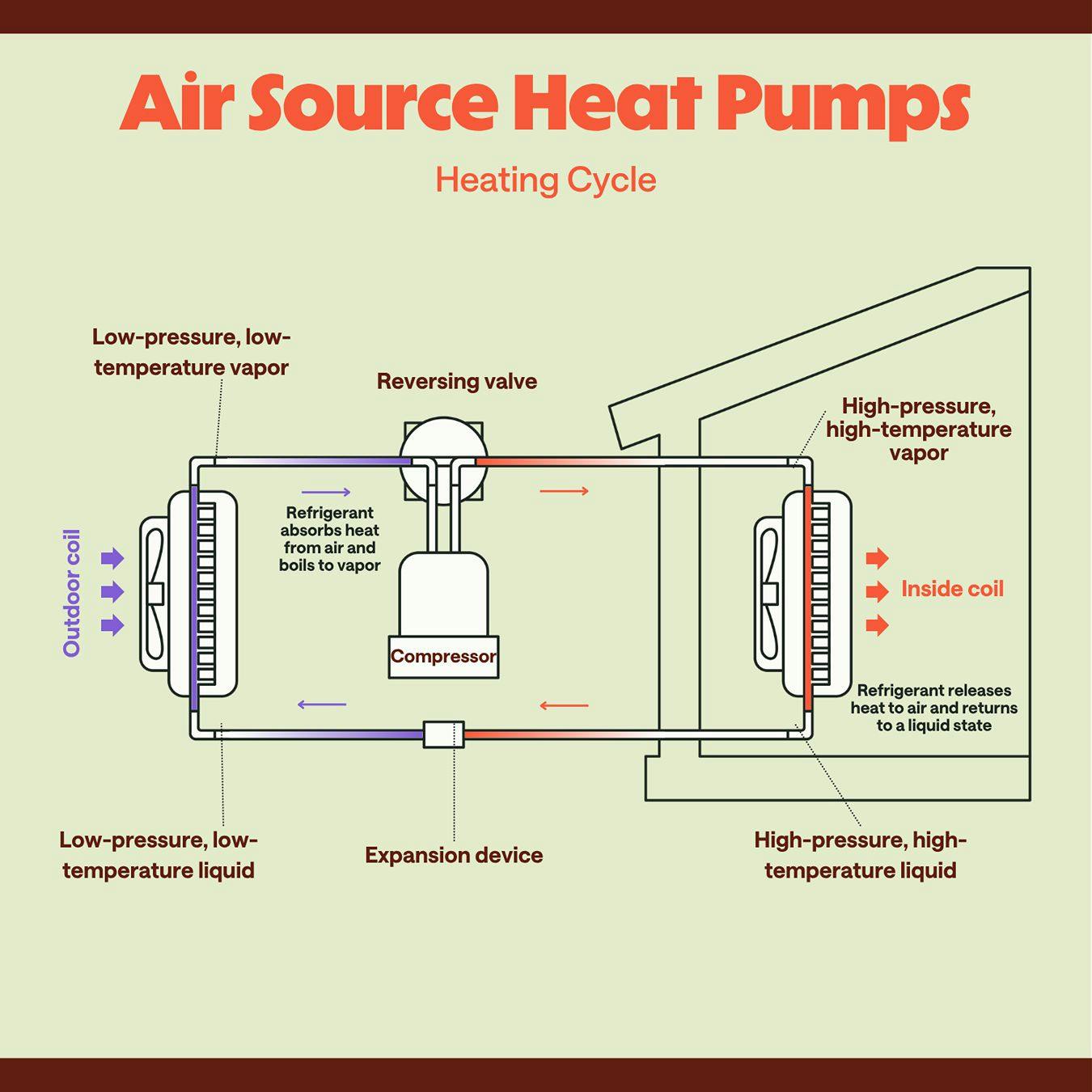
Heat pumps transfer heat between a building and the air or ground outside. You can think of a heat pump like your refrigerator or air conditioner, but reversible.
When a heat pump is in cooling mode, it moves heat out of your home. When it's in heating mode, it does the reverse. Cold climate heat pumps are able to grab heat from even frigid air.
Heat pumps vs. electric resistance heating
Electric furnaces, baseboard heating, radiant floor heating, and space heaters are forms of electric resistance heating. Electric resistance heating converts electric power into heat and it is very close to 100% efficient. That gives electric resistance heating a coefficient of performance of about 1.0. For every unit of energy that goes in, you get one unit of heat out.
Air-source heat pump heating systems typically have a COP rating of up to 4.0 (this number changes with the temperature outside). Ground-source or geothermal heat pumps can work at a COP rating of 5.0 or higher. According to the Department of Energy, a heat pump can reduce electricity use for heating by about 75% compared to electric resistance heating systems.
How much can heat pumps save?
How much you can save by switching to a heat pump depends on a range of factors such as home size, your climate, your daily, weekly, or even seasonal routine, and if you’re using home solar panels for electricity.
In February 2024, the National Laboratory of the Rockies (then called the National Renewable Energy Lab) reported 62-95% of American homes would save money on energy bills by going to a heat pump. NREL found 92-100% of homes using gas, propane, or another electric system for heating would save money by switching to a heat pump.
NREL estimated the average annual savings at $300-$650 for homes with an air conditioner and already heating with electricity, propane, or heating oil. In cases with larger homes, replacing very old or very inefficient systems, or projects also including insulation upgrades, savings can add up to thousands a year.
See how much you can save with a new HVAC system from Palmetto
Factors affecting heat pump savings
How much you can save varies with a number of factors.
Your old system
How much you save depends if you’re replacing a natural gas furnace or electric resistance heating. If you’re switching from two older, less efficient systems, even if one is an old heat pump, you’re likely to see more significant savings.
If you’re getting rid of a gas furnace, you are reducing, and maybe even eliminating a monthly gas bill.
Energy prices
If you're considering an electric heat pump, the difference in your utility electricity and natural gas rates will affect your savings.
One way to control your energy bills is with home solar power. The more electricity you use, the more of your total energy use can come from renewable solar power.
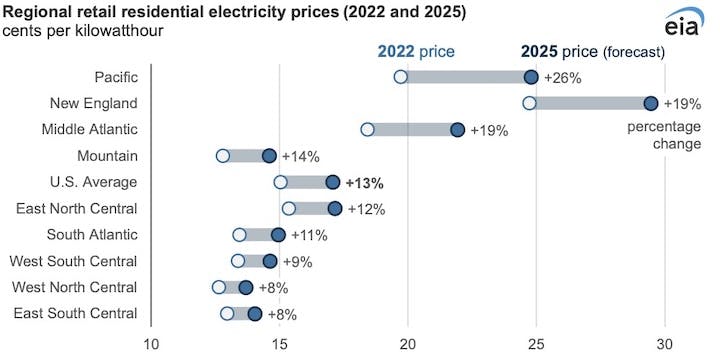
Source: eia.gov
Your home’s insulation and efficiency
When you add or improve insulation and switch to a modern, high-efficiency heat pump, the percentage of US homes that save money goes to 82-97% according to NREL.
Bringing your home’s insulation up to recommended levels is a big way to improve your home’s heating and cooling comfort and efficiency. Weatherstripping and air sealing around doors and windows, caulking, and sealing gaps near baseboards, outlets, and vents help with energy efficiency, indoor air quality, moisture control, and more.
Heat pump efficiency
Generally speaking, a heat pump's upfront cost increases with its efficiency. Yet, higher efficiency could translate into greater savings over the years. Best practice is balancing energy efficiency, climate, and heating and cooling needs with your budget.
A heat pump’s SEER2 rating is a ratio of energy usage to cooling output. The HSPF2 is a similar ratio of energy usage to heating output. Normally, the higher the SEER2 and/or HSPF2, the more expensive the system is. The best advice is to get the ratings recommended for your zone or region, rather than buy the highest possible SEER2 or HSPF2.
Geothermal heat pump efficiency
Ground-source, or geothermal, heat pumps are more expensive to purchase and install than air-source units. Excavation and installation are typically major expenses with a geothermal system. Geothermal heat pumps are more efficient than air-source heat pumps and typically deliver lower heating costs.
More tips for maximizing heat pump savings
- Heat pump maintenance: Regular service and maintenance, changing air filters, and cleaning coils can keep a heat pump operating efficiently.
- Get the right size and installation: The heating and cooling needs of a 1,750-sq. ft. house with no one home most days from 9-5 are different than for a 4,000-sq. ft. house with a lot more coming and going. Once a knowledgeable pro has worked with you to find the right system size, ratings, and features, a professional installation is important to giving you the efficiency, reliability, warranty coverage, and comfort you’re counting on.
- Use heat pump incentives: Check with your state, city, or utility to see if any applicable incentives are available to you.
Curious about your HVAC options at home? Learn more by contacting Palmetto. With the Palmetto Comfort Plan you can skip the upfront cost and instead make predictable monthly payments that cover the cost of the equipment and installation.
See how much you can save with a new HVAC system from Palmetto
Frequently asked questions
Can a heat pump save you money?
A new, energy-efficient heat pump can save most users money, according to the National Laboratory of the Rockies. They can do so by using less energy and reducing maintenance costs by replacing two systems with one. Estimated savings vary due to many factors, but the NLR estimates the average household savings from switching from heating with electric resistance, propane, or heating oil to a heat pump are $300-$650.
How much does a heat pump cost?
Home size, energy rates, your normal usage, improvements to ductwork or electrical work, heat pump efficiency ratings, labor costs, and available tax credits or rebates, all impact heat pump cost. Ductless mini-split heat pumps cost about $1,500-$5,000 per zone according to a range of online sites. Ducted air-source heat pumps range from $4,000-$25,000. The best way to determine the cost of a heat pump for your home is to get a quote.
Will a heat pump work in cold climates?
Heat pumps work in cold climates better than ever before. Cold climate heat pumps are built and certified to work at full efficiency in cold temperatures down to 5 degrees and some models maintain efficiency well below zero.
How do I find the right heat pump for my home?
A number of factors go into deciding on the right heat pump for your home. You can ask local companies with knowledge and experience in your area, fitting systems to similar homes in your climate. You can also use our home energy advisor page and we’ll provide an estimate, answer your questions, and help you find the right system for your home and needs.
Disclaimer: This content is for educational purposes only. Palmetto does not provide tax, legal, or accounting advice. Please consult your own tax, legal, and accounting advisors.