Palmetto Impact Report 2025: Addressing the Affordability and Reliability Crisis
Last edited

Author
Palmetto
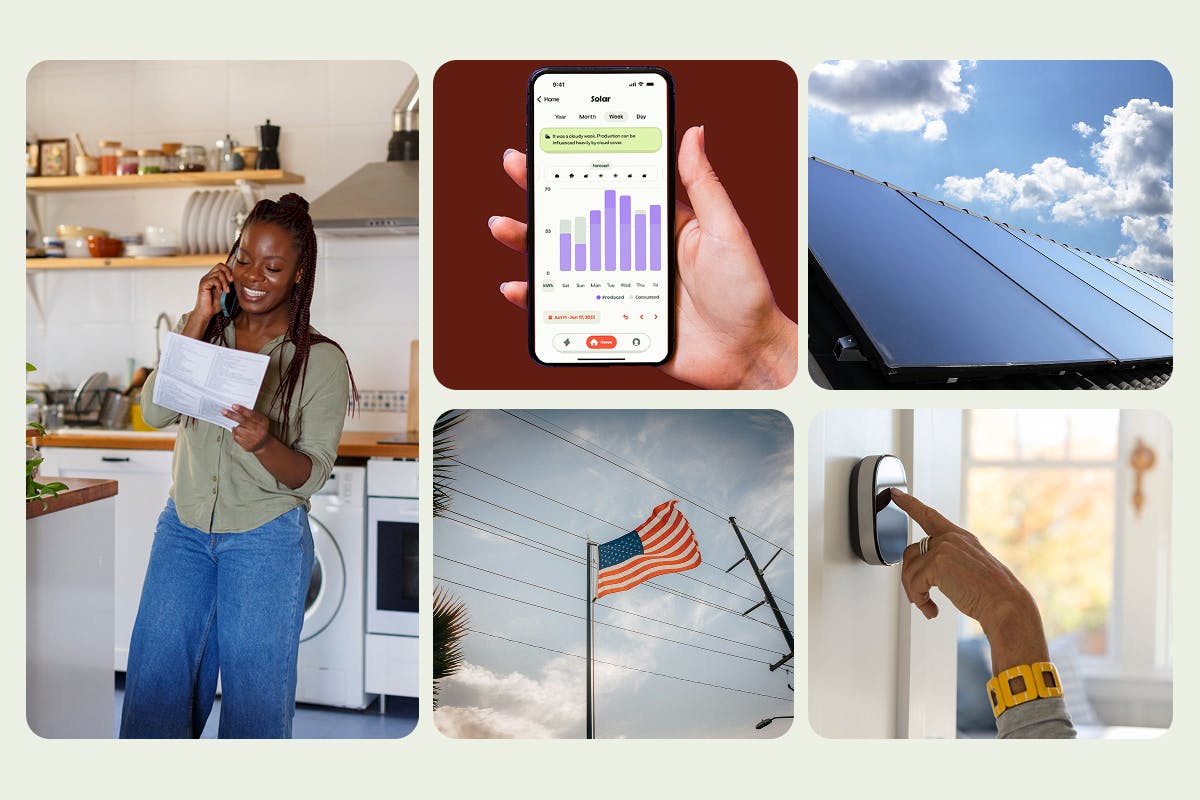
2025 is the year consumer energy broke into the mainstream.
As energy bills spiked across the country, terms like capacity auction, demand growth projection, and hyperscaler entered public awareness. More importantly, as energy bills rose, they started squeezing already thin wallets. Energy bills became a key component of the affordability crisis that grew more urgent for more Americans this year.

Nearly half of Americans call their electric bill a major stressor, according to recent research. Four in five people said their electric bill was higher than it was a year ago. Nearly 80 million Americans are struggling to pay their utility bills.
Energy dominated parts of the political landscape, too. Fights over energy tax credits were a focus during the One Big Beautiful Bill Act negotiations, and concerns over energy bills played a key role in elections this November and could as well in the 2026 midterms. At the same time, cheap and clean renewables and energy storage continued to make up the bulk of new generation added to the grid, despite new roadblocks this year.
Within the residential solar industry, the biggest story is the end of the 25D tax credit at the end of 2025 and the wholesale shift to third-party ownership. How the industry adapts remains to the earlier-than-scheduled phase out remains to be seen. Smaller companies that relied on 25D are sure to be hit the hardest. Companies with a strong track record in third-party ownership can be a lifeline to engineering, procurement, and construction (EPC) companies who need to pivot to third-party ownership, and fast.
Palmetto stands uniquely at the nexus of 2025’s biggest trends in energy. We’ve lowered the barrier to entry for solar, storage, and efficient HVAC systems, saving Americans millions of dollars. We’re a crucial partner to EPCs across the country. We’re building resilience at home and adding affordable energy to the grid as rising demand threatens to make it less reliable and more expensive.
2025 was a huge year that proves Palmetto’s mission is more urgent now than ever and that we’re primed to make 2026 even bigger.
Solar deployment in 2025
We expanded Palmetto’s footprint in 2025 and project to complete 71,927 systems this year, helping nearly 72,000 families across 30 states and Puerto Rico control their long-term electricity costs.
Installation momentum is picking up as 2025 draws to an end, reflecting a push by homeowners to take advantage of the 25D tax credits before they expire.
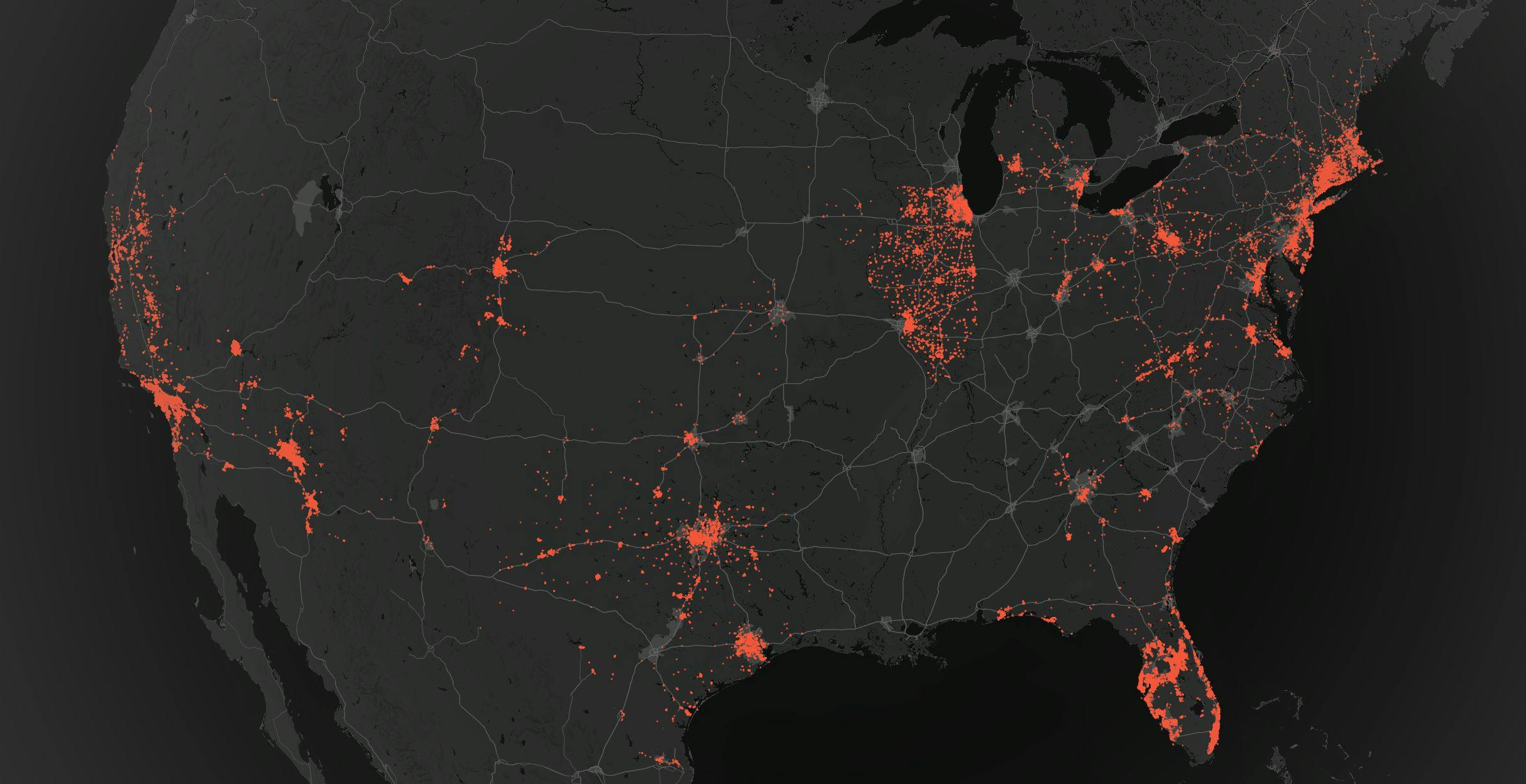
Palmetto’s solar installations as of November 2025.
All those solar installations generate a lot of electricity. Earlier this year, Palmetto-managed solar installations surpassed one terawatt-hour of electricity produced. Over 2025 alone, they’re projected to produce 704 gigawatt-hours, enough electricity to drive 800,000 electric vehicles around the globe. Avoiding that much grid electricity has the same climate impact of removing 110,326 gas-powered vehicles from the road for a year.
Big savings in 2025
Distributed solar and storage are key to the clean energy transition and the health of the grid, but they’re most important for the savings they deliver. All told, Palmetto’s customers saved tens of millions of dollars, even as rising electricity rates became a national story.
Compared to the electricity rate from their incumbent utility, Californians working with Palmetto collectively saved $27.8 million in 2025. That’s a lot of tangible savings flowing directly to consumers.
When electricity rates jumped, Palmetto customers saved more
When electricity rates jump, it puts additional pressure on people already feeling the squeeze of the current affordability crisis. It also proves the value of locking in predictably priced electricity through a lease from Palmetto LightReach.
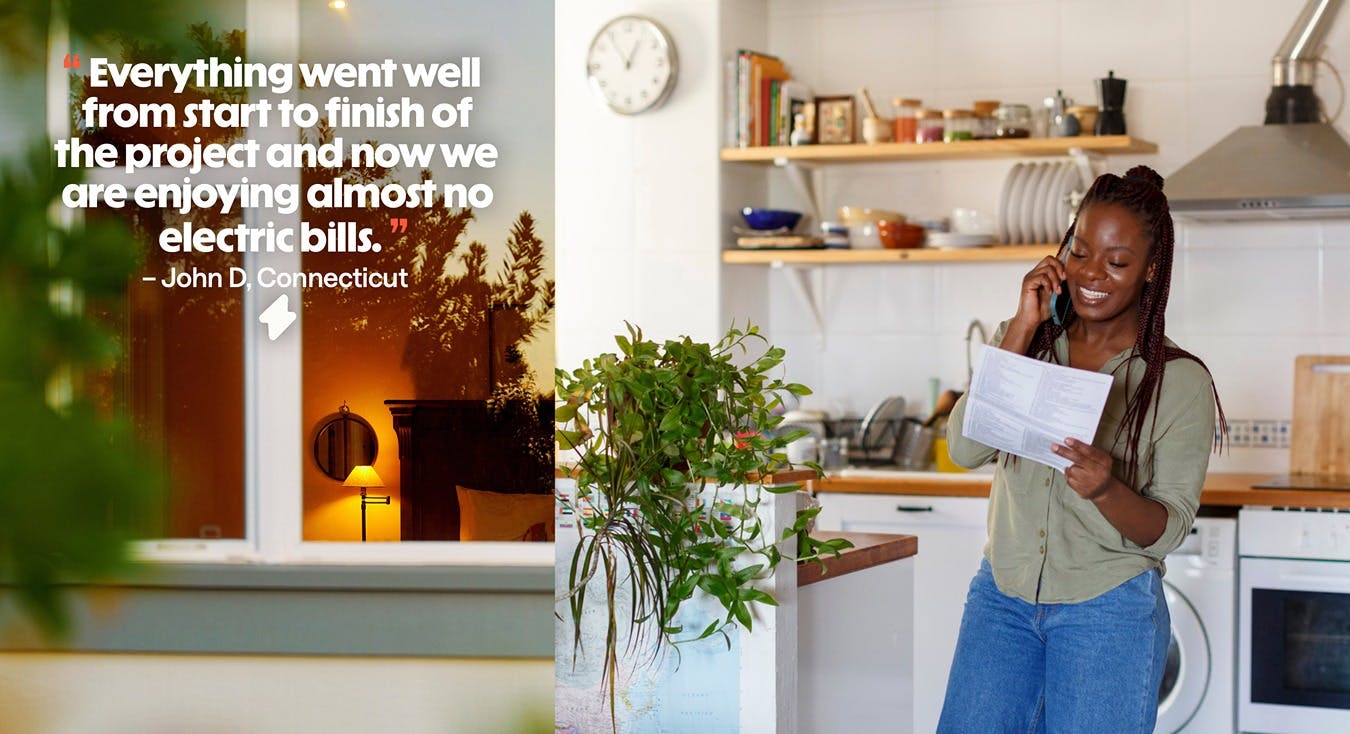
When electricity rates in Connecticut increased beyond market expectations, Palmetto LightReach customers there realized an additional $463,000 in estimated savings. It’s proof that locking in a predictable and affordable rate now can pay dividends years down the road.
Heavy hitting in solar-heavy states
Palmetto had an outsized role in helping homeowners go solar this year. As homeowners rushed to take advantage of the expiring 25D tax credits or control their energy costs with third-party ownership solar, Palmetto was there to make solar simple and easy.
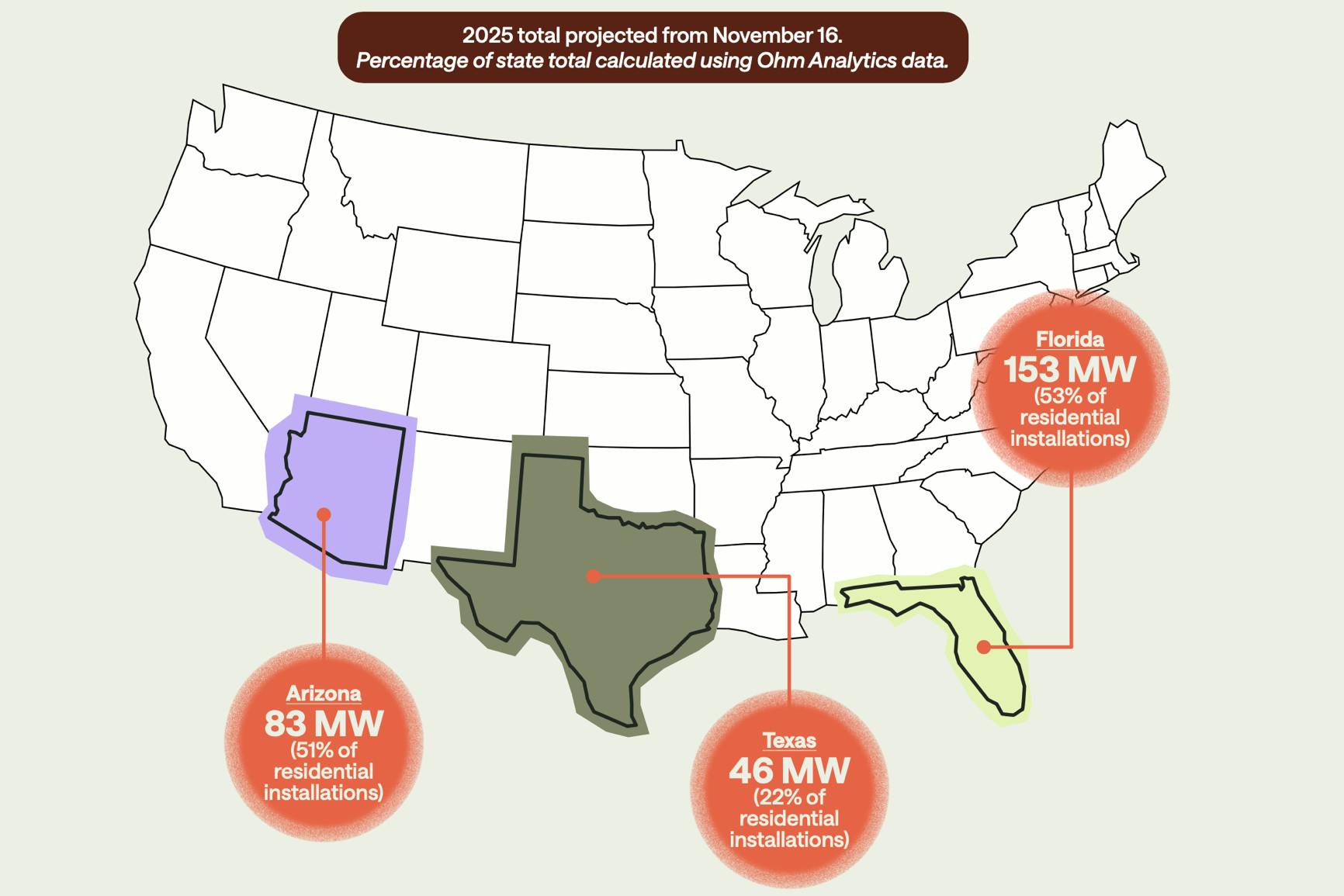
In Arizona, Palmetto accounted for 83 megawatts of solar panels, approximately 51% of residential deployments there.
Residential solar and the hyperscaler
Perhaps no energy story was bigger in 2025 than the explosion in data center growth and the mind-boggling demand growth projections that came with it. One recent projection from Grid Strategies sees electricity usage growing 32% by 2030, a huge number after decades of relatively flat demand. Data centers accounted for 55% of that projected growth.
Perhaps surprisingly, residential solar can help meet that growing demand. In states such as Florida, Palmetto solar installations offset significant portions of local data center energy demand.
Supporting small businesses and solar workers
This year also saw a potentially huge disruption to the industry with the early expiration of the 25D tax credit. Other major disruptions, such as California’s shift to NEM 3.0 in 2023, were followed by business closures and job losses: up to 17,000 jobs lost in California according to a survey conducted that year by the trade group, the California Solar and Storage Association.
While the impact of the loss of the 25D tax credit is still unknown, Palmetto’s impact in supporting small and medium businesses throughout the industry is clear.
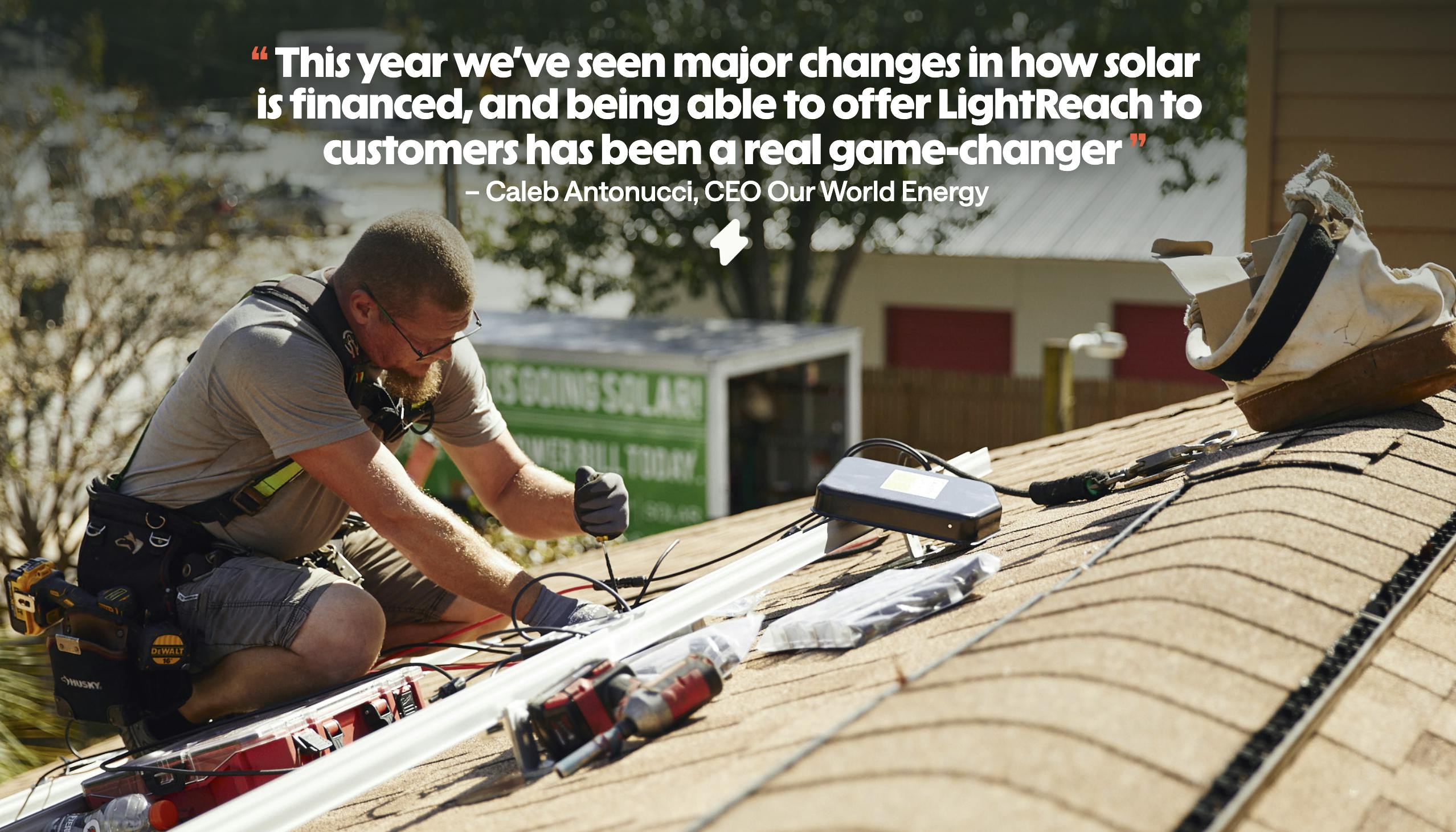
Palmetto’s streamlined technology platform, competitive pricing, and accessible financing are helping more than 500 EPC partners strengthen and scale their businesses in the post-25D world. Those partners represent an estimated workforce of more than 11,350 across the 29 states where Palmetto LightReach-financed systems were installed in 2025.
Savings to low-income communities
In 2024, one in three American households cut back on or went without household necessities to pay their energy bill. One in four low-income households spent an average of 15% of their income on their energy bills.
In 2025, Palmetto deployed systems for 17,750 homes in low-income communities for zero money down. That’s 17,750 high-efficiency solar installations delivering clean and affordable energy where it’s most needed, and providing lifetime savings of up to $27,600 per household.

What’s next in 2026
If 2025 was the year consumer energy broke into the mainstream, it’s safe to say it’ll stay there in 2026.
Data centers, as they fuel the expansion of AI and our online lives, are expected to drive the explosion in electricity use growth, accounting for 55% of an expected one-third increase in demand by 2030, according to Grid Strategies.
Rising demand is likely to keep electricity prices marching upward. The US Energy Information Administration predicts a 4% increase in 2026 after a projected increase of 4.7% in 2025. With higher prices not just at the electric meter, affordability will remain top of mind for many Americans.
Alongside accessible and cost-controlling solar through Palmetto LightReach, consumers will have access to zero-down, affordable HVAC through Palmetto’s Comfort Plan. Affordable access to bill-reducing solar and efficient and reliable HVAC will become even more valuable as tools to address the affordability crisis. Accessible battery storage will help ease grid stress and the burden on consumers of increasing power outages.
Palmetto’s offerings are poised for another year of leading the world into the clean energy future, where homeowners control their costs while building resiliency and gaining greater energy independence. It’ll be more important than ever.