79% of Homeowners Worry About Summer Energy Bills. Most Haven’t Done the One Thing That Could Help
Last edited
Author
Andrew Blok
Electrification and Solar Writer and Editor
For many Americans, summer doesn't just bring higher temperatures—it also brings higher electricity bills.
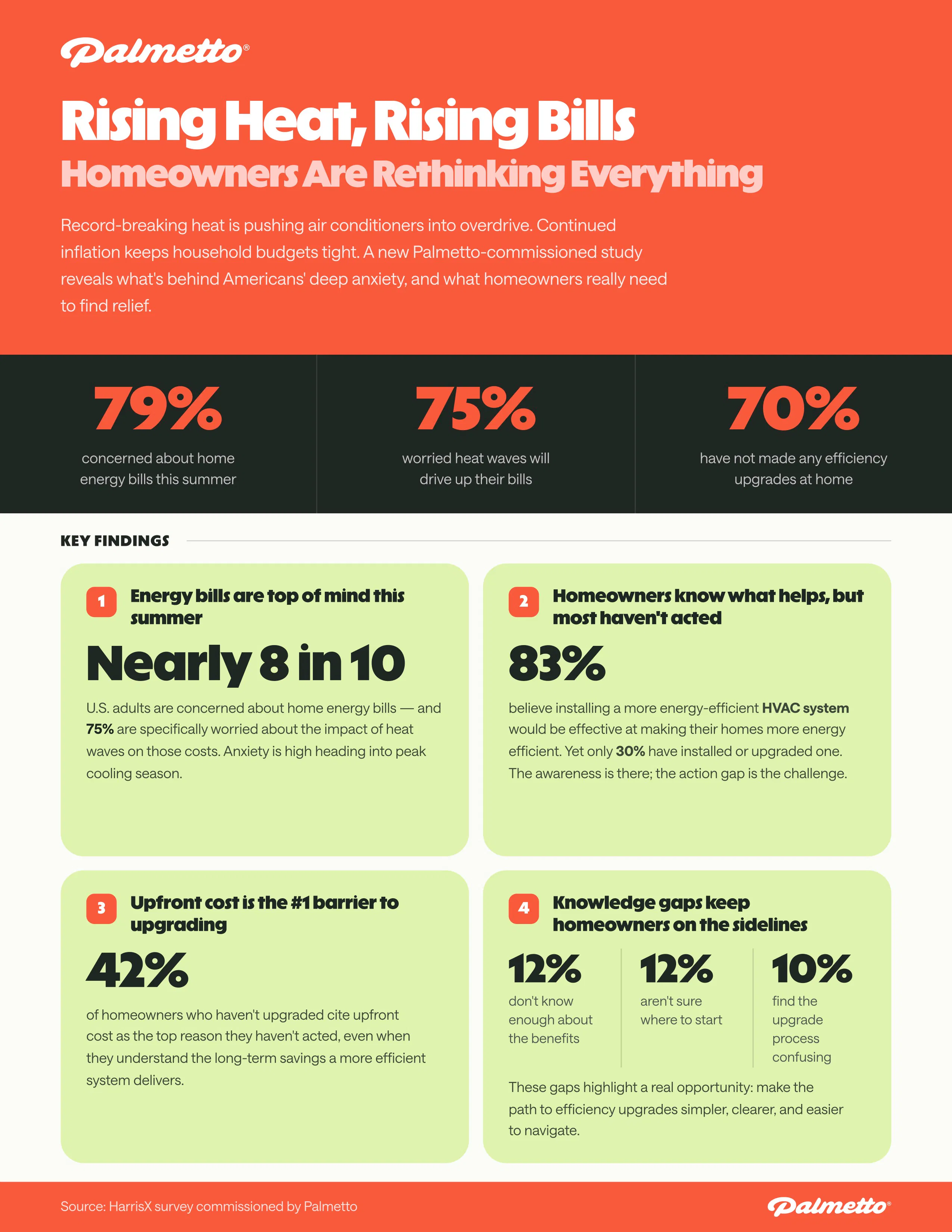
A new HarrisX survey commissioned by Palmetto finds that concerns about the cost of keeping homes cool are widespread. Nearly eight in 10 U.S. adults (79%) say they are concerned about their home energy bills this summer, while 75% are worried specifically about the impact heat waves could have on those costs.
The findings come as much of the United States experiences prolonged periods of extreme summer heat and many households continue to grapple with higher living costs. Utilities across the country have sought electricity rate increases in recent years, while hotter temperatures have driven greater demand for air conditioning, making energy affordability an increasingly important issue for homeowners.
Despite these concerns, many homeowners have yet to make home improvements that could help lower their long-term energy use.
See how much you can save with a new HVAC system from Palmetto
Homeowners recognize the value of energy-efficient HVAC systems
Heating and cooling are among the largest sources of residential energy use, particularly during the summer months. As older air conditioning systems become less efficient, they can consume more electricity while providing less effective cooling.
The HarrisX survey found that homeowners understand the potential benefits of upgrading. More than four in five homeowners (83%) believe installing a more energy-efficient HVAC system would help make their homes more efficient.
Yet only 30% say they have upgraded or replaced their HVAC system with a more energy-efficient model.
That disconnect suggests that while homeowners recognize the value of efficiency, many face obstacles that prevent them from taking action.
Upfront cost remains the biggest barrier
For homeowners who have not upgraded their HVAC systems, the largest obstacle is financial.
Among respondents who have not made an energy-efficient HVAC upgrade, 42% say the upfront cost is the primary reason they have delayed doing so.
Replacing a heating and cooling system often represents one of the largest investments homeowners make. Although newer systems may reduce monthly operating costs over time, the initial expense can be difficult for many households to absorb, particularly as budgets remain under pressure from higher prices across many categories.
The survey suggests that affordability remains a key factor shaping homeowners' decisions about energy improvements.
Many homeowners need more information before getting started
Cost is not the only challenge homeowners face.
Among those who have not upgraded their HVAC systems:
- 12% say they do not know enough about the benefits of energy-efficient systems.
- 12% say they are unsure where to begin.
- 10% say navigating the installation or upgrade process feels too complicated.
These findings indicate that many homeowners may benefit from clearer information about available technologies, installation options, rebates, tax incentives and financing opportunities before deciding to move forward with a project.
Reducing complexity may be just as important as reducing cost in helping more households make energy improvements.
Small improvements can also make a difference
While replacing an HVAC system is one of the largest energy-related investments a homeowner can make, experts generally recommend starting with improvements that reduce overall energy demand.
Sealing air leaks, improving insulation, installing programmable or smart thermostats, replacing air filters regularly and scheduling routine HVAC maintenance can all help improve system performance and reduce energy consumption. For homeowners ready to replace aging equipment, newer high-efficiency air conditioners and heat pumps may provide additional savings while improving indoor comfort.
The right approach will vary depending on a home's age, location, climate and existing equipment, but reducing wasted energy can often help lower cooling costs over time.
Energy efficiency is increasingly about affordability
The survey findings point to a broader shift in how Americans think about home energy improvements.
While energy efficiency has often been associated with environmental goals, homeowners today increasingly view it through a financial lens. Rising utility bills, hotter summers and ongoing cost pressures are making efficiency a practical household budgeting strategy as much as a sustainability consideration.
As temperatures continue to climb and energy demand remains high, many homeowners appear ready to reduce their energy costs. The challenge is no longer convincing them that energy efficiency works—it's helping them overcome the financial and informational barriers that stand between intention and action.
See how much you can save with a new HVAC system from Palmetto
Methodology: The HarrisX survey on behalf of Palmetto was conducted online among 1,070 adults, in the United States between June 5th, 2026, and June 8th, 2026.
Respondents were recruited through opt-in, web-panel sampling. Recruitment occurs through a broad variety of professional, validated respondent panels to expand the sampling frame as wide as possible and minimize the impact of any given panel on recruiting methods.
The sampling margin of error of this survey is +/- 3.0 percentage points. Margins of error for subgroups are larger and vary depending on sample size. Results were weighted by gender, age, race/ethnicity, region, and income where necessary to align with the demographic composition of the U.S. adult population.