Heat Pump Water Heaters: What They Are, How They Work
Last edited
Author
Andrew Blok
Electrification and Solar Writer and Editor
Editor
Andrew Giermak
Solar and Electrification Writer and Editor
Heat pump water heaters apply super-efficient heat pump technology to the third largest energy use in your home. Heat pumps already drive the most efficient heating and cooling solutions for homes, and now are the most efficient way to heat your water, too (almost 20% of the average home’s energy use).
If heat pump water heaters sound strange or complicated, don’t worry. Here’s what you need to know.
See how much you can save with home energy changes
What is a heat pump water heater?
A heat pump water heater is an electric water heater that uses heat from the surrounding air to heat water. Because it moves heat instead of generating it like a conventional electric water heater, it’s much more efficient.
Energy Star-certified heat pump water heaters use about 70% less energy than conventional electric water heaters.
A heat pump water heater may be a standalone system or combined with a heat pump for space heating and cooling, a less common but highly efficient set up.
How a heat pump water heater works
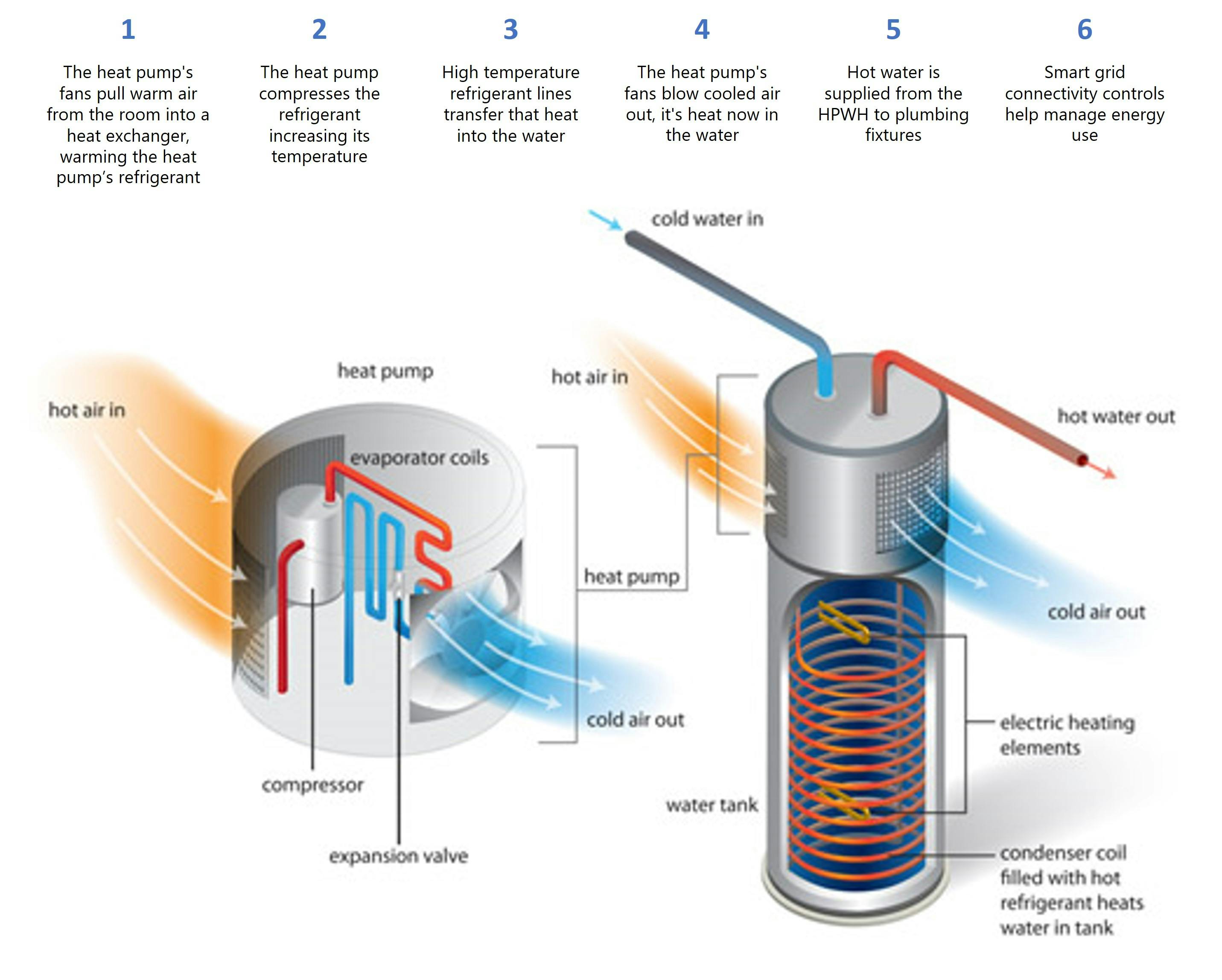
A heat pump water heater works the same way an HVAC heat pump does, or like a refrigerator but in reverse.
The heat pump’s fan pulls in air, which is moved across evaporator coils containing refrigerant gas. The now-warmer refrigerant passes through a compressor to increase its pressure and temperature. Now very hot, the refrigerant passes through condenser coils around or inside the water tank. The heat transfers to the water and the cooled refrigerant goes back to the evaporator coils. More air is drawn in, starting the cycle again.
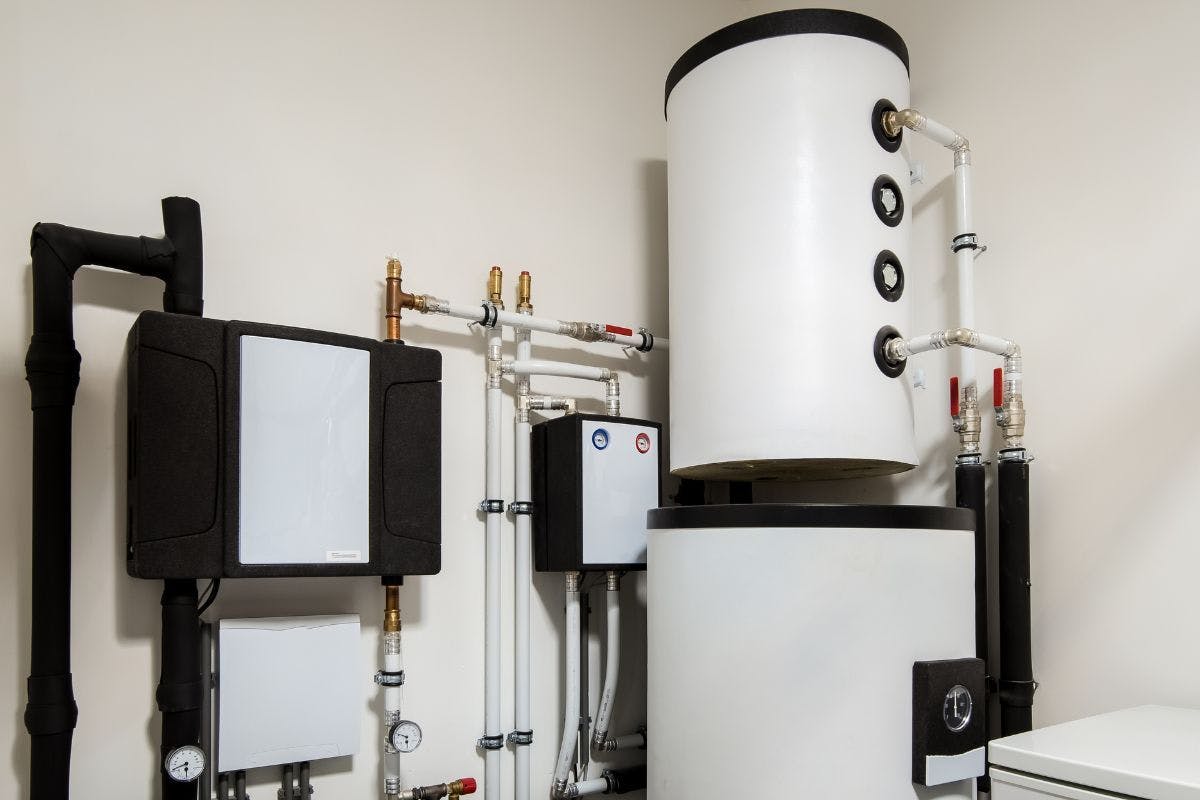
A heat pump water heater is often installed where the air temperature around it is 40-120°F year-round, though manufacturers’ recommendations will vary. Typically, a heat pump water heater is installed in a basement, garage, utility room, or laundry room. It can also be put near a furnace, where warmer air can be pulled in, making it more efficient.
Credit: Energy Star
Heat pump water heater costs
A heat pump water heater's upfront purchase and installation costs are typically more than a conventional water heater's. In the long run, energy savings may make up and surpass the difference. Energy Star-certified heat pump water heaters save a family of four an estimated average of $550 a year compared to a standard electric water heater.
A standard electric water heater with a 50-gallon tank costs, on average, from $500-$2,100 and the installation cost ranges from $700-$1,800 according to our survey of retail and consumer sources.
Heat pump water heaters range from $1,100-$3,100 for the purchase and $1,000-$3,500 for installation according to retail, consumer, and government sources. The water heater’s size, local labor costs, and extra construction or components needed affect the price. Rebates, tax credits, and incentive programs can cut the initial cost with approved, energy-efficient water heaters.
If you save $550 annually, as Energy Star estimates the average family will, you could recoup the extra upfront cost in a few years. (Your savings may vary.) Heat pump water heaters have an estimated lifespan of 13-15 years.
Incentives and tax credits for heat pump water heaters
Heat pump water heaters may qualify for state or local incentive programs. Check with your state, locality, or utility for programs.
See how much you can save with home energy changes
Heat pump water heater pros and cons
Here’s how heat pump water heaters stack up against other options.
Pros
- Efficiency: Energy efficiency means paying for less energy.
- In-home environment: Electric appliances operate cleanly.
- Climate: Heat pump water heaters use less energy and have a smaller carbon footprint than other water heaters. Replacing an old water heater with a heat pump water heater can avoid about 12 tons of CO2 over its lifetime.
- Lifespan: Conventional water heaters generally last 10-12 years. Heat pump water heaters last about 13-15 years, potentially extending the savings from efficiency after the initial upfront costs.
- Quiet: Heat pump water heaters run nearly silently.
Cons
- Upfront cost: The initial expense of purchasing and installing a heat pump water heater is typically higher than for conventional water heaters.
- Added installation needs: The first time you install a heat pump water heater, it may require additional work which could add labor time and costs.
- Space needs: A heat pump water heater needs enough space for good airflow and a condensation drain.
When to get a new water heater
There are signs it’s time for a new water heater or an upgrade.
Signs your water heater needs replacing
- No or not enough hot water
- Waiting for hot water more frequently
- Inconsistent temperatures
- Nearing the end of its expected lifespan
- Rusty or dirty-colored water
- Leaks from tank or components
- Low or inconsistent water pressure
- Strange sounds
- Pilot light going out (gas heaters only)
Reasons to upgrade
- Your demand for hot water changes
- Home electrification
- Switching from gas to electric before or after going solar in order to maximize the use of your own clean, renewable, independent electrical power.
See what home electrification can do for you:
How to choose a new heat pump water heater
You’ll likely work with a knowledgeable installer to make the right choice, but here are factors to consider when choosing a heat pump water heater.
Capacity
A too small water heater will leave you without the hot water you need, while a too big one will see you paying more than you need. A system capacity of 50 gallons is pretty standard.
First hour rating
In addition to the actual capacity, you should also factor in the first hour rating (FHR). FHR is the number of gallons of hot water the system produces in the first hour of use. It combines tank capacity, heating efficiency, and heating speed. Energy Guide labels have the FHR and the estimated annual energy cost.
You can take the busiest time for hot water usage in your home, typically the morning rush before work and school or the evening, and figure out the FHR to fit your water usage. A shower uses an average of 20 gallons of hot water. A dishwasher uses an average of seven gallons. Washing a load of laundry on a hot water cycle takes about 25 gallons.
Location
You’ll need to make sure you have the space, airflow, and drain or pump compatibility for it.
If you’re switching to a heat pump water heater as part of a home electrification project or to save energy and money, home solar panels could be worth adding to your plans, too. More home energy insight and ways to reduce your energy bills are on the Palmetto app which you can download for free. Start with Palmetto’s Savings Maximizer to find out what you could save.
See what home electrification can do for you:
Frequently asked questions
Is a heat pump water heater worth it?
A heat pump water heater will be more efficient than conventional gas or electric water heaters and may reduce your energy bills. A heat pump water heater’s lifespan, quiet operating, and possibility of combining with your HVAC heat pump system could make it well worth it.
How does a heat pump water heater work?
A heat pump water heater doesn’t use electric resistance heating like a conventional electric water heater. Instead it pulls heat from the air to heat the water in its tank.
Will a heat pump water heater save me money?
A heat pump water heater usually costs more upfront than a conventional tank or tankless water heater. However, Energy Star-certified heat pump water heaters can save a family of four up to $550 a year in electric costs compared to a standard water heater.
Can you reduce your water heating costs?
Yes. Using less hot water will reduce how much you spend to heat it. So will reducing your water heater's target temperature to about 120 °F, which reduces the appliance's energy use and the risk of scalding. (Some people have health risks that recommend a higher temperature setting.) You can also insulate the first few feet of pipe that carries hot water from the water heater. Do these tasks as part of a wider DIY energy audit.
How long does a heat pump water heater last?
According to Energy Star, heat pump water heaters typically last 13-15 years, a few years longer than conventional storage tank water heaters.
What size heat pump water heater do I need?
Work with a professional to size your water heater. A water heater with a storage capacity of 50 gallons is fairly common.
Can a heat pump water heater work in a cold climate?
Yes. Because heat pump water heaters are often installed inside, they don’t have to deal with extremely cold temperatures. Even so, cold climate heat pump water heaters exist that can handle any expected temperature.
Disclaimer: This content is for educational purposes only. Palmetto does not provide tax, legal, or accounting advice. Please consult your own tax, legal, and accounting advisors.