Plug-in solar panels guide: Are they worth it?
Last edited
Author
Andrew Blok
Electrification and Solar Writer and Editor

If you rent, have a complicated roof, or just aren't ready for a full solar installation, you've probably wondered whether there's a simpler way to capture some free sunlight. Plug-in solar, also called balcony solar, is a small solar panel or two that generates electricity and feeds it into your home through a standard wall outlet. No installer, no permit in many states, and no major commitment.
Plug-in solar is a real, growing category. Here's an honest look at how it works and whether it makes sense for you.
See what solar can do for you:
What is plug-in solar?
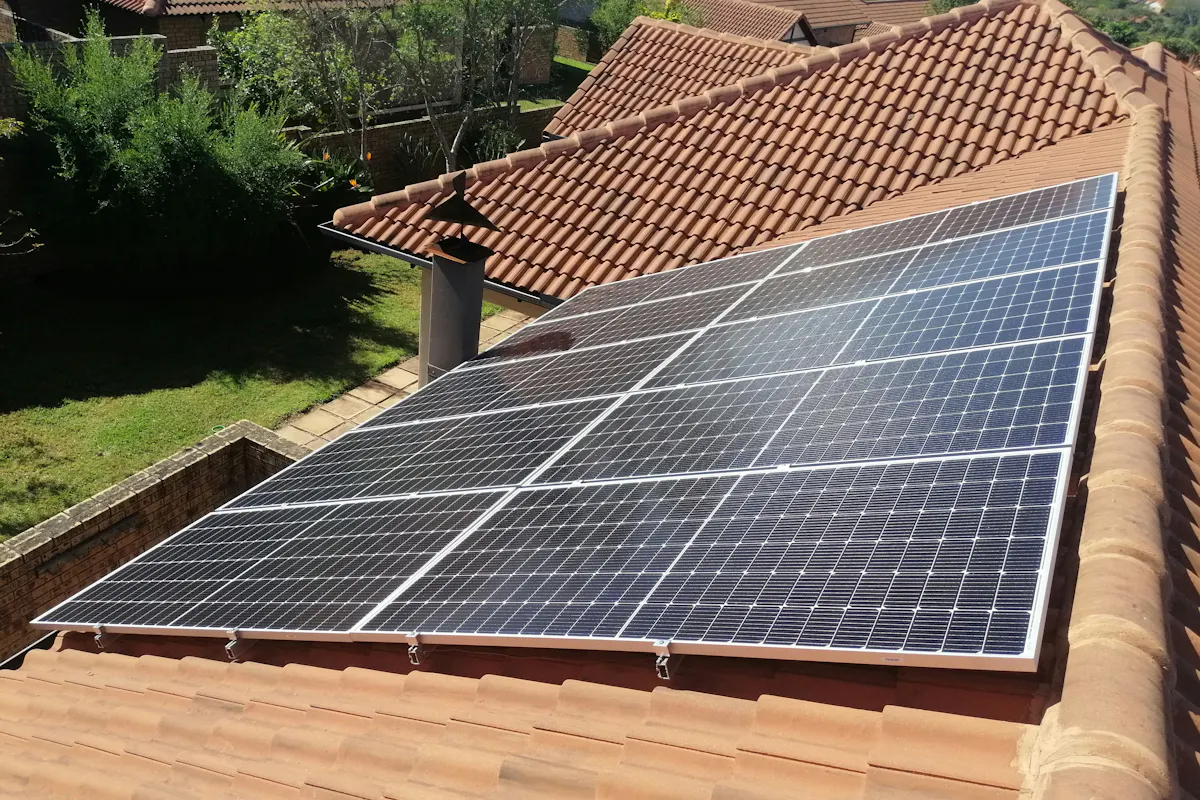
Plug-in solar is a small, self-contained solar system (typically one to three panels) designed for people who can't or don't want to install a traditional rooftop array. Panels can be mounted on a balcony railing, a fence, a patio, or propped against a wall anywhere with decent sun and a nearby outdoor outlet.
The concept is established in Europe, where Germany alone had 4 million systems in use by 2025, by some estimates. The U.S. market is younger but growing, driven by rising electricity rates and new state legislation. Those laws often cap plug-in systems at 1,200 watts. A typical rooftop installation runs 7,000 to 10,000 watts by comparison. Plug-in solar won't power your whole home, but it can make a real dent in your daytime electricity use.
How does plug-in solar work?
A standard kit includes one or two solar panels and a microinverter, the small device that converts the electricity the panels produce into the alternating current (AC) your home runs on. The microinverter connects to a power cord that plugs into a standard 120-volt outdoor outlet.
Once plugged in, your home automatically draws from the solar panels first and the grid second. Any shortfall comes from the grid as usual.
Grid-tied plug-in solar shuts off automatically during a power outage. If you want backup power during outages, you'd need to add some sort of battery storage option.
States that have clear rules may require systems certified to UL 3700, a U.S. safety standard for plug-in solar. It's your best assurance that a product has been tested for circuit safety and the automatic shutoff described above.
Read more: How solar panels work
Pros and cons of plug-in solar
What plug-in solar does well:
- Opens solar access to renters and condo owners.
- Low upfront cost. Smaller kits start around $300 to $500; larger systems run $700 to $1,500.
- DIY-friendly.
- Portable. If you move, you take it with you.
- Payback period is often shorter than rooftop solar.
Where it falls short:
- Limited output. Rooftop solar arrays can offset more of your electric consumption.
- Can’t achieve the large savings of some rooftop arrays.
- Regulatory gray area in many states.
- Payback period ranges from two to seven years depending on location, utility rate, and sun exposure.
Read more: Solar panels pros and cons
See what solar can do for you:
Plug-in solar cost and savings
Smaller kits start around below $500; a larger system runs up to $1,500.
Savings depend heavily on your electricity rate and sun exposure. Bright Saver, a pioneer in US balcony solar provides a savings estimator based on ZIP code and system size. Depending on size. For my ZIP code in Michigan, it estimated savings of about $40 to $100 per year. In places with more expensive electricity. In areas with more expensive electricity (like Fresno, California), it estimated savings of about $95 to $235. Depending on how much electricity rates rise in the future, that could result in several thousands of dollars in savings. PVWatts, a solar calculator from the National Laboratory of the Rockies, can give you an estimate, too.
If you own your home and have a roof that works for solar, a well-designed system of rooftop solar panels will almost always deliver substantially higher long-term savings. Plug-in solar is a practical option for people who won’t benefit from rooftop solar, but not a replacement for it.
Where is balcony solar allowed?
As of this writing, these states have passed laws explicitly allowing plug-in solar without standard utility interconnection approval (most cap systems at 1,200 watts).
- Colorado
- Connecticut
- New Hampshire
- New Jersey
- Maine
- Maryland
- Utah
- Vermont
- Virginia
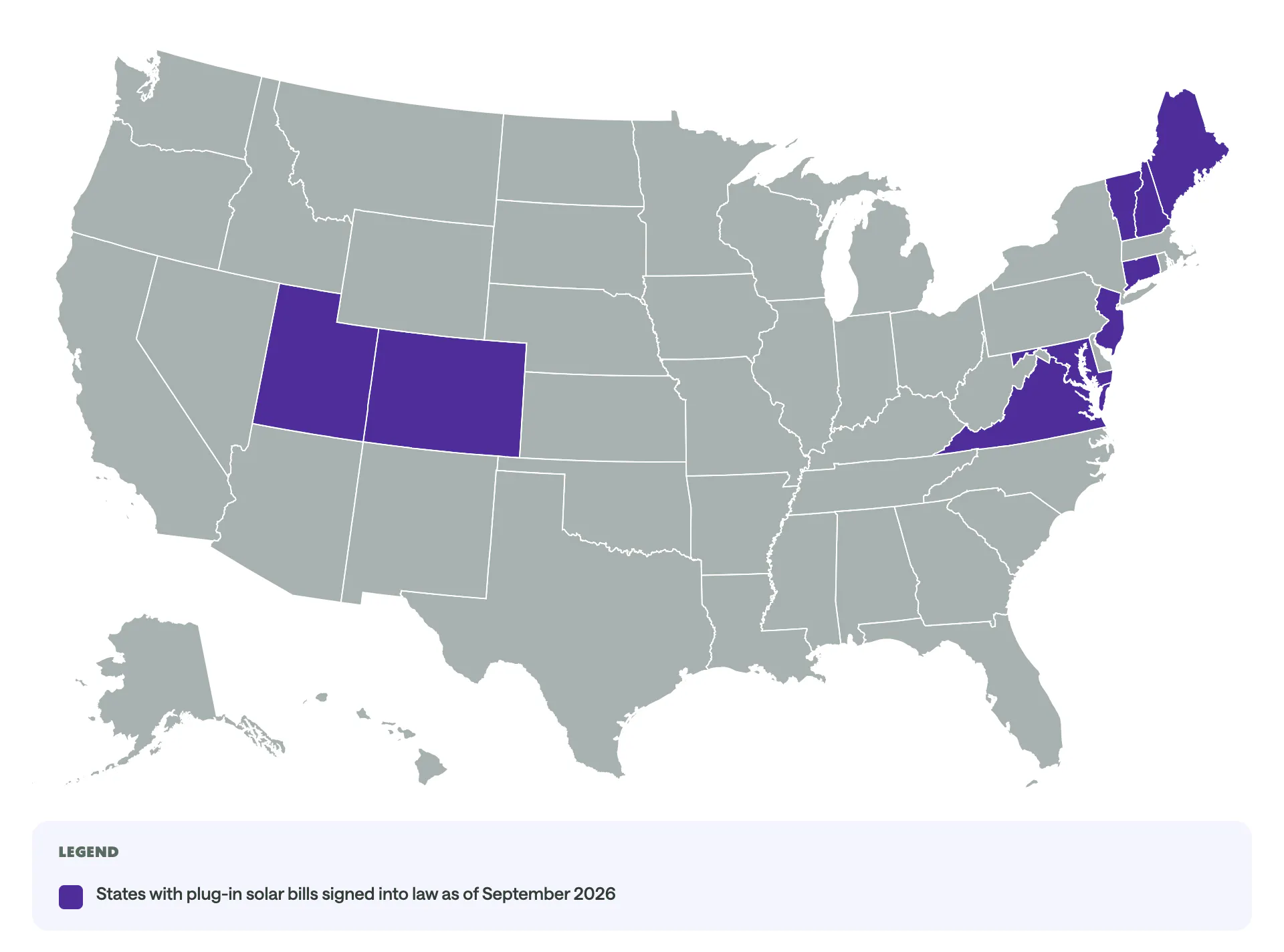
Several more states have legislation actively moving. The landscape is changing quickly, so check your state's current status before purchasing.
Because plug-in solar is a new-ish technology in the United States, state laws enabling the technology usually aren’t overturning a ban, just clarify the rules to make explicit what’s allowed. That means much of the country is operating under a sometimes confusing lack of clarity. Wherever you live, in a state with or without clarifying legislation, make sure you’re following the rules laid out by your utility, your state, and even your insurance company.
Two other factors matter beyond state law:
Your utility. Even where state law is permissive, your utility company may have its own rules. It's worth a direct check before you install.
Your HOA. Some state laws protect residents from HOA restrictions on plug-in solar; others don't. If you're in an HOA, review your governing documents and verify whether your state's law addresses this.
See what solar can do for you:
Frequently asked questions
How does plug-in solar work?
Plug-in solar panels connect to a microinverter, which converts their output into household AC electricity and delivers it through a standard wall outlet. Your home draws from the panels first and the grid second, reducing how much electricity you pull from your utility.
Is plug-in solar worth it?
It depends on your alternatives. For renters and condo residents who can't access rooftop solar, a plug-in system can deliver meaningful savings at a low upfront cost. For homeowners with a suitable roof, a full rooftop solar installation will typically deliver much greater long-term value. Your electricity rate, sun exposure, and where you mount the panels all affect the outcome.
Is plug-in solar good for renters?
It can be. In states with renter protections built into their plug-in solar laws, like Colorado and New Jersey, landlords generally can't block a compliant installation. In other states, you may need permission. Check your state's rules and your lease before buying.
Do you need a permit for plug-in solar?
In states with enabling legislation, certified systems under the wattage cap typically don't require a permit or professional installation. In states without those laws, traditional permitting requirements may still apply. Check your state's current rules before you proceed.
Will plug-in solar work during a power outage?
No. Grid-tied plug-in solar shuts off automatically during outages to protect utility workers making repairs. To use solar power during an outage, you'd need a separate battery.
Disclaimer: This content is for educational purposes only. Palmetto does not provide tax, legal, or accounting advice. Please consult your own tax, legal, and accounting advisors.