Small-scale solar generation has grown sharply in a decade, EIA reports
Last edited
Author
Andrew Blok
Electrification and Solar Writer and Editor

What happened?
The U.S. Energy Information Administration (EIA) reported on October 16, 2026, that electricity from small-scale solar has risen from an estimated 18,812 gigawatt-hours (GWh) to 92,979 GWh over the past decade. That final amount is enough electricity to power more than 1.8 million homes for a year. (Small-scale means systems under 1 megawatt, a category that includes all residential rooftop solar.)
According to EIA, California, Arizona, Texas, and Florida generate the most, with New York fifth. California alone accounted for 37% of the 2025 total.
Separately, the Solar Energy Industries Association (SEIA), an industry trade group, says the U.S. passed 6 million solar installations in 2026, about two years after reaching 5 million. SEIA reports that 97% of installations are on residential rooftops.
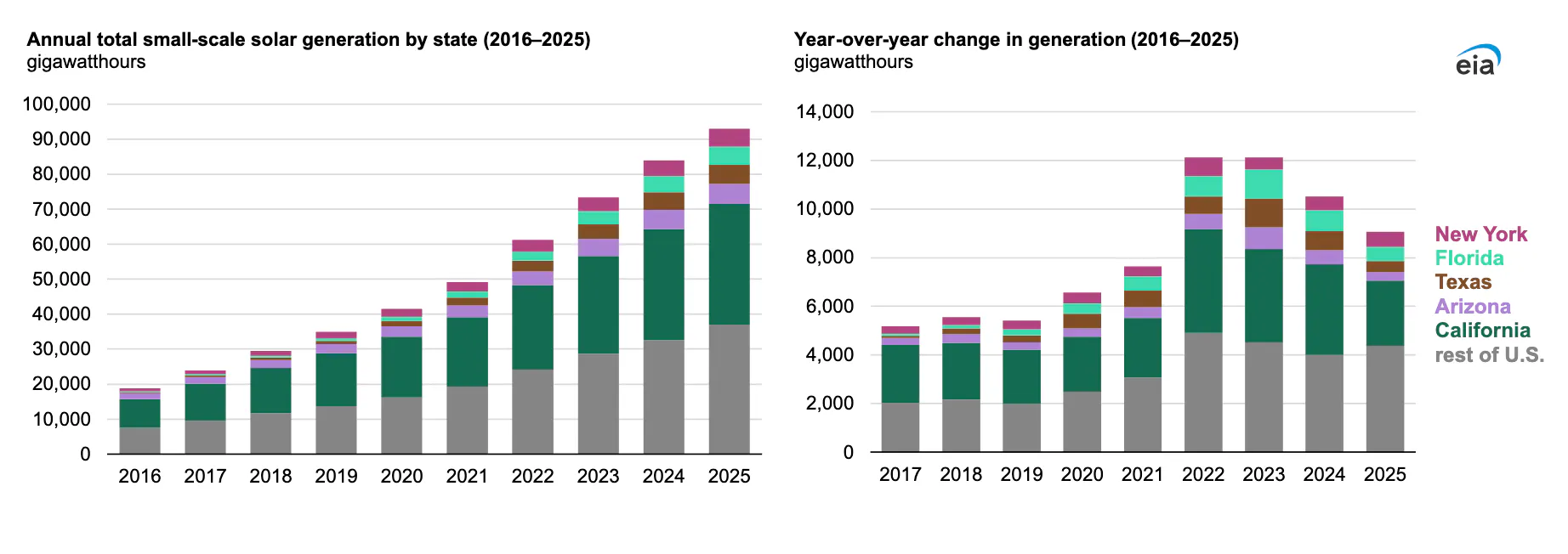
Screenshot from U.S. EIA
What it could mean for your home
The figures show that rooftop solar is firmly established in the mainstream, and is no longer a niche product. Millions of people have turned to home solar panels to take the sting out of high electric bills and, when paired with backup battery storage, to navigate increasing power outages.
Research shows that the promise of energy bill savings is the largest motivator for most people going solar. With energy affordability all over the news, it’s possible more Americans will turn to solar panels to tackle rising costs, even as residential solar is slated to step back after the loss of key federal incentives for homeowners.
What you can do next
Learn more about home solar panels if you’re interested in what they could do for your home.
For some households, the upfront price of buying a system remains a hurdle. A solar lease removes that barrier, swapping the upfront cost of purchase and installation for predictable monthly payments that cover the cost of the equipment, installation, maintenance, monitoring, and most repairs. Leases, like the Palmetto Energy Plan, can expand access to solar’s benefits to more people.
Whether a lease lowers your total energy spending depends (like it does for all solar installations) on your electricity usage, utility rates, and lease terms.
Read more: Solar leasing pros and cons and Solar leasing vs. buying
If you're curious whether solar makes sense for your home, learn more about Palmetto's solar offerings or get a free quote today.
See what solar can do for you:
Disclaimer: This content is for educational purposes only. Palmetto does not provide tax, legal, or accounting advice. Please consult your own tax, legal, and accounting advisors.