Power Outages Are Getting Longer in the US, Thanks to Extreme Weather
Last edited
Author
Andrew Blok
Electrification and Solar Writer and Editor
Editor
Andrew Giermak
Solar and Electrification Writer and Editor
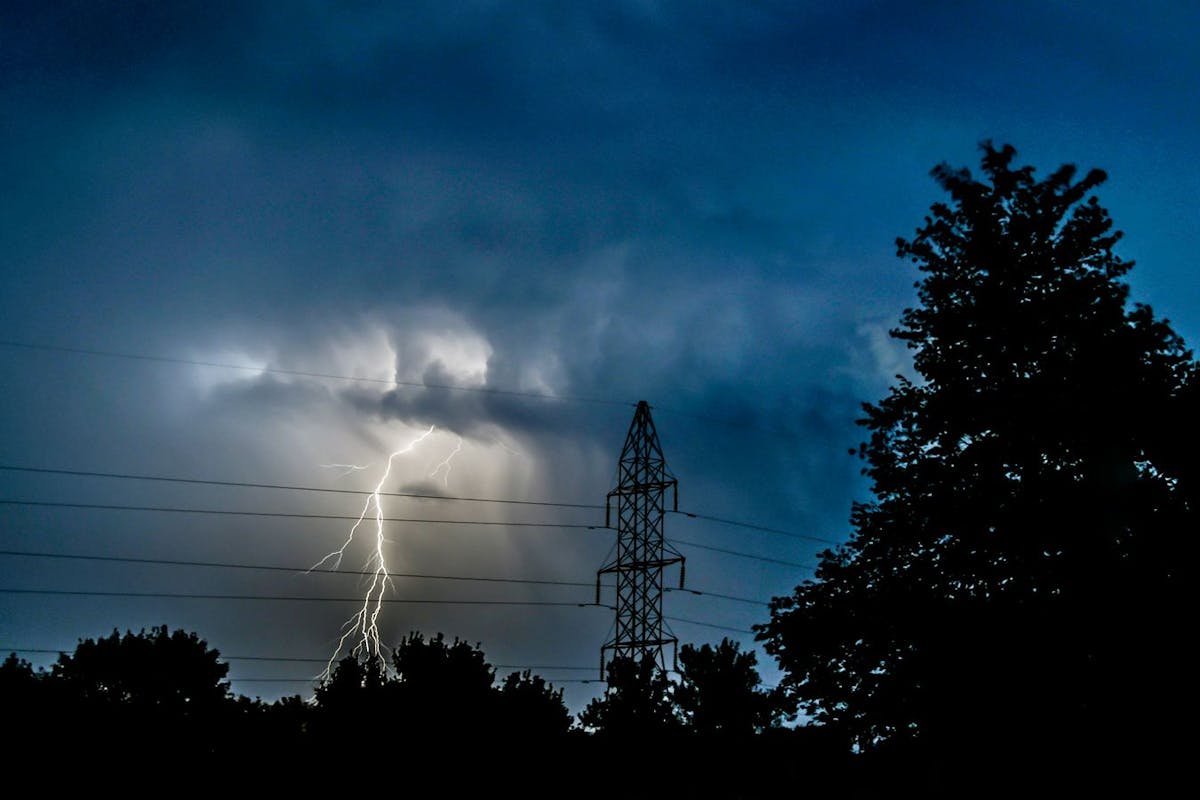
From rising demand to aging infrastructure, there’s a lot of stress on the grid right now. One challenge — extreme weather and natural disasters — is leading to longer outages across the country.
That’s according to a new survey, conducted by J.D. Power and Associates, asking utility customers about their experience with service interruptions this year. Those findings are backed up by data from the US Energy Information Administration, which reveal the country saw its highest level of outages in a decade.
See how much you can save with home energy changes
The story on outages
According to the results, 45% of Americans experienced an outage in the first half of 2025, and about half of those were due to extreme weather. Large weather events and other disasters (like wildfires) tend to lead to longer outages, and the average length of the longest outage has grown over the years. Halfway through 2025, the longest outage reported averaged 12.8 hours, up from 8.1 hours in 2022. In the South, the longest outage averaged 18.2 hours long.
In the South, extreme weather caused significant and lengthy outages. When extreme weather caused outages, they averaged 95.2 hours, according to the survey. In the West, wildfires and wildfire prevention disrupted the power supply. Four percent of people in the West experienced an outage due to fire, and 6% had their power interrupted due to a utility proactively cutting the power to avoid sparking a fire.
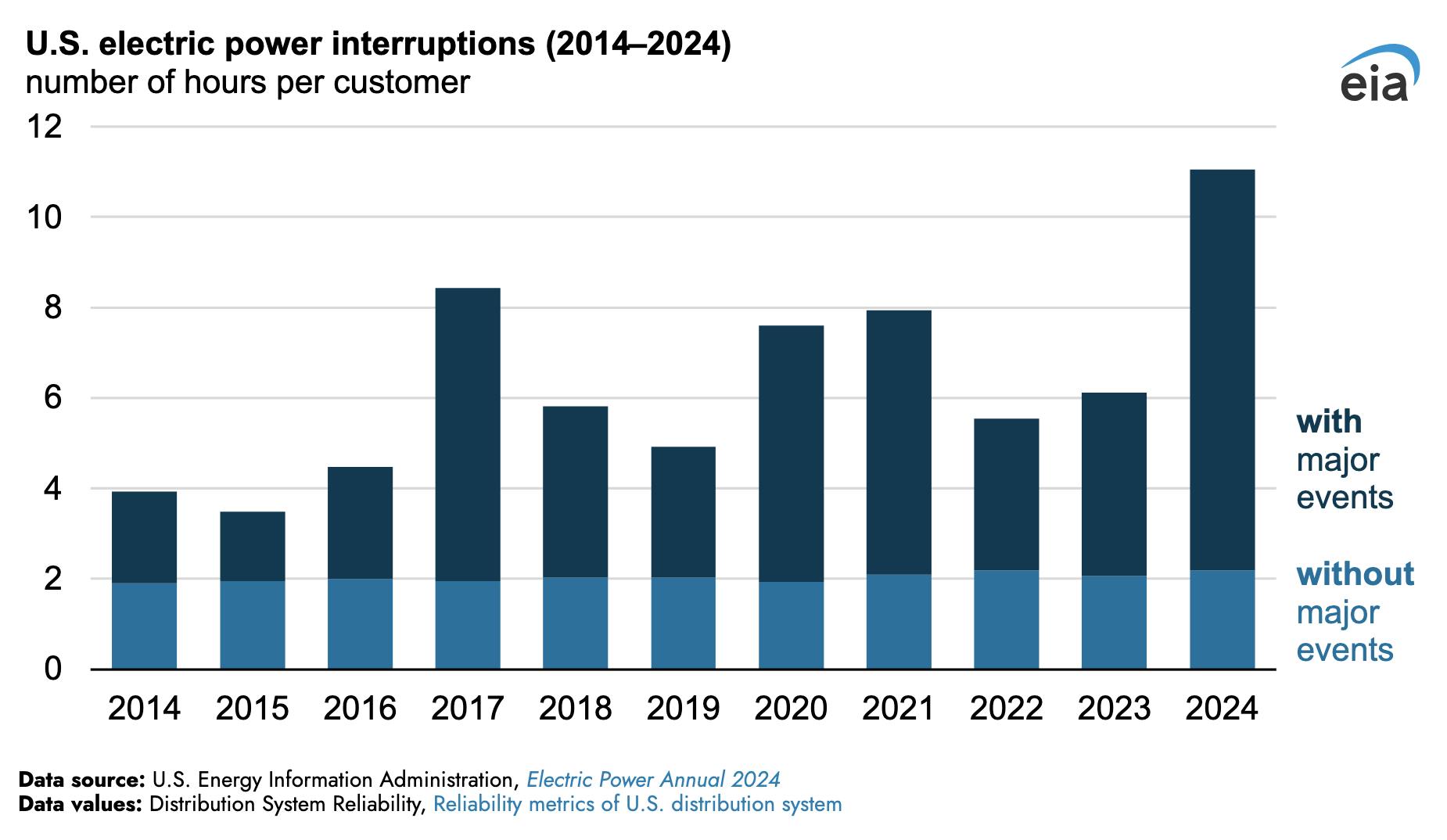
Newly released data from the US Energy Information Administration shows blackouts in 2024 (the most recent year for which there’s complete data) were at their highest levels in the last decade. There were more than 10 hours of outages per utility customer in 2024, thanks largely to powerful and damaging storms, like Hurricanes Beryl, Helene, and Milton. (Those storms accounted for 80% of the total hours without power.)
Dealing with outages
Whether it’s for a few minutes or a few hours, a power outage is at least annoying and at worst downright dangerous. Luckily, there are ways to lessen the burden of a blackout.
Solar and at-home energy storage can help get you through with clean, reliable power as long as the sun’s shining.
A home battery may not power your whole home — that depends on the number and size of batteries you have installed and how much power your home uses — but can power essentials, like lights, a refrigerator, and your internet connection. Compared to other backup options, batteries have the advantage of operating quietly and cleanly. When paired with solar panels, they can recharge when the sun rises, keeping your phone and laptop charged through even the longest outage.
See what solar and storage can do for you with a free quote from Palmetto and expert guidance on what's best for your home.
See how much you can save with home energy changes
Frequently asked questions
Will solar panels work in a blackout?
With a backup battery, solar panels will keep working in a blackout. Without a backup battery that can temporarily separate you from the grid, solar panels shut down during an outage to protect themselves and utility workers.
How long can a backup battery power my house in a blackout?
That depends on the size of your battery and how much of your home you want to back up. Batteries are typically capable of powering emergency loads, like lighting, internet, and refrigerators. Palmetto’s expert advisors will give you the straight answer on how a battery fits your needs, even if the answer is that it doesn’t.


