Electric Furnace Maintenance and Repair: What to Do
Last edited
Author
Andrew Blok
Electrification and Solar Writer and Editor
Electric furnaces run quietly, require no gas line, and are mechanically simple compared to many heating systems. But simple doesn't mean maintenance-free. Components wear out, filters clog, and parts eventually fail — and how you care for the system affects how long it lasts and what it costs you.
With routine care, electric furnaces typically last 20 to 30 years, longer than most gas furnaces. Here's what regular upkeep looks like, what tends to break, and when to call a professional.
See how much you can save with a new HVAC system from Palmetto
Electric furnace maintenance
Here are the regular tasks that can keep your furnace running well.
Change the air filter regularly
This is the most important thing you can do. A clogged filter restricts airflow and forces the system to work harder, which puts extra strain on the blower motor and heating elements over time. Replace the air filter every one to three months depending on filter type and household conditions — more frequently if you have pets or people with allergies at home.
Schedule an annual professional inspection
In the early fall before heating season have a licensed HVAC technician inspect the system. A pre-season checkup catches problems before they become mid-winter emergencies, when appointments are harder to get and emergency rates may apply.
During a tune-up, a technician will typically inspect and test heating elements, check the sequencer (the component that staggers elements to prevent electrical overload), test safety switches and controls, service the blower motor, and verify airflow and duct integrity.
Keep vents and the unit area clear
Make sure supply and return vents throughout the home are unobstructed — furniture, rugs, and drapes all reduce system efficiency. Avoid storing items near the furnace unit itself, which needs adequate airflow around it.
Check your thermostat
If the system runs constantly or can't reach your set temperature, the problem may be a thermostat calibration issue rather than a furnace failure. A programmable or smart thermostat can also help you manage energy use more efficiently throughout the season.
Electric furnace repair
Electric furnaces have no burners, heat exchangers, or gas valves — fewer components means fewer things to go wrong. But several parts can fail over time.
Heating element failure
The heating elements (also called resistance coils) are what produce heat. Most units have multiple elements working in sequence. When one fails, the furnace may still run but won't heat adequately. A burned-out element is one of the most common electric furnace repairs — not a DIY job due to high-voltage wiring, but generally straightforward for a technician.
Sequencer problems
The sequencer stages the heating elements to prevent them from drawing power simultaneously, which would trip a breaker. A faulty sequencer can cause irregular heating, short cycling (the furnace switching on and off too quickly), or elements that won't activate at all.
Blower motor issues
The blower motor circulates heated air through your ductwork. Signs of trouble include unusual noise, weak airflow at vents, or the furnace running without warm air reaching the living space. Sometimes a motor just needs lubrication; other times it requires replacement.
Tripped breakers and electrical issues
If your furnace stops working, check your electrical panel first — a tripped breaker is sometimes the only culprit. Repeated tripping could be a signal of an underlying electrical problem requiring a technician.
Control board failure
The control board manages the furnace's operating sequence. When it fails, the system may behave erratically, display error codes, or stop working entirely. Control board symptoms can mimic other problems, so proper diagnosis matters before replacing parts.
See how much you can save with a new HVAC system from Palmetto
What electric furnace repairs cost
These are estimates drawn from consumer sources across the internet and will vary based on your region, parts, and contractor. Use them for budgeting guidance, not as a firm quote.
Common repairs and estimated cost ranges:
- Heating element replacement: $100-300
- Sequencer replacement: $150-350
- Blower motor replacement: $300-800
- Control board replacement: $600-1,200
- Labor: most technicians charge $50-150 per hour, with a minimum trip fee
Electric furnace repairs tend to cost less than gas furnace repairs, largely due to the simpler design. That said, if your system is older and facing a major repair, it's worth asking a technician for an honest assessment of whether repair or replacement makes more financial sense.
DIY electric furnace repair and maintenance
Some tasks are reasonable to handle yourself. Others involve 240-volt electrical work and should go to a licensed technician — this is not a situation where a small mistake is easily corrected.
Tasks most homeowners can handle:
- Replacing the air filter
- Clearing vents and registers
- Replacing a thermostat (if you're comfortable with basic wiring)
- Resetting a tripped breaker (if it trips again, call a pro to address the underlying issue)
Tasks that require a licensed HVAC technician:
- Inspecting or replacing heating elements
- Testing or replacing the sequencer
- Blower motor service or replacement
- Control board diagnosis or replacement
- Any work inside the furnace cabinet
- Annual system inspection and tune-up
If you'd rather hand off maintenance entirely, an HVAC care plan can cover routine visits and repairs with predictable monthly costs. Palmetto's Comfort Plan covers regular maintenance and many common repairs when you lease your HVAC system.
Some homeowners with aging electric furnaces also use that moment to evaluate a heat pump — a system that handles both heating and cooling and heats more efficiently than an electric furnace. Ready to explore your options? See what Palmetto's Comfort Plan includes.
See how much you can save with a new HVAC system from Palmetto
Frequently asked questions
How often does an electric furnace need to be serviced? Typical guidance is once a year, ideally in early fall. Change your air filter every one to three months depending on filter type, household conditions, and how much your furnace runs
How long does an electric furnace last? With regular maintenance, electric furnaces typically last 20 to 30 years — generally longer than gas furnaces.
Can I do electric furnace maintenance myself? Filter changes and clearing vents, yes. Anything inside the unit requires a licensed technician.
What are the most common electric furnace problems? Heating element failure, sequencer issues, and blower motor problems are the most frequently reported repairs. Always check for a tripped breaker before assuming the furnace itself has failed.
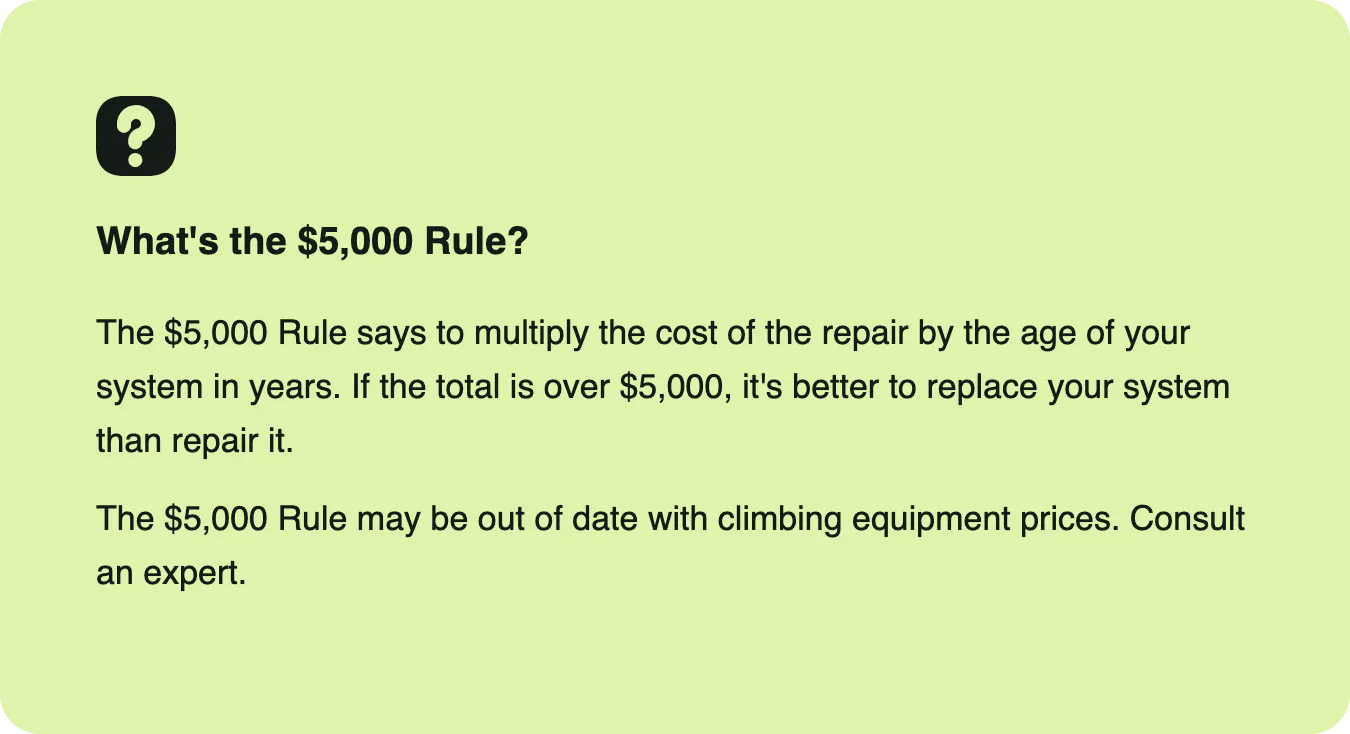
Is it worth repairing an old electric furnace? It depends on the system's age, the repair cost, and overall condition. If the repair cost approaches half the price of a replacement — or the unit is near the end of its expected lifespan — get an expert’s opinion on whether replacement makes more sense.
Disclaimer: This content is for educational purposes only. Palmetto does not provide tax, legal, or accounting advice. Please consult your own tax, legal, and accounting advisors.