Heat Pump vs. Electric Furnace: Which Is Right for Your Home?
Last edited
Author
Andrew Blok
Electrification and Solar Writer and Editor

If you already have an electric furnace and you're wondering whether a heat pump would be a better fit, you're asking the right question. Both systems run on electricity and can effectively heat your home. But they work very differently, and those differences have real consequences for your energy bill and your comfort.
Here's a straightforward look at how the two compare.
See how much you can save with a new HVAC system from Palmetto
How are heat pumps different from electric furnaces?
An electric furnace works through electric resistance heating. Electricity passes through metal coils, the coils get hot, and a blower pushes that warmed air through your ducts. Every unit of electricity the furnace consumes produces roughly one unit of heat.
A heat pump works differently. Rather than generating heat, it moves heat that already exists in the outdoor air into your home, even when it's cold outside. In cooling mode, it runs the process in reverse. The result: a heat pump can deliver two to four units of heat for every one unit of electricity it uses.
That distinction — generating heat versus moving it — is the core reason a heat pump is much more efficient and cheaper to run than an electric furnace.
Further, an electric furnace only heats. For cooling, you need a separate air conditioner. A heat pump handles both in a single system.
Benefits of heat pumps vs. electric furnaces
Here’s how a heat pump stacks up against an electric furnace.
Energy efficiency
Because a heat pump moves heat rather than creates it, it uses significantly less electricity to do the same job. According to the U.S. Department of Energy, today's heat pumps can reduce electricity use for heating by up to 75% compared to electric resistance heating, including electric furnaces. Real-world savings will depend on many factors, like what type of heat pump replaces your electric furnace, how well-sealed your home’s ducting is, and the temperature outside (heat pumps get less efficient at low temperatures, though they typically remain more efficient than electric furnaces).
The underlying reason is the coefficient of performance (COP) — the ratio of heat output to electricity consumed. An electric furnace has a COP of 1: one unit of heat per unit of electricity. A mid-range heat pump in moderate conditions operates at a COP of 2-3. That gap shows up on your monthly bill. A geothermal heat pump is even more efficient.
Heating and cooling in one system
If you have an electric furnace, you likely also have a separate central air conditioner — two systems to maintain and eventually replace. A heat pump replaces both. The upfront cost is often higher than a furnace alone, but when compared against replacing a furnace and an aging AC together, the math can look quite different.
See how much you can save with a new HVAC system from Palmetto
Installation cost
A heat pump system including installation typically runs from around $5,000 to $20,000 or more, depending on home size, system type, and local labor costs. An electric furnace with installation generally runs less. That said, the right comparison for most homeowners may not be furnace vs. heat pump — it might be furnace-plus-AC vs. heat pump.
Operating cost
The efficiency advantage of a heat pump usually translates to lower monthly energy costs, particularly in moderate climates. Because both systems run on electricity, the comparison is direct: the more efficient system costs less to run. The exact difference depends on your home's size, insulation, local electricity rates, and climate.
Lifespan
Electric furnaces tend to last longer — often 20-25 years — partly because they only run during the heating season. Heat pumps typically last 15-20 years since they run year-round for both heating and cooling. It's a reasonable factor when comparing total cost of ownership.
| Heat pump | Electric furnace | |
|---|---|---|
| Energy efficiency | 2-3 (or more) units of heat per unit of electricity | 1 unit of heat per unit of electricity |
| Heating and cooling? | Yes. Both. | No. Heating only |
| Installation costs | Typically higher | Typically lower |
| Operating costs | Often much lower. | Often much higher. |
| Lifespan | 15-20 years | 20-25 years |
What about cold weather?
For years, the conventional wisdom was that heat pumps struggled in very cold climates, and for older models, that was often true. Standard heat pumps can lose efficiency as outdoor temperatures drop, sometimes requiring backup resistance heat to maintain comfort.
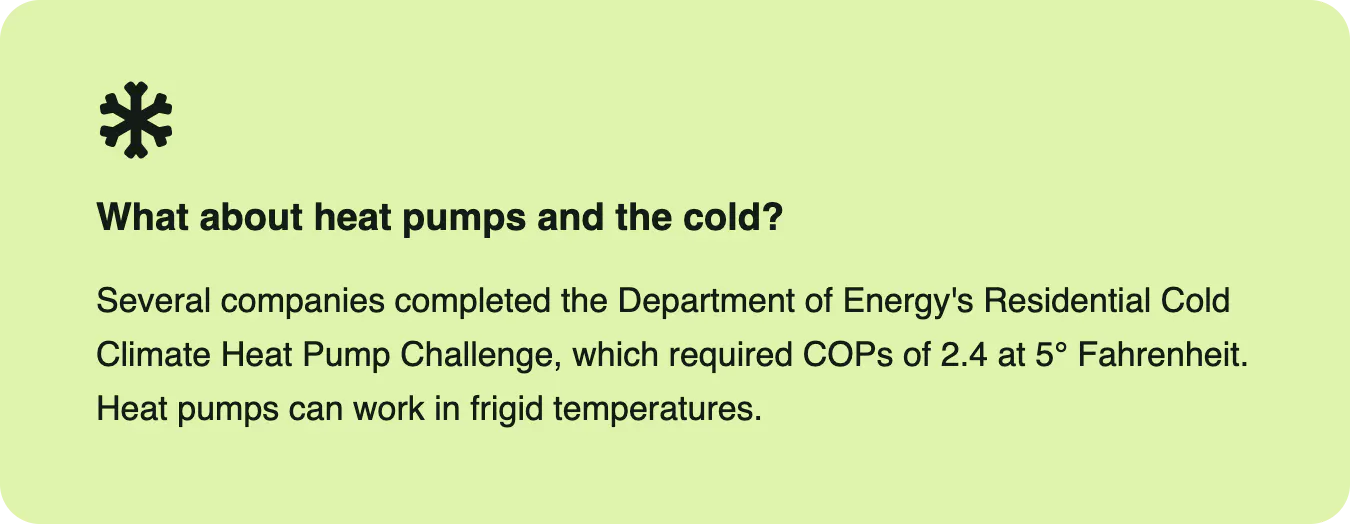
Cold-climate heat pumps change that picture. Following the DOE's Residential Cold Climate Heat Pump Challenge — which involved eight major manufacturers — prototype units were tested operating at temperatures as low as -15°F while still meeting efficiency requirements. These systems use technologies like inverter-driven variable-speed compressors to maintain heating output in conditions that would have taxed older designs.
If you live somewhere with harsh winters, consider a cold-climate heat pump.
Is a heat pump or electric furnace better for me?
For most homes with an electric furnace, a heat pump is worth a serious look. The efficiency advantage is real. The ability to handle heating and cooling in one system simplifies ownership. And the technology has matured to the point where cold-weather performance is no longer the liability it once was.
The right answer still depends on your situation: your climate, your existing ductwork, whether your AC also needs replacing, and your budget for upfront vs. ongoing costs. A heat pump isn't the right fit for every home, but for many homeowners running an electric furnace, it's likely to cost less to operate and offer more year-round utility.
If you want to understand what an upgrade might look like for your home, Palmetto's Comfort Plan offers a way to get a new, energy-efficient heat pump with no large upfront purchase cost, with maintenance and service included. Learn more about how leasing your next HVAC system could work for your home.
See how much you can save with a new HVAC system from Palmetto
Frequently asked questions
Can a heat pump replace an electric furnace? Yes. A heat pump can replace an electric furnace and a central air conditioner. Heat pumps provide both heating and cooling in one system.
Is a heat pump cheaper to run than an electric furnace? In most cases, yes. Heat pumps use significantly less electricity than electric furnaces to produce the same amount of heat, which typically means lower monthly energy bills. The actual difference depends on your home size, insulation, climate, and local electricity rates.
Do heat pumps work in cold climates? Modern cold-climate heat pumps are designed to operate efficiently even in very cold weather, with some models maintaining high efficiency at temperatures as low as -15°F. Older or standard models may struggle in extreme cold, so if you live in a colder climate, look specifically for units rated for cold-climate performance.
What's the lifespan difference between a heat pump and an electric furnace? Electric furnaces tend to last 20-25 years because they only run during the heating season. Heat pumps typically last 15-20 years since they operate year-round. It's worth factoring in when comparing total cost of ownership.
What is a heat pump lease? A heat pump lease lets you get a new heat pump installed with no large upfront cost, paying a predictable monthly amount instead that covers the equipment, installation, and common repair and maintenance needs. It can make an upgrade more accessible if purchase price is the main barrier.
Disclaimer: This content is for educational purposes only. Palmetto does not provide tax, legal, or accounting advice. Please consult your own tax, legal, and accounting advisors.