Geothermal Heat Pump Installation: Cost, Process, and What to Expect
Last edited
Author
Andrew Blok
Electrification and Solar Writer and Editor
If you're replacing an aging heating and cooling system and wondering whether geothermal is worth the jump, you're asking the right question. Geothermal heat pumps are more efficient than any conventional HVAC system, but they cost significantly more to install and involve a more complex process than a standard swap.
This guide covers how installation works, what it realistically costs, and how to know whether it's a smart fit for your home and budget.
See how much you can save with a new HVAC system from Palmetto
What is a geothermal heat pump?
A geothermal heat pump moves heat between your home and the ground beneath it, rather than generating heat by burning fuel or extracting it from outdoor air, like an air source heat pump. Because the ground stays at a stable temperature year-round, these systems deliver consistent, efficient heating and cooling regardless of what's happening outside.
Geothermal heat pump installation process
Installing a geothermal system is a bigger project than installing a conventional heat pump or furnace. It involves both indoor work (the heat pump unit itself) and outdoor ground work (the loop system), and it typically takes one to three weeks depending on loop type and site conditions.
Site assessment and system design
Before any digging begins, a geothermal installer evaluates your property. They'll assess your lot size and soil conditions, run a heat loss calculation to determine the right system capacity, and decide which type of ground loop makes sense for your home.
Choosing a loop type
The ground loop is the defining feature of a geothermal installation. It's a network of pipes buried underground that circulates fluid to exchange heat with the earth. There are three main configurations:
- Horizontal loops are laid in trenches roughly five to six feet deep. They require more land (typically 1,200 to 2,000 square feet for an average home) but are generally less expensive to install because trenching costs less than drilling.
- Vertical loops are installed by drilling boreholes 150 to 400 feet deep. They require far less surface area, making them suitable for smaller lots, but the drilling adds significant cost.
- Pond or lake loops are an option if your property has a suitable body of water nearby. Pipes are coiled and submerged rather than buried, making this the least expensive option where it applies.
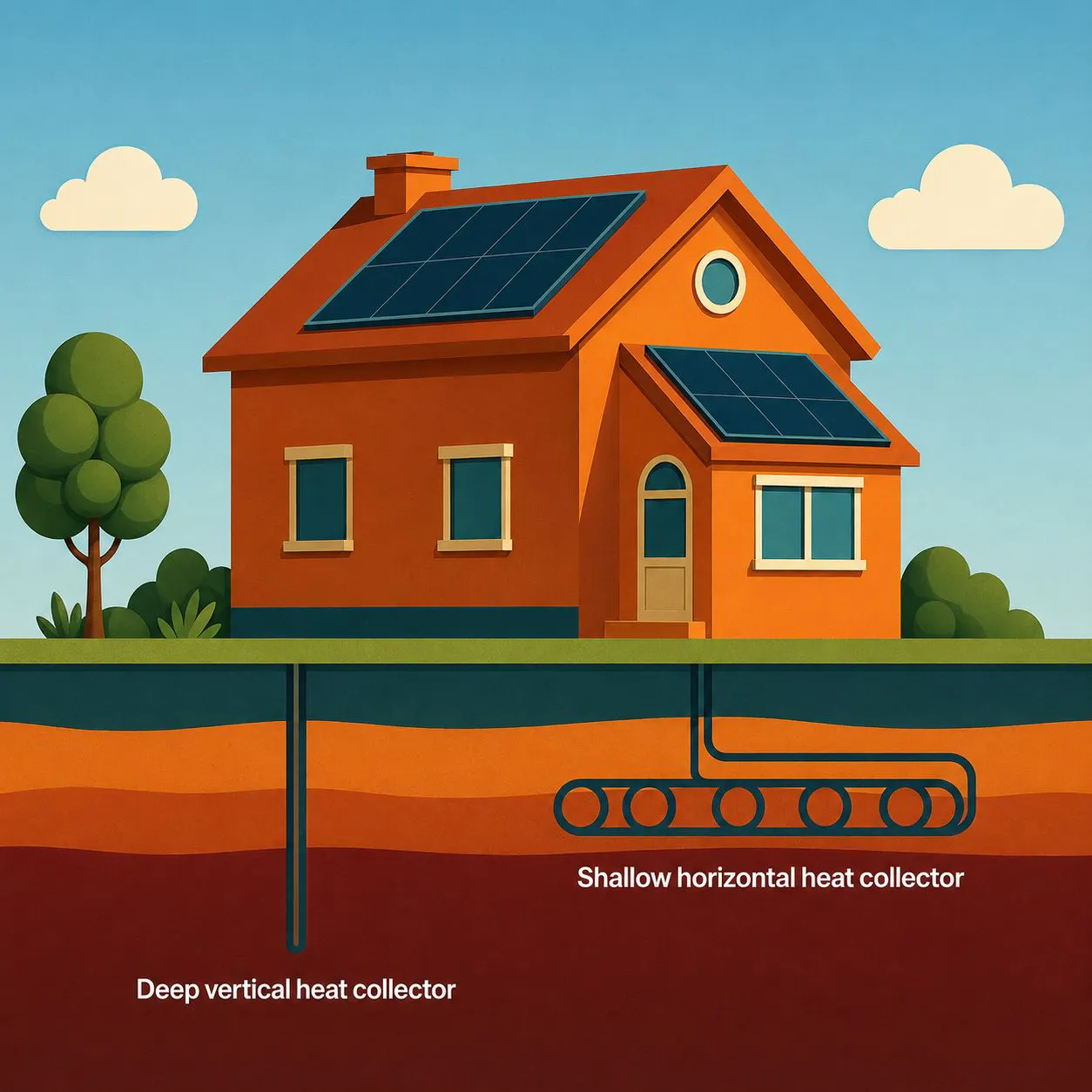
Your lot size and soil type will largely determine which configuration is available to you, and that choice has a major impact on total cost.
Excavation or drilling
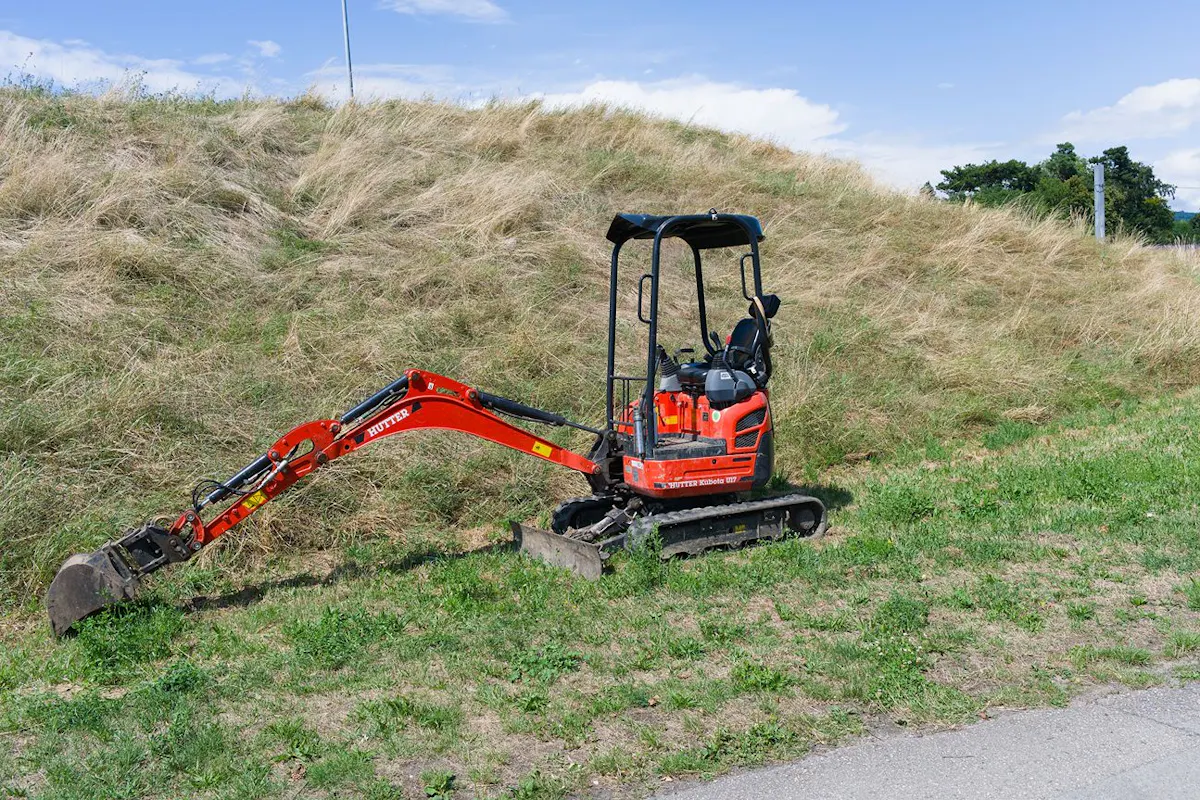
This is the most disruptive phase. Horizontal loop installations require a backhoe or trencher to open long, wide trenches across your yard. Vertical installations involve a drilling rig on your property for several days. Most yards are restored reasonably well after the work is complete, though full regrowth can take a season.
Loop installation and burial
Once the ground is opened, the loop pipes are placed, connected, and pressure-tested for leaks. The circulating fluid (often a water-and-antifreeze mix) is added before the trenches or boreholes are sealed.
Indoor unit installation
With the loop in the ground, the indoor heat pump unit is installed and connected to your existing ductwork. If your home has no ductwork, you'll need to budget for that addition or explore ductless distribution options.
System commissioning
The installer connects everything, tests the system's performance, and confirms the loop fluid is circulating properly. Any smart thermostat integration or zoning setup is configured at this stage.
How long does it take and how disruptive is it?
Most installations take one to three weeks from ground-breaking to commissioning. Horizontal loop projects can sometimes finish on the shorter end; vertical drilling adds time, especially if crews are in demand. Expect your yard to look rough until it recovers. Some dust, noise, and equipment traffic are normal parts of the process.
See how much you can save with a new HVAC system from Palmetto
Geothermal heat pump installation cost
Geothermal systems cost significantly more to install than any other residential HVAC option. The wide cost range reflects real differences in loop type, home size, soil conditions, and regional labor rates.
Typical installed costs for residential geothermal heat pumps fall in the range of $18,000 to $50,000 for most homes. Simpler projects (horizontal loops, smaller homes, favorable soil) land closer to the lower end. Larger homes, vertical drilling, or challenging conditions can push costs above that.
Breaking it down:
- Equipment (the indoor heat pump unit): approximately $3,500 to $14,000, depending on brand, model, and capacity.
- Ground loop installation: roughly $10,000 to $25,000 or more, depending on loop type and site conditions. The loop typically accounts for about 40 to 50 percent of total project cost.
- Ductwork modifications (if needed): $1,400 to $5,600
- Labor and other costs: varies by region
Based on a survey of online consumer sources, horizontal loop systems tend to run $12,000 to $30,000 installed. Vertical loop systems typically run $20,000 to $45,000 or more.
What about the federal tax credit?
A 30% federal tax credit (Section 25D) previously covered geothermal heat pump installations, but ended for systems installed after 2025.
State and utility rebate programs may be available in some areas. Check with your installer, utility, of your state energy office for available programs.
Geothermal operating costs
Geothermal systems operate at a Coefficient of Performance (COP) of 3.0 to 5.0, meaning they deliver three to five units of heating or cooling energy for every unit of electricity they consume. That’s more efficient than gas furnaces and air source heat pumps.
According to ENERGY STAR, certified geothermal heat pumps use about 61% less energy than a standard model, saving roughly $830 per year on average. Your actual savings will depend on your climate, home size, insulation, and what system you're replacing. Homes switching from oil, propane, or electric resistance heat tend to see the largest reductions. Your cost in real dollars will differ depending on the cost of electricity, your temperature preferences, insulation and much more.
The ground is what keeps efficiency consistent regardless of weather. Unlike air-source systems, which work harder as outdoor temperatures drop, geothermal systems draw from ground that stays between 45 and 75 degrees Fahrenheit year-round. Efficiency doesn't fall on a 5-degree night the way it does for a unit pulling from frigid outdoor air.
Maintenance costs are often modest. The underground loop can last 50 years or more, and the indoor unit typically lasts 20 to 25 years, compared to 15 to 20 for a conventional system.
Budget and space considerations for geothermal heat pumps
Geothermal is not the right fit for every home. Here are two major considerations.
Space requirements
Horizontal loops require meaningful yard space, typically 1,200 to 2,000 square feet for a mid-size home. If your lot is small or heavily landscaped, a horizontal system may not be practical. Vertical loops solve the space problem but cost more to install. If your property has a suitable pond or lake, a water loop can be the most cost-effective path.
Heavily wooded yards, significant slope, or underground obstacles (rock, utilities, septic systems) can complicate or rule out certain loop configurations. A site assessment will catch these issues before you commit.
Budget realities
At $18,000 to $50,000, geothermal is a significant investment. The break-even period against a conventional system is longer than it was a few years ago. In cold climates or for homes replacing oil, propane, or electric resistance heat, the annual savings can still justify the upfront cost over a 15 to 25-year horizon. In mild climates or for homes already on efficient natural gas, the math is tighter.
State and utility incentives, where available, can still make a meaningful difference. Some state programs offer rebates of several thousand dollars. Your installer should be familiar with programs in your area.
Geothermal heat pump leasing
If the upfront cost is the primary barrier, a lease may be a worthwhile option. A heat pump lease swaps the upfront cost of equipment and installation for predictable monthly payments that cover typical maintenance and many repairs.
If you're uncertain whether your home is a good candidate, a site assessment from a certified geothermal installer is the best next step.
Ready to explore whether geothermal or another efficient heating and cooling system makes sense for your home? Learn about the HVAC options available to you.
See how much you can save with a new HVAC system from Palmetto
Frequently asked questions
How long does geothermal heat pump installation take?
Most residential installations take one to three weeks from start to finish. Horizontal loop projects can sometimes wrap up faster; vertical drilling projects often take longer, especially when drilling crews are in high demand.
Is geothermal installation very disruptive?
More so than a standard HVAC replacement. Horizontal loop installation involves trenching your yard with heavy equipment; vertical drilling brings a drill rig onto the property for several days. The indoor work is much less disruptive. Most homeowners find it manageable once they know what to expect.
How much land do you need for a geothermal heat pump?
Horizontal loop systems typically require 1,200 to 2,000 square feet of open yard space for an average-size home. Vertical systems need very little surface area, making them suitable for smaller lots. Homes near a pond or lake may have additional options.
How much can you save on energy bills with a geothermal heat pump?
Savings depend on your climate, home size, insulation, and what you're replacing. Estimated annual savings versus a gas furnace typically run $400 to $900; versus oil or propane, savings can be higher. Versus an air-source heat pump, the range is generally $300 to $700 per year. It's worth asking an installer to model your specific home.
Are there any incentives available for geothermal heat pumps in 2026?
The federal 30% tax credit (Section 25D) expired for systems placed in service after December 31, 2025. State and utility rebate programs remain available in many areas and vary significantly by location. Check with your state energy office and your installer for programs that may apply to your project, and verify current availability before making any financial decisions.
Disclaimer: This content is for educational purposes only. Palmetto does not provide tax, legal, or accounting advice. Please consult your own tax, legal, and accounting advisors.


