The Days Are Getting Longer and Solar Will Shine
Last edited
Author
Andrew Blok
Electrification and Solar Writer and Editor
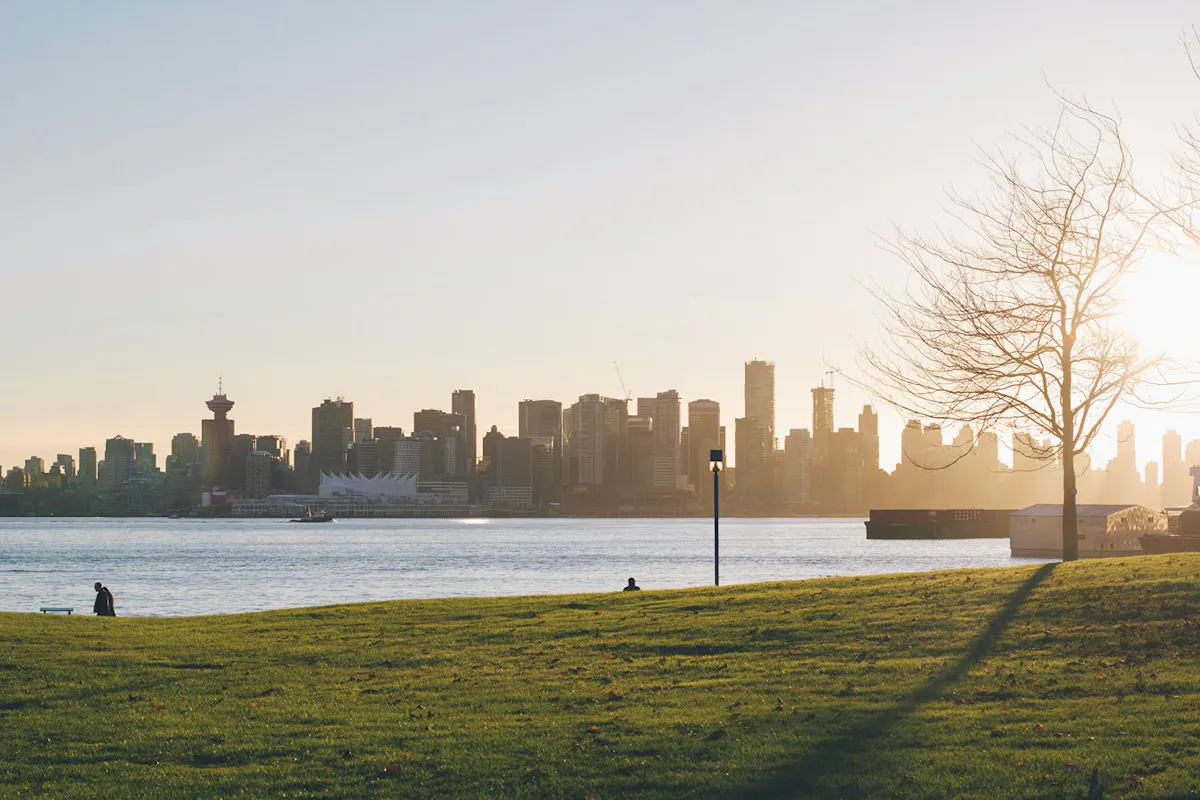
Across the United States, as spring turns to summer, the days are rapidly getting longer. That’s great news for people who love a long summer evening, and it’s great news for people with solar panels. It may go without saying, but the more sunlight, the more electricity solar panels generate.
Understanding this variability, called solar seasonality, can be key to understanding your savings, especially early on in your solar panels’ lifetime.
See what solar can do for you:
How much more daylight do we get in May?
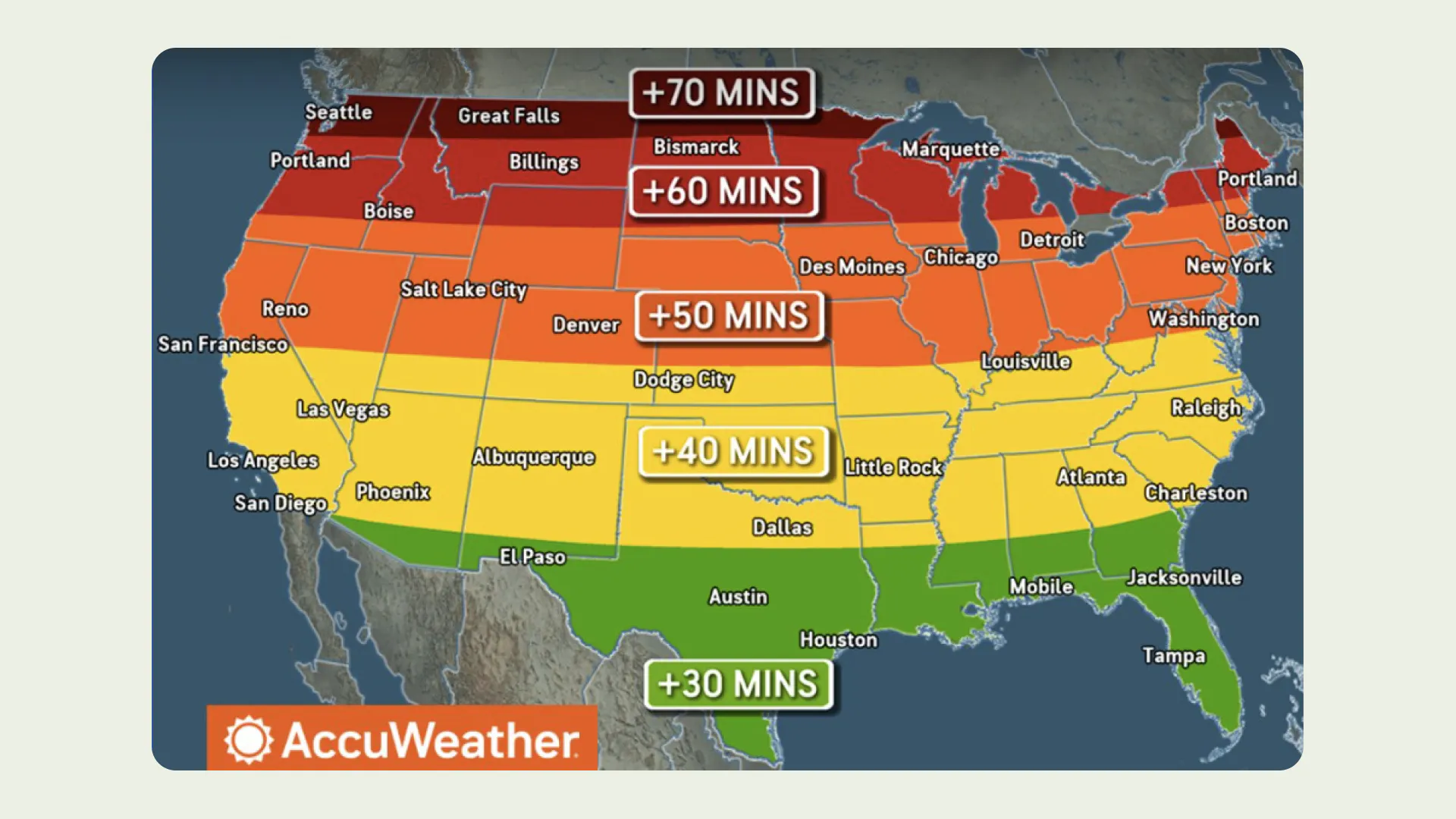
According to recent graphic published by Accuweather, the United States gains anywhere from 30 minutes of daylight in the south to 70 minutes in the north. (This isn’t the biggest month for daylight gained. The northern US gains more than 100 minutes of daylight in March, for example.)
Increasing sunlight and its intensity can be measured using a metric called peak sun hours. The number of peak sun hours varies throughout the year. Take a look at difference between peak sun hours in the United States in March and September.
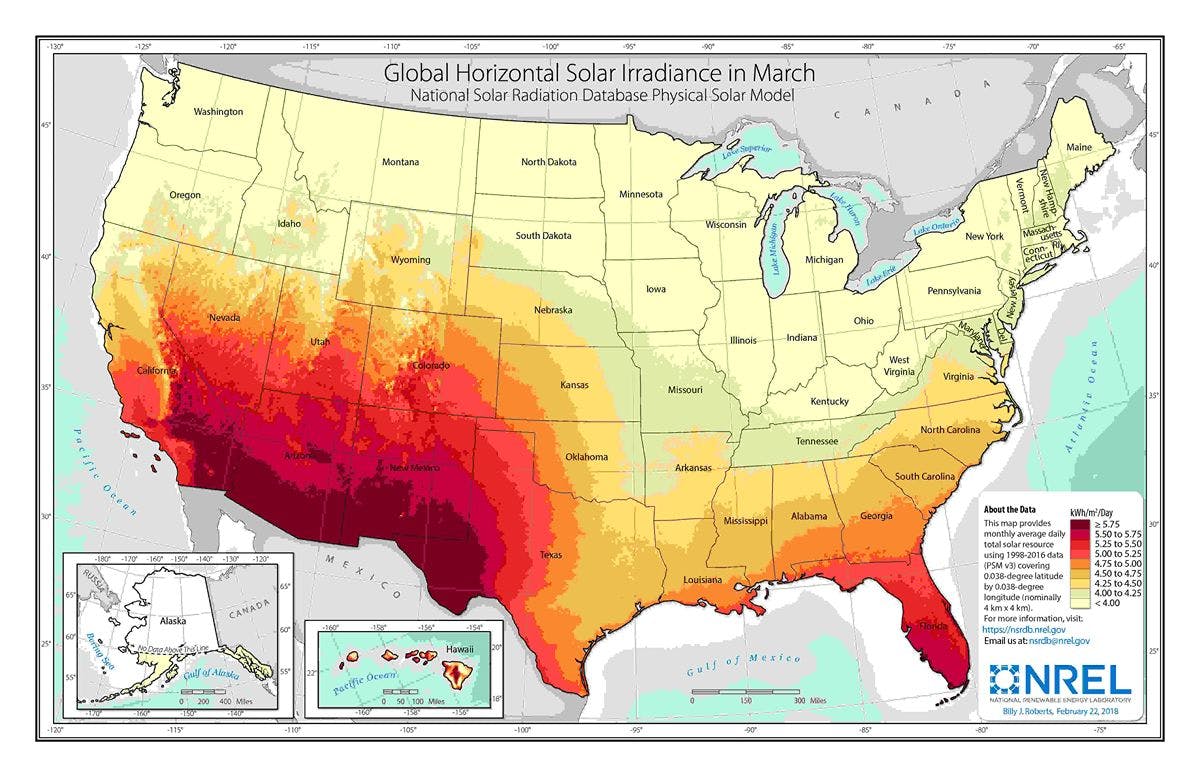
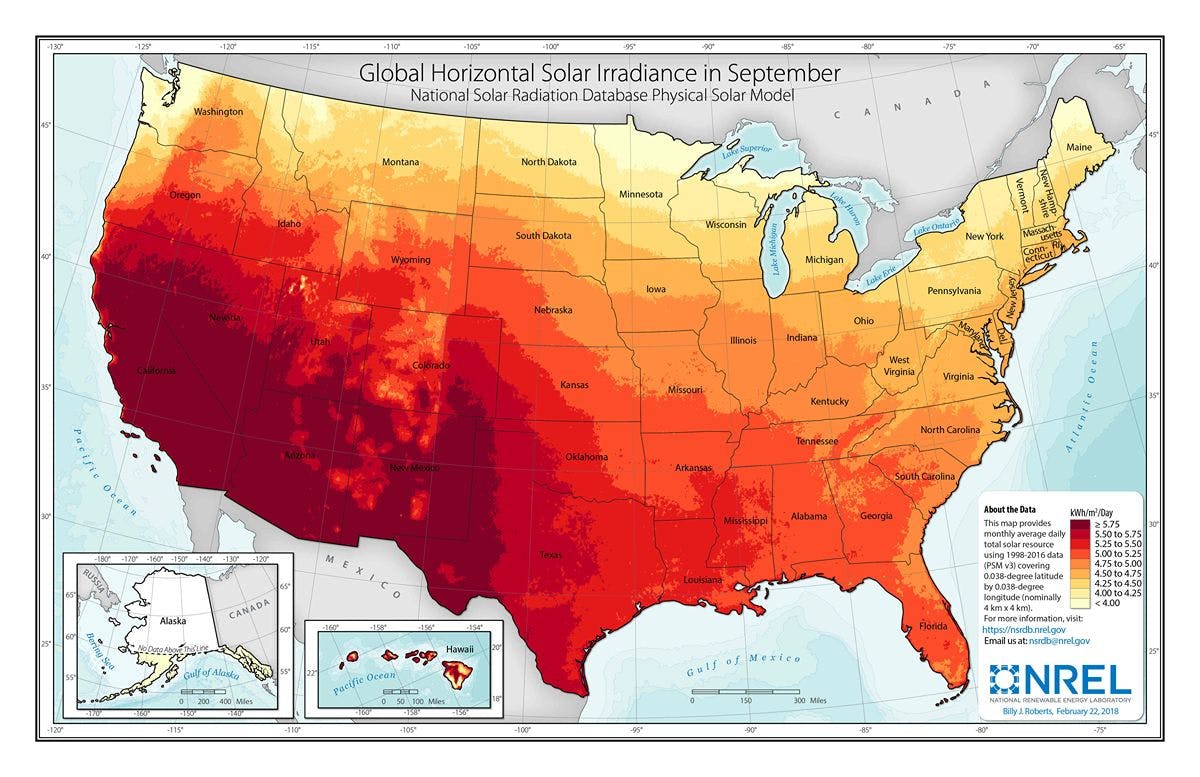
Source: National Laboratory of the Rockies, formerly National Renewable Energy Laboratory
What happens to solar production as days get longer?
More sunlight means more electricity from rooftop panels. Thanks to Palmetto data*, we can get an idea of just how much solar production increases as the days get longer.
The solar panel systems Palmetto monitors produced almost 5% more electricity in April (the most recent month for which we have data) than in March thanks to the changing seasons. They produced nearly 75% more electricity in April than they did in January.
If we look at just one northern state, where the change in daylight is more pronounced, the change is even larger. In Connecticut, the solar systems Palmetto monitors generated nearly 33% more electricity in April than March and 268% more electricity than January.
See what solar can do for you:
Is that a problem for solar panels?
I can hear you saying, “Isn’t this just another way of saying that solar panels are bad in the winter?”
It's unequivocally true that solar panels produce less electricity with less sunlight. That’s why it’s often best to look at solar’s impact on your energy bill over the year.
For example, under net metering and favorable net billing systems, many homeowners can build a bank of bill credits that help offset their electric bills through the less productive winter season. In some areas, like California, solar batteries can help unlock solar savings, even though they increase the overall cost of the system.
Understanding this can go a long way to correctly setting expectations. Systems activated in the fall or winter might deliver lower-than-expected savings. Solar panels activated in the spring or summer might deliver more obvious savings right off the bat. (If you’re considering solar panels for your home, it’s important to understand how solar panels will affect your energy bill before you go solar. Working with a reputable solar company can help.)
The fact that total available sunlight isn’t the only reason solar panels can work is proven by the fact that some northern states are solar leaders. Illinois and New York are both top ten states for solar capacity, according to the Solar Energy Industries Association.
As the days lengthen in those northern states (and the entire northern hemisphere), all those solar panels will be cranking out more and more electricity.
See what solar can do for you:
*Based on aggregate solar production data from Palmetto systems.
Disclaimer: This content is for educational purposes only. Palmetto does not provide tax, legal, or accounting advice. Please consult your own tax, legal, and accounting advisors.


