DIY Mini-Split Heat Pumps: When to Call a Pro
Last edited
Author
Andrew Blok
Electrification and Solar Writer and Editor
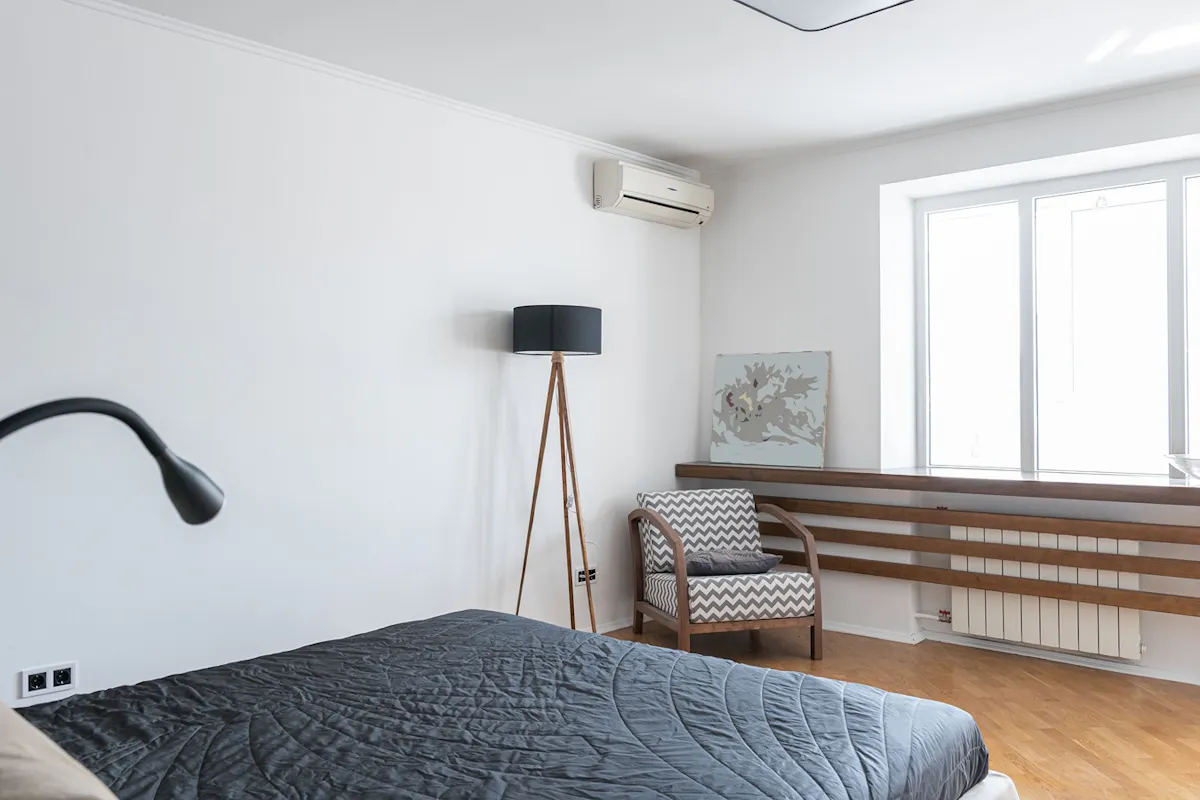
If you've been researching ways to heat and cool a garage, a home office, or a newly finished basement, you've probably come across mini-split heat pumps. And if you're the kind of person who likes to handle things yourself, the next question is almost inevitable: Can I just install one myself?
The short answer depends on what you mean by "DIY" and what you're trying to accomplish. Here's what to know before you buy anything.
See how much you can save with a new HVAC system from Palmetto
Are there DIY mini-split heat pumps?
Yes. A handful of manufacturers have built systems specifically for homeowners who want to skip the HVAC contractor. The most well-known is MRCOOL, whose DIY series uses pre-charged line sets — the refrigerant comes loaded in the lines from the factory, and the company advertises installation with no professional help needed.
That matters because most standard mini-splits require a licensed technician to handle refrigerant. DIY-specific systems sidestep that by sealing the refrigerant in from the factory — so a motivated homeowner with basic tools can often handle the physical installation.
But, when it comes to heat pumps, "DIY-ready" doesn't mean permit-free or complication-free.
What does a DIY mini-split installation actually involve?
Even with a purpose-built system, mini-split installation has steps that aren't all equally approachable.
Physical mounting: The indoor air handler needs to be mounted securely to a wall, usually high up. The outdoor condenser unit needs a stable pad or bracket. You'll drill a hole through your exterior wall to run the line set and electrical connections. This part is manageable for most DIYers.
Electrical work: Mini-splits run on dedicated circuits, often 240 volts. You'll need to run wire from your electrical panel to the outdoor unit and make sure the breaker is sized correctly for the system. This is where things get more technically demanding — and where most jurisdictions require a licensed electrician or a permit, even if the mechanical side qualifies as DIY.
Refrigerant connection: With a purpose-built DIY system, this step is simplified. With a standard mini-split, it requires EPA certification and specialized equipment. Never attempt to handle refrigerant on a standard system without certification — it's both illegal and potentially dangerous.
Permits and inspection: This is the step most people overlook. Even pre-charged, quick-connect systems must meet local mechanical codes, and permit rules differ across the U.S. Some jurisdictions require a licensed contractor for any HVAC work. Skipping permits can create problems when you sell your home, file an insurance claim, or need service down the line.
See how much you can save with a new HVAC system from Palmetto
When are DIY mini-splits a good idea?
A DIY mini-split tends to make the most sense when all of these are true:
- You're conditioning a single space — a room addition, a detached garage, a basement — rather than your whole home
- You've chosen a purpose-built DIY system with pre-charged line sets
- You're comfortable with a moderate home improvement project and have the required tools
- You've checked your local permit requirements and know what's allowed
- The electrical work is within your skill set or you're willing to hire an electrician for that part
For that kind of single-zone application, a DIY system can be a reasonable and cost-effective solution. Mini-split heat pumps are genuinely efficient — no ductwork means no energy lost through leaks.
When should you call in a professional?
For most situations — and almost certainly for whole-home comfort — professional installation is the right call. Here's why.
Multi-zone systems are complex. Running multiple indoor heads from one outdoor unit requires careful load calculations to make sure each zone is sized correctly. An undersized or oversized system won't perform efficiently, and mistakes in multi-zone installation are difficult and expensive to correct.
Standard mini-splits require refrigerant handling. If you're not buying a purpose-built DIY system, you cannot legally handle the refrigerant yourself without EPA certification. That applies to most of the mini-splits sold for residential use.
Most whole-home installations need permits — and a pro to pull them. Many states require a licensed contractor to pull HVAC permits, even if you do some of the work yourself. A professional takes responsibility for code compliance and handles the inspection process.
Electrical work adds risk. In most places, this work requires a licensed electrician regardless of who handles the HVAC side.
Warranty coverage can depend on it. Even MRCOOL — the leading DIY brand — specifies that the warranty applies only to systems installed according to their instructions and in compliance with applicable local codes. A botched installation that's out of code won't be covered.
If you're curious about how a heat pump could improve comfort throughout your home, get a free quote today.
See how much you can save with a new HVAC system from Palmetto
Frequently asked questions
Are DIY mini-splits safe?
A purpose-built DIY system installed correctly, with permits where required and proper electrical work, can be safe. The risks come from skipping steps: unpermitted installations, undersized wiring, improper mounting, or attempting to handle refrigerant without certification.
Do I need a permit to install a mini-split myself?
In most cases, yes — at least for the electrical portion, and often for the mechanical work as well. Permit requirements vary by city and state, so check with your local building department before you start. Skipping permits can affect your homeowner's insurance, your home's resale value, and your ability to get warranty service.
Can I install a mini-split myself without an HVAC license?
For standard mini-splits, no — refrigerant handling requires EPA Section 608 certification, and many states require a licensed contractor regardless. For purpose-built DIY systems, the refrigerant requirement may go away, but the electrical work is still governed by local code.
Can a DIY mini-split heat a whole house?
It's possible to cover a whole home with multiple mini-split units, but a whole-home system involves multi-zone planning, load calculations, and significant electrical work. This is not a typical DIY project, even for someone experienced with home improvement.
What's the difference between a DIY mini-split and a regular mini-split?
The main difference is refrigerant handling. DIY systems like MRCOOL's come with pre-charged line sets, so you don't need EPA certification or specialized equipment to connect them. Standard mini-splits require both. Either way, electrical work and permits still apply.
Disclaimer: This content is for educational purposes only. Palmetto does not provide tax, legal, or accounting advice. Please consult your own tax, legal, and accounting advisors.