Mini-Split Heat Pump Installation: What to Expect and What it Costs
Last edited
Author
Andrew Blok
Electrification and Solar Writer and Editor
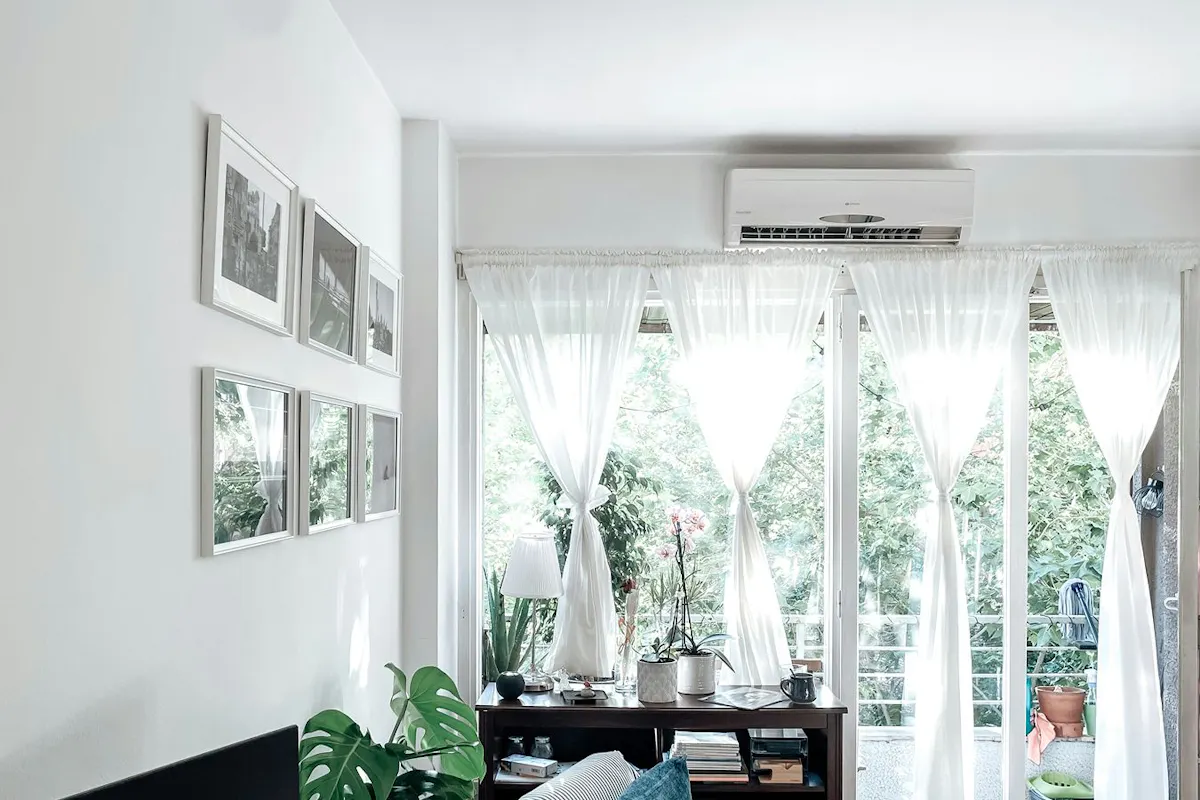
A mini-split heat pump is one of the most flexible and efficient ways to heat and cool your home. No ductwork required, room-by-room control, and efficiency that beats older electric heat systems by a wide margin.
If you're weighing whether to install one, two questions come up fast: How does installation actually work, and how much will it cost? This article walks through both.
See how much you can save with a new HVAC system from Palmetto
Mini-split heat pump installation
A mini-split system has two main components: an outdoor condenser unit and one or more indoor air handlers, connected by a refrigerant line, a condensate drain, and electrical wiring.
Most states require a licensed HVAC contractor for the refrigerant connections and electrical work, and the quality of the installation has a real impact on how well the system performs over time.
Here's how a typical professional installation goes.
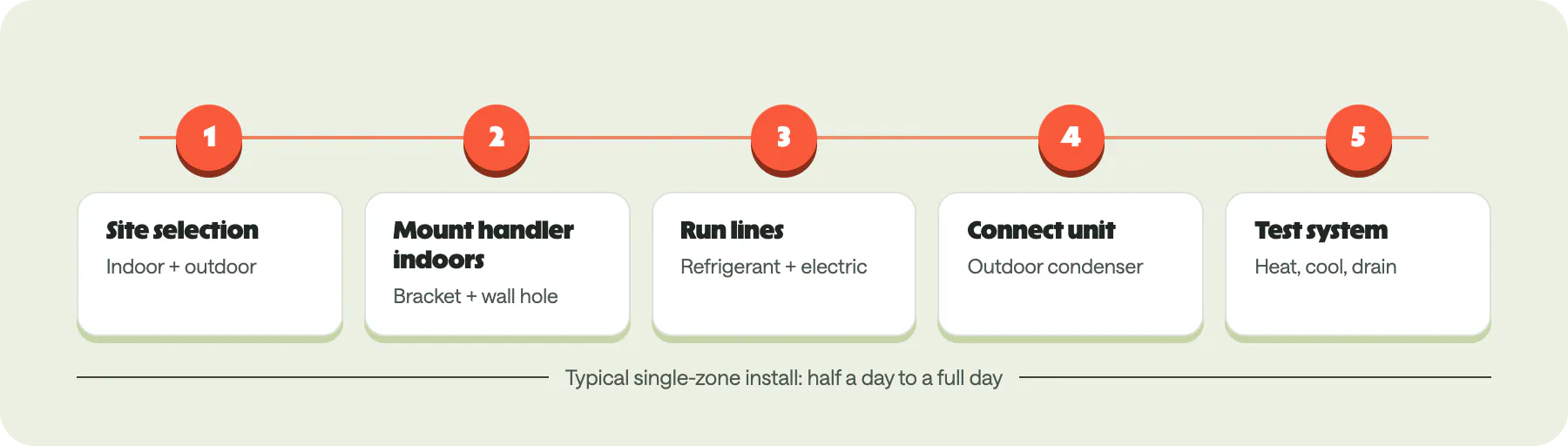
Choosing where everything will go
Before anything is drilled or mounted, the installer determines placement. For each indoor air handler, you want a location that distributes air evenly, avoids direct sunlight (which throws off the unit's temperature sensor), and sits high enough to circulate air across the room. The outdoor condenser needs a level, stable spot on a concrete pad, elevated 6 to 12 inches in cold climates to stay above snow.
Mounting the indoor air handler
The installer locates wall studs and mounts a bracket for the indoor unit, making sure it's level — required for proper drainage of condensate (the water that collects during cooling). A hole is drilled through the exterior wall, usually about 3 inches in diameter, for the refrigerant line, drain line, and control wiring. The air handler snaps onto the bracket and all lines connect before it's secured in place.
Running the refrigerant lines and electrical wiring
The lines run from the indoor unit through the wall and down to the outdoor condenser, typically covered by line-set covers on the outside for a clean look. A dedicated electrical circuit runs from your electrical panel to a disconnect box near the outdoor unit — a safety shutoff that lets power be cut during service. Installing a new disconnect box is standard practice and may be required by local codes.
Connecting the outdoor unit and testing
Once the condenser is secured, the installer connects the refrigerant lines from inside. Handling refrigerant requires specialized equipment and certification, which is one of the main reasons professional installation matters. After everything is connected, the technician runs the system through heating and cooling modes, checks refrigerant pressure, confirms the controls are communicating correctly, and verifies the condensate drain is flowing.
A thorough commissioning test takes time — plan on half a day to a full day for a single-zone installation. Multi-zone systems, long line runs, or complex wall access (brick, stucco, finished walls) can add time and cost.
See how much you can save with a new HVAC system from Palmetto
Mini-split heat pump cost
Mini-split pricing varies based on how many zones you need, the size of the system, the brand, and your local labor market. The table below reflects typical installed costs from multiple industry sources in 2025 and 2026, but your actual quote will depend on your home and region. Always get at least two or three itemized quotes before committing.
| Configuration | Total installed |
|---|---|
| Single zone | $3,000-$8,000 |
| Two to three zones | $6,000-$15,600 |
| Whole-home multi zone | $12,000-$26,000+ |
Ranges reflect typical 2025-2026 U.S. installed costs from multiple industry sources, Actual quotes vary by brand, region, and installation complexity.
Equipment cost
Equipment-only prices generally run from around $700 to $3,500 for a single-zone system. Brand matters here. Established and premium brands run higher than entry-level options but typically offer better warranties, parts availability, and cold-climate performance. If a mini-split will be your primary heating source in a cold winter climate, it's worth investing in a model rated for low-temperature operation — sometimes called a "cold climate" or "hyper-heat" system.
Installation cost
Labor typically adds $1,000 to $3,500 for a single-zone installation. Several things can push that higher: long refrigerant line runs, drilling through masonry or stucco, running new electrical circuits, or hard-to-reach locations. Permits are often required and generally cost $100 to $300 — confirm whether they're included in your quote.
Rebates and incentives worth checking
The High-Efficiency Electric Home Rebate (HEEHR) and Home Owner Managing Energy Savings (HOMES) programs, administered by individual states, offer rebates for energy efficiency upgrades, including efficient heat pumps. Availability varies significantly: some states have active programs, others haven't launched yet. Restrictions on income and fuel . Many utilities also run their own rebate programs, separate from state efforts, which can sometimes be layered on top.
Because availability, funding levels, and eligibility rules change frequently, verify what's currently active in your area before signing a contract.
Mini-split heat pump leasing
One of the biggest hesitations people have about a new mini-split system is the upfront cost. Leasing is one way to approach that differently. With a heat pump lease, you pay a predictable monthly amount rather than a large sum upfront. The lease typically covers equipment and installation, and in many cases most routine maintenance as well — no surprise bills when something needs attention.
The Palmetto Comfort Plan is built around this model. It's worth exploring if you want the benefits of a new, efficient system without the upfront cost of buying one outright. Reach out for a free quote today.
See how much you can save with a new HVAC system from Palmetto
Frequently asked questions
How long does a mini-split installation take?
A single-zone installation in a straightforward location typically takes half a day to a full day. Multi-zone systems or more complex installations can take longer, sometimes two days or more.
Can I install a mini-split myself?
Some brands market DIY kits, but most installations still require a licensed professional for the refrigerant connections and electrical work, which are regulated in most states. DIY mini-split installations may also affect warranty coverage and rebate eligibility. For most homeowners, a licensed contractor is the safer path.
How much does a single-zone mini-split cost?
Typical installed costs run from about $2,500 to $6,000, depending on brand, system capacity, and installation complexity.
How many zones do I need?
That depends on your home's layout and how you use it. A single-zone system works well for one room, an addition, or a space your central system doesn't reach well. A whole-home setup generally requires one zone per area you want to condition independently. An HVAC professional can do a load calculation to help size the system properly.
Is mini-split heat pump leasing a good option?
Leasing makes the most sense when upfront cost is a barrier or when you prefer a predictable monthly expense that includes maintenance coverage.
Disclaimer: This content is for educational purposes only. Palmetto does not provide tax, legal, or accounting advice. Please consult your own tax, legal, and accounting advisors.