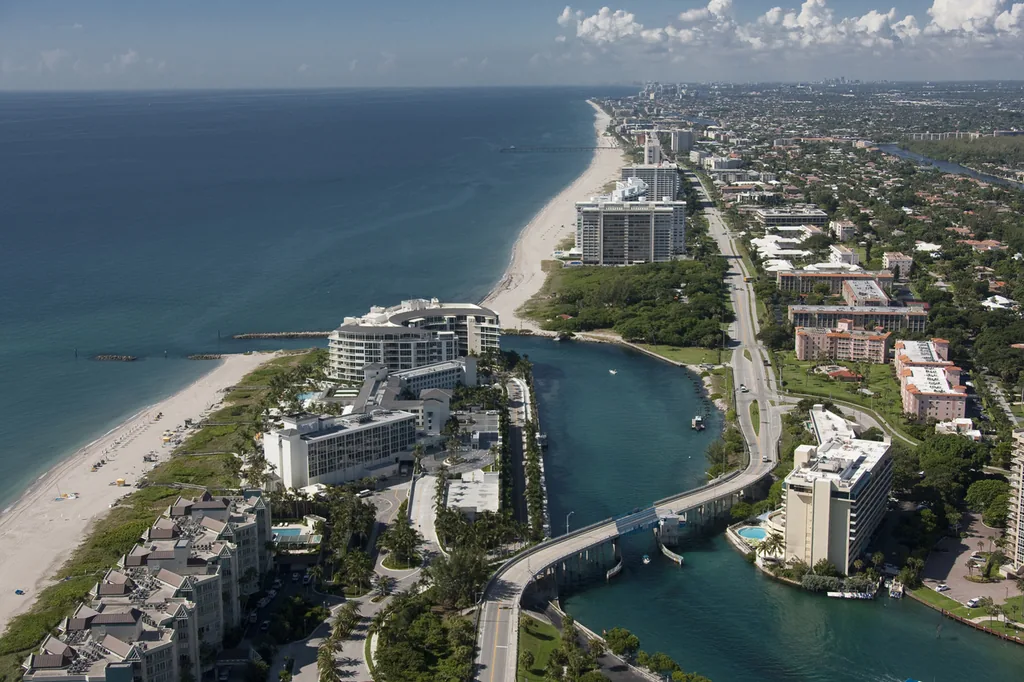
Boca Raton, FL Solar Panels
In This Guide

Solar Power in Boca Raton
Solar panel installation in Boca Raton starts with understanding how your home uses electricity and whether solar is right for you. Florida ranks second in the nation for residential solar installations, reflecting the growing interest in home solar across the state.
Learn what to consider, from your roof to equipment options, in Palmetto’s guide to home solar panels.
How Much Do Solar Panels Cost in Boca Raton, FL?
See what solar installation may cost in Boca Raton using Palmetto’s records of real Florida installations. Our calculator draws on local data from Boca Raton and nearby communities, including Delray Beach, Deerfield Beach, and Highland Beach, to help you explore an estimate based on homes in your area.
System
- No upfront investment
- Palmetto handles all maintenance
- 90% Production Guarantee
- Comprehensive protection program included
Key Takeaways
- Boca Raton’s sunshine can support home solar year-round, though storms, clouds, and seasonal daylight affect monthly production.
- A typical 2,000–3,000-square-foot home estimate is $28,316 to buy or about $146 per month to lease; actual costs vary.
- Florida offers solar tax exemptions, but export credits depend on your utility, so check local rules when comparing costs and potential savings.
Boca Raton Electricity Prices
Electricity costs can shape the long-term value of solar for Boca Raton homeowners.
Florida’s average electricity price rose from 11.9¢/kWh in 2021 to 15.2¢ in 2025, with a 2024 dip to 14.1¢. The U.S. average climbed from 13.7¢ to 17.2¢. These aren’t Boca Raton-specific rates.
For Boca Raton households, rooftop solar can generate some electricity at home, potentially reducing how much power is purchased from the utility and limiting exposure to rate changes. Results depend on system size and household use.
Over time, producing electricity at home may help make energy costs more predictable, though utility rates, solar production, equipment, and household consumption all affect the value. Compare expected production with your actual bill before deciding.
Price of Energy: Florida vs National Average
Boca Raton Area Utility Providers
For Boca Raton households served by FPL, the utility’s 2025 average electricity rate was 14.6¢ per kilowatt-hour, based on U.S. Energy Information Administration Form EIA-861 data.
FPL’s rate was below Florida’s 15.20¢ average and the U.S. average of 17.2¢. State and national figures combine rates across multiple utilities, so they are broader benchmarks rather than the rate every household pays.
Solar panels can generate electricity at home and may reduce how much a household buys from the utility. The potential impact on electricity costs depends on factors such as household use and solar production.
Florida Solar Incentives
Boca Raton homeowners may find state and local programs that help offset solar costs. Explore solar incentives in Florida below.
Florida offers a sales-tax exemption for qualifying solar equipment, a residential property-assessment exclusion, and an 80% ad valorem exemption for qualifying renewable-energy devices treated as tangible personal property. Eligible customer-owned systems may receive utility-dependent export credits.
PACE may finance eligible solar improvements in participating areas, with repayment through a property assessment; it is a loan, not a rebate or grant. Export-credit terms vary by utility.
| Incentive | Type | Description | Source |
|---|---|---|---|
| Florida Sales and Use Tax Exemption for Solar Energy Systems | Sales Tax Exemption | Florida exempts qualifying solar-system equipment and components from state sales and use tax, including eligible photovoltaic equipment and energy-storage units. | Learn More |
| Florida Renewable-Energy Device Assessment Exclusion — Residential Property | Property Tax Exclusion | The value attributable to a qualifying renewable-energy device is excluded from the assessed value of residential real property. | Learn More |
| Florida Ad Valorem Exemption for Qualifying Renewable-Energy Tangible Personal Property | Property Tax Exemption | An 80% exemption from ad valorem taxation is available for the assessed value of qualifying renewable-energy devices that are treated as tangible personal property, subject to statutory conditions. | Learn More |
| Florida Customer-Owned Renewable Generation Interconnection and Export Credits | Net Metering / Net Billing | Florida’s interconnection and net-metering framework can provide bill credits for eligible customer-generated electricity, but export rates and terms depend on the serving utility and its tariff. | Learn More |
| Florida PACE Financing for Eligible Solar Projects | Financing | In participating areas, PACE may finance eligible solar improvements with repayment through a property assessment; it is a loan, not a rebate or grant. | Learn More |
Qualifying solar energy system equipment is exempt from Florida sales and use tax, reducing the purchase cost by the sales tax that would otherwise apply. Florida Department of Revenue guidance identifies items such as solar collectors, photovoltaic power-conditioning equipment, and qualifying energy-storage units among potentially eligible equipment.
The purchaser generally certifies that the equipment qualifies to the seller. A battery’s eligibility can depend on whether it meets the state’s requirements as part of a qualifying solar energy system, so confirm the treatment and documentation with the seller before purchase.
Florida excludes the value attributable to a qualifying renewable-energy device from the assessed value of residential property. This can prevent the value added by eligible solar equipment from increasing the home’s property-tax assessment; it is not a cash rebate and does not exempt the rest of the home from property taxes.
The statute covers qualifying devices that collect, transmit, store, or use solar energy, including specified solar and photovoltaic equipment and storage systems. The residential provision applies to qualifying devices installed on or after January 1, 2013. Homeowners can ask their county property appraiser what records or steps are needed for their installation.
Florida law provides an 80% ad valorem tax exemption for the assessed value of qualifying renewable-energy devices covered by the statute and classified as tangible personal property. This can reduce property-tax liability on qualifying equipment, but the exemption is not a general reduction in a homeowner’s real-property taxes.
Eligibility depends on the device, its tax classification, installation date, and statutory conditions; qualifying devices installed on real property on or after January 1, 2018 may be covered, subject to exceptions. This provision is more likely to matter for business or other taxable property than a typical residential rooftop system. Check with the county property appraiser about classification and eligibility.
Florida Public Service Commission rules provide standardized interconnection and net-metering requirements for customers of the state’s investor-owned utilities, generally for eligible systems up to 2 MW. Excess generation is generally credited under the applicable utility tariff, but credit rates, annual settlement, fixed charges, application steps, and system requirements vary; credits are not necessarily a cash payment at the retail rate.
Municipal utilities and electric cooperatives have their own program terms, so homeowners should obtain the current written tariff from their utility. The state framework and utility-specific terms are available from the Florida Public Service Commission.
Property Assessed Clean Energy (PACE) financing may allow an eligible property owner to finance a qualifying solar project and repay the amount through an assessment on the property-tax bill. The financing amount and terms depend on the provider, project, property, and applicant; PACE does not reduce the project price like a rebate or tax exemption.
Availability depends on whether the county and local program participate and whether the property and proposed solar work meet the program’s rules. Before signing, review the total repayment amount, fees, assessment and lien implications, and what happens if the property is sold or refinanced. Confirm current availability through the official Florida PACE information site.
Ready to start saving with solar?
Speak with a Palmetto solar expert to find out exactly how much you can save with Florida incentives.
Get a Free QuoteBoca Raton Solar Irradiance
Solar panel production varies throughout the year based on daylight hours, weather patterns, and sun intensity. Understanding how seasons affect your solar system helps set realistic expectations for your investment.
Boca Raton’s strong year-round sunshine supports solar, though summer storms, cloud cover, and seasonal changes in daylight affect monthly output. With a well-sized system, solar can work in many climates.
Solar Production in Boca Raton by Month
What Can Your Solar System Power?
Summer Production (July)
In July, your 10 kW system could power:
- 3.0 average homes (15 kWh/day per home)
- or Run central AC for 14 hours (about 3 kWh per hour)
- or Drive an electric vehicle about 160 miles (3.5 miles per kWh)
Winter Production (December)
In December, your 10 kW system could power:
- 2.5 average homes (15 kWh/day per home)
- or Run a heat pump for 18 hours (about 2 kWh per hour)
- or Drive an electric vehicle about 130 miles (3.5 miles per kWh)
Annual Production
Over a year, your 10 kW system could:
- Offset 11 tons of carbon dioxide emissions
- or Equal the environmental benefit of planting 190 trees
- or Cut about $2,310 a year from electricity bills (at today’s rate and local net metering rules)
Want to know exactly how much solar can power your home?
Get a personalized solar analysis based on your actual home, energy usage, and roof characteristics.
Get My Custom EstimateSolar Panel Systems in Boca Raton
We organized address-level solar installation data across the U.S. to create this interactive map of Boca Raton. Explore the hexagons to see how many installations are in each area, and discover neighborhoods and communities where your neighbors have made the switch to solar.
How to Choose a Solar Installer in Boca Raton
Verify the license
Florida contractor licensing is handled by the Florida Department of Business and Professional Regulation (DBPR), Construction Industry Licensing Board (CILB). Ask each installer for the contracting business’s credential and classification, then confirm it with the state and with the city or county where your home is located. Florida lists Certified Solar Contractor (CV) and Registered Solar Contractor (RV) classifications: certified credentials allow statewide contracting, while registered credentials are limited to their authorized jurisdiction. A separate solar classification is not always required; another Chapter 489 contractor may perform solar work within its authorized scope. Read Florida’s contractor-licensing provisions and ask who will actually perform the work.
Look for certified installers
Ask whether the proposed installer holds a relevant North American Board of Certified Energy Practitioners (NABCEP) certification, and verify what the credential covers at NABCEP. You can also ask about manufacturer certifications for the panels, inverters, or other equipment in the quote. These credentials are useful points of comparison, but they are not a substitute for the required Florida contractor credential. Ask which employees or subcontractors hold them and whether they will be involved in your project.
Compare quotes the same way
Request written proposals with the same assumptions and compare each of these items side by side:
- System size: total capacity in kilowatts (kW), plus the panel and inverter brands and models.
- Price: total price and price per watt, calculated consistently from the quoted system size. Separate cash price from any financed or lease payment.
- Production: estimated electricity generation in kilowatt-hours per year (kWh/year), and the assumptions behind the estimate. Ask the installer to explain major differences between bids.
- Warranties: panel product and performance, inverter, workmanship, and roof penetrations. Check coverage, exclusions, and who you contact for service.
- Project responsibilities: who obtains permits and handles utility interconnection, and what you must do yourself.
- Payment terms: total cost or monthly payment, any escalator, and any other scheduled charges. Compare the full terms, not just the first payment.
Permits, interconnection and your HOA
Building and electrical permits go through the local enforcement agency, generally the city or county building department for the property. Ask the installer which office applies to your address and who will submit the paperwork. You apply to the electric utility serving the home for interconnection approval and any required agreement or metering. Depending on your address, check whether the utility is Florida Power & Light Co or City of Lake Worth Beach, and ask that utility about its current interconnection and net-metering program. Florida Statute § 163.04 bars deed restrictions and similar binding agreements from prohibiting or effectively prohibiting solar devices. An association may set a roof location within the statute’s specified south-facing orientation if that does not impair effective operation. Review the Florida solar-access law and discuss proposed placement with your association.
Red flags
- Pressure to sign the same day, before you can review the proposal or compare bids.
- Unlicensed crews, or contractors who cannot show an appropriate Florida credential and authorized scope—including out-of-state crews.
- Vague production estimates, or a refusal to explain how the estimate was prepared.
- A large upfront deposit without clear written payment milestones and project terms.
- A promise that a 2026 purchase qualifies for a federal homeowner tax credit; homeowner credits ended December 31, 2025.
Leasing Solar Panels
For Boca Raton homes served by Florida Power & Light (FPL), Palmetto offers a solar lease. A lease uses a set monthly payment, while a power purchase agreement (PPA)—not listed as available for FPL—charges for each kilowatt-hour the panels produce, so payments can vary with seasonal production.
With a lease, you can go solar without paying the full system cost upfront. The leasing provider owns the equipment and handles covered maintenance, unlike a cash purchase, where you pay the system cost and are generally responsible for arranging repairs and upkeep.
Compare the trade-offs in this guide to buying or leasing solar, or learn about Palmetto’s LightReach lease. Availability and terms depend on your utility and home.
LightReach lease: key terms at a glance
| Agreement length | 25 years. |
|---|---|
| Upfront cost | $0. No down payment for the equipment or installation. |
| Payment | A monthly payment set in your agreement, based on the system’s expected production. This page’s estimate is about $146/month for a typical Boca Raton system (assumes about 10.5¢ per kWh produced). |
| Annual escalator | Set in your agreement. Ask whether your payment rises each year, and by how much, before you sign; a 0% escalator keeps it flat for 25 years. |
| Estimated 25-year total | About $43,665 if the payment never rises. Any escalator raises this total, so ask for the full 25-year figure in writing. |
| Who owns the system | Palmetto owns it and claims any tax credit on it; you use the electricity it makes. |
| Included | Monitoring, maintenance and repairs, and a 90% production guarantee. |
| Credit check | Required to qualify. |
| Selling your home / year 25 | Ask how the agreement transfers to a buyer and what your options are at the end of the term (renew, buy, or removal). |
Estimates only. Your written agreement sets the actual payment, escalator and terms. Source: palmetto.com/lightreach.
Go solar without the investment
With LightReach, there are no investment costs to recoup, loan payments to manage, or maintenance needs to take on. As soon as your panels are active, your solar savings are too!
Explore LightReach LeasingFrequently Asked Questions
Yes. Most Boca Raton homes served by Florida Power & Light (FPL) have 1:1 net metering. When your solar panels send extra electricity to the grid, FPL credits it on your bill at a kilowatt-hour rate and carries unused credits from month to month.
FPL has a $25 monthly minimum bill. In December, remaining credits are settled at about 1.5 cents per kWh, and the credit balance resets to zero. Check your utility and current tariff, since terms can vary by provider.
Yes, an owned solar panel system may increase a Boca Raton home’s value. Zillow’s study found homes with solar panels sold for about 4.1% more on average, but that figure is not a guaranteed increase for every home or local sale.
This potential value applies to systems the homeowner owns, such as a cash-purchased system. With a leased system, the buyer may need to assume the lease agreement, which can affect resale differently.
In Boca Raton, a LightReach solar lease can offer a low fixed monthly payment with no upfront cost. The calculator estimates about $146 per month for a typical 2,000–3,000-square-foot home; actual payments depend on the home and system.
Cash purchase is another option: the calculator estimates about $28,316 for a typical 10.53 kW system. The federal 30% tax credit is no longer available for residential cash purchases following the 2025 federal law change. See the calculator above for estimates by home size.
In Boca Raton, leasing means the provider owns and installs the panels; you pay monthly. A typical 10.53-kW system is estimated at $146/month, based on NREL PVWatts production of about 1,580 kWh per kW annually and a $0.105/kWh rate. There’s no upfront cost.
LightReach includes installation, monitoring, maintenance, and comprehensive protection with a 90% Production Guarantee in one payment. The payment is typically below your electric bill, so savings may start on day one, though utility charges can remain.
Solar panels in Boca Raton are low maintenance. Rain often washes away dust, but it’s useful to watch for debris or damage after strong storms and check system production periodically.
With a LightReach lease, Palmetto owns the system and handles monitoring, maintenance, and repairs at no extra cost, including a 90% Production Guarantee.
Palmetto Solar is a solar installation option for Boca Raton homeowners. We combine national experience with a local focus, and have completed 22,293 installations in Florida since 2020. Our financing options and installer network can help homeowners compare ways to go solar.
The best choice depends on your roof, electricity use, budget, and utility export-credit terms. Compare written estimates for system size, total cost, financing, warranties, maintenance, and expected production before deciding.
In Boca Raton, a 10 kW solar system can produce about 15,800 kWh per year, based on the article’s NREL PVWatts estimate. A typical 10.5 kW home system would produce roughly 16,600 kWh annually under similar conditions.
Actual output varies with roof direction and pitch, shade, weather, and season. For example, the 10 kW estimate ranges from about 37 kWh per day in December to 44.5 kWh per day in July.
Explore Solar Power in Other Florida Cities
- Bradenton
- Cape Coral
- Clermont Solar Panels
- Davenport, FL
- Fort Myers Solar Panels
- Kissimmee Solar Panels
- Naples Solar Installation
- Solar in Ocala
- Solar in Orlando
- Palm Bay Solar Panels
- Solar in Port Charlotte
- Port St. Lucie, FL
- Solar in Punta Gorda
- Riverview
- Sarasota
- St. Petersburg, FL
- Tampa Solar Installation
- The Villages
- Solar in Venice
- Winter Garden Solar Panels