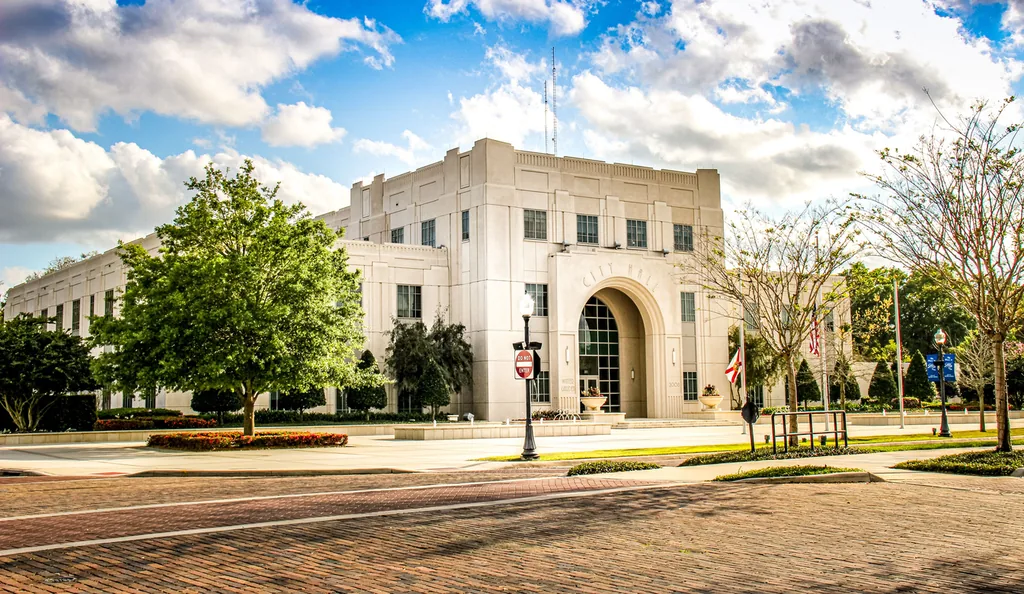
Winter Garden, FL Solar Panels
In This Guide
- 01 Solar Energy in Winter Garden
- 02 Solar Cost Calculator
- 03 Winter Garden Reviews
- 04 Key Takeaways
- 05 Winter Garden Electricity Prices
- 06 Florida Solar Incentives
- 07 Winter Garden Solar Production
- 08 Solar Installations in Winter Garden
- 09 Choosing an Installer
- 10 Leasing Solar Panels
- 11 Frequently Asked Questions

Solar Power in Winter Garden
For homeowners in Winter Garden, the area’s sunny weather can make solar panel installation worth exploring. The right setup depends on your roof, household energy use, and utility plan.
Learn what to consider for solar installation in Winter Garden, starting with our guide to home solar panels.
How Much Do Solar Panels Cost in Winter Garden, FL?
Explore estimated solar installation costs in Winter Garden using Palmetto’s real installation data from the area, including Horizon West, Oakland, and nearby Windermere. See how local project costs may vary before deciding whether solar is right for your home.
System
- No upfront investment
- Palmetto handles all maintenance
- 90% Production Guarantee
- Comprehensive protection program included
Key Takeaways
- Winter Garden’s sunshine supports solar, but your roof, energy use, and utility plan shape the system and its results.
- Local estimates help set expectations: a typical 10.53-kW cash system is about $28,316, with estimated 25-year savings near $83,784.
- Florida tax benefits may lower costs: qualifying solar equipment may receive sales- and property-tax benefits, but eligibility and utility rules vary.
Winter Garden Electricity Prices
For Winter Garden homeowners, Florida’s changing electricity prices are one factor to consider when weighing solar.
Florida’s average rate rose from 11.9 cents per kWh in 2021 to 15.2 cents in 2023, then fell to 14.1 cents in 2024, below the U.S. average of 16.5 cents. These are statewide figures, not Winter Garden-specific rates.
Solar panels can produce some of a household’s electricity and may reduce utility purchases. Results depend on the home, system size, energy use, and utility billing plan.
Over time, solar may help limit exposure to changing utility rates. Comparing system costs with potential bill savings and reviewing utility rules can help homeowners assess the long-term value.
Price of Energy: Florida vs National Average
Winter Garden Area Utility Providers
Winter Garden electricity customers may be served by Duke Energy, OUC, or SECO. The latest figures available here are from 2023, so they offer a snapshot—not current utility rates.
In 2023, Duke Energy averaged 18.1¢ per kWh, above Florida’s 15.20¢ and the U.S. average of 16.0¢. OUC at 12.6¢ and SECO at 13.0¢ were below both benchmarks.
These differences show why a household’s utility and electricity use matter when evaluating energy costs. Solar can provide another way to generate household electricity, while its potential value depends on the home and utility arrangement.
Winter Garden Utilities Electricity Rates
Florida Solar Incentives
Winter Garden homeowners may qualify for Florida tax benefits that help offset solar costs; review the solar incentives in Florida listed below.
Benefits can include sales-tax exemptions for qualifying solar and storage equipment, property-assessment exclusions, and tangible-personal-property tax exemptions for eligible renewable-energy devices. Eligibility depends on the equipment and how it is classified.
Utility financing programs are limited to customers or members of the named utilities, so they are not general Winter Garden incentives. With LightReach leasing, Palmetto handles the commercial investment tax credit and passes savings through as lower monthly payments.
| Incentive | Type | Description | Source |
|---|---|---|---|
| Florida Solar and Energy-Storage Equipment Sales Tax Exemption | Sales Tax Exemption | Florida exempts qualifying solar-energy system components, including eligible photovoltaic and energy-storage equipment, from state sales and use tax. | Learn More |
| Florida Residential Renewable-Energy Property Assessment Exclusion | Property Tax Assessment Exclusion | For qualifying residential property, Florida excludes the just value attributable to qualifying renewable-energy devices, including eligible solar and storage equipment, from the property assessment. | Learn More |
| Florida Renewable-Energy Device Tangible Personal Property Tax Exemption | Property Tax Exemption | Florida exempts 80% of the assessed value of qualifying renewable-energy devices that are treated as tangible personal property from ad valorem taxation. | Learn More |
Florida exempts qualifying solar-energy system equipment from sales and use tax, reducing the upfront purchase cost by the tax that otherwise would apply. Eligible components identified by the Florida Department of Revenue include photovoltaic and power-conditioning equipment, solar collectors, and qualifying energy-storage units and integral accessories.
The exemption is for qualifying equipment, not automatically for every product or charge included in an installation. The purchaser certifies eligibility to the seller, and equipment must meet the state’s applicable requirements. Ask the installer to identify eligible items separately and confirm how the exemption is applied to your purchase. Florida Statute §212.08 and Florida Department of Revenue guidance.
Florida excludes the portion of a residence’s just value attributable to a qualifying renewable-energy device from the property-tax assessment. This can reduce the assessed value used to calculate property taxes after installing eligible solar equipment or qualifying energy-storage equipment; it is not a rebate or a dollar-for-dollar tax credit.
The residential provision covers qualifying devices installed on or after January 1, 2013, and the current statute provides for the exclusion through December 31, 2037. The amount of any tax savings depends on the value attributed to the equipment and local tax rates. Contact your county property appraiser about documentation and how the provision applies to your system. See Florida Statute §193.624.
Florida exempts 80% of the assessed value of a qualifying renewable-energy device from ad valorem taxation when the device is tangible personal property. For an eligible solar installation, this may reduce the taxable value attributable to qualifying equipment; the actual savings depend on the assessment and local tax rates.
The provision generally applies to qualifying devices installed on real property on or after January 1, 2018, and is distinct from the real-property assessment treatment under §193.624. It is not a cash payment, and it applies only where the equipment qualifies as tangible personal property. Ask your county property appraiser whether your system qualifies and what filing or records are required. See Florida Statute §196.182.
Ready to start saving with solar?
Speak with a Palmetto solar expert to find out exactly how much you can save with Florida incentives.
Get a Free QuoteWinter Garden Solar Irradiance
Solar panel production varies throughout the year based on daylight hours, weather patterns, and sun intensity. Understanding how seasons affect your solar system helps set realistic expectations for your investment.
Winter Garden’s abundant sunshine supports solar production, though summer storms and seasonal daylight shifts affect monthly totals. As in cloudier cities, a well-designed system can still perform well.
Solar Production in Winter Garden by Month
What Can Your Solar System Power?
Summer Production (July)
In July, your 10 kW system could power:
- 3.6 average homes (15 kWh/day per home)
- or Run central AC for 18 hours AND power all other appliances
- or Fully charge 5.4 Tesla Model 3 electric vehicles
Winter Production (December)
In December, your 10 kW system could power:
- 2 average homes (15 kWh/day per home)
- or Keep your home heating system running for 15 hours
- or Fully charge 3 Tesla Model 3 electric vehicles
Annual Production
Over a year, your 10 kW system could:
- Offset 10 tons of carbon dioxide emissions
- or Equal the environmental benefit of planting 175 trees
- or Save approximately $4,234 in electricity costs
Want to know exactly how much solar can power your home?
Get a personalized solar analysis based on your actual home, energy usage, and roof characteristics.
Get My Custom EstimateSolar Panel Systems in Winter Garden
We’ve organized solar installation data from across the United States into this interactive map of Winter Garden. Select a hexagon to see how many installations it represents, and explore the neighborhoods and communities nearby where residents have made the switch to solar.
How to Choose a Solar Installer in Winter Garden
Verify the license
Paid rooftop solar installation in Florida generally requires the responsible contractor to hold an appropriate Florida contractor credential. The Florida Department of Business and Professional Regulation’s Construction Industry Licensing Board (CILB) lists Certified Solar Contractor (CV) and Registered Solar Contractor (RV) classifications. Certified credentials allow contracting statewide; registered credentials are limited to the authorized jurisdiction. Ask who is responsible for the work, request that contractor’s credential type and number, and verify it with DBPR’s CILB. A separate solar credential is not always required: another Chapter 489 contractor may perform solar work within their authorized scope. Review Florida’s contractor licensing provisions.
Look for certified installers
NABCEP certification can be a useful signal of solar-specific training and demonstrated knowledge, but it does not replace the Florida contractor credential or guarantee a particular project outcome. You can learn about certification at NABCEP. Ask whether the proposed installer also holds certifications from the panel or inverter manufacturers named in your quote. Manufacturer certifications may show product-specific training or authorization; ask what they cover and whether they apply to the people doing your installation.
Compare quotes the same way
Request written proposals with the same scope, then compare these details side by side:
- System size: total capacity in kilowatts (kW), and the price per watt calculated on a consistent cost basis.
- Equipment: panel and inverter brands and models, so you can identify differences between proposals.
- Estimated production: expected kilowatt-hours (kWh) per year. Ask each installer to explain the estimate and its assumptions rather than comparing headline savings alone.
- Warranties: panel product and performance, inverter, workmanship, and roof penetrations. Check the coverage period and who is responsible for service.
- Project responsibilities: who will handle building and electrical permits, utility interconnection, and any required agreement or metering.
- Payment: total cost or monthly payment, plus any escalator and the terms that affect what you will pay over time.
Permits, interconnection and your HOA
Building and electrical permits go through the appropriate local enforcement agency. For an ordinary residential project, that means the city or county building department for your property; ask the installer who will prepare and submit the paperwork. For interconnection approval and any required agreement or metering, the homeowner applies to the electric utility serving the home. Confirm the utility for your address—it may be Florida Power & Light Co, Duke Energy Florida, LLC, Tampa Electric Co, or JEA—and ask about its program and process.
Florida Statute § 163.04 generally bars binding deed restrictions, covenants, declarations, or similar agreements from prohibiting or effectively prohibiting solar collectors and other renewable-energy devices. An association may set a roof location within the statute’s specified south-facing orientation if that does not impair effective operation. Review your association’s requirements early and ask the installer to help address proposed placement. Read the statute.
Red flags
- Pressure to sign the same day or before you have time to compare written proposals.
- Unlicensed crews, or out-of-state crews with no clearly identified Florida-credentialed contractor responsible for the work.
- Vague production estimates, or savings promises without a clear annual kWh estimate and explanation.
- A large upfront deposit without a clear written payment schedule and project scope.
- Promises of federal homeowner tax credits for purchases in 2026; homeowner credits ended December 31, 2025.
Leasing Solar Panels
For Winter Garden homeowners, Palmetto offers solar leasing through LightReach for customers served by Orlando Utilities Commission (OUC), Duke Energy Florida, and SECO Energy. A lease uses a set monthly payment; a power purchase agreement (PPA), which is not listed as available here, charges for each kilowatt-hour the system produces. Availability depends on your utility.
With a lease, you can go solar without paying the full system cost upfront. Unlike a cash purchase, where you own the equipment and arrange maintenance, the leasing provider owns the system and handles maintenance under the agreement. Review the terms and responsibilities before choosing.
Learn more about buying or leasing solar and Palmetto LightReach.
Go solar without the investment
With LightReach, there are no investment costs to recoup, loan payments to manage, or maintenance needs to take on. As soon as your panels are active, your solar savings are too!
Explore LightReach LeasingFrequently Asked Questions
Winter Garden has solar export-credit programs, but the rules depend on your electric utility. OUC and Duke Energy Florida offer 1:1 net metering: unused kilowatt-hour credits roll over monthly. OUC settles remaining credits at the full retail rate in December; Duke pays an avoided-cost rate at its December true-up.
SECO Energy uses net billing instead, crediting exported electricity at about 9.5¢/kWh toward the current bill. Check your utility name on your bill, since credit rates and settlement rules differ.
Yes, an owned solar panel system may increase a home’s resale value in Winter Garden. Zillow’s study found homes with solar panels sold for about 4.1% more on average. That national estimate is not a guaranteed increase for every home; roof condition, system details, and local market conditions matter.
This potential value increase applies to systems the homeowner owns, not leased or TPO systems. With a lease, a buyer may need to assume the agreement, which can affect resale differently.
In Winter Garden, homeowners can go solar with a LightReach lease for a low fixed monthly payment and no upfront cost. The calculator above estimates $135 per month for a typical 2,000–3,000-square-foot home.
Cash purchase is another option: the calculator estimates about $28,316 for a typical 10.53-kW system. The federal 30% residential solar tax credit is no longer available for cash purchases following the 2025 federal law change. Actual costs vary with home size, energy use, and roof conditions.
Solar leasing lets a provider own and install the panels while you pay a set monthly amount instead of buying the system. In Winter Garden, a typical 10.53 kW system is estimated at $135 per month, based on Florida’s 1,462 kWh/kW/year production ratio and a $0.105/kWh rate. There is no upfront cost.
Palmetto’s LightReach lease includes the system, installation, monitoring, maintenance, and protection with a 90% Production Guarantee in one payment. The lease payment is typically below the current electricity bill, so homeowners may save from day one; actual bills depend on energy use and utility charges.
In Winter Garden, a 10-kW solar system can produce about 15,400 kWh per year, based on the article’s NREL PVWatts estimate. A typical 10.53-kW home system would produce roughly 16,200 kWh annually.
Monthly output changes with the seasons: the estimate for a 10-kW system ranges from about 35 kWh per day in December to 49 kWh per day in May. Roof direction, shading, weather, and system design affect actual production.
Palmetto Solar is a solar installation company Winter Garden homeowners can consider. We have completed 22,293 installations in Florida since 2020, with a local installation network and financing options.
The best fit for your home depends on roof condition, electricity use, utility rules, and the system’s total cost. Compare those details and the agreement terms when evaluating a solar installation.
Yes. Solar panels work in Winter Garden’s mild winters, and the area averages about 5.6 peak sun hours per day. Shorter winter days mean less sunlight than in summer, so production changes by season; a 10-kW system is estimated to produce about 35.4 kWh per day in December versus 43 kWh in July.
Clouds and summer storms can reduce output, but panels still generate electricity from diffuse daylight. Production is lower on cloudy days, not necessarily zero.
Explore Solar Power in Other Florida Cities
- Boca Raton Solar Panels
- Bradenton, FL
- Cape Coral Solar Panels
- Clermont Solar Installation
- Davenport Solar Panels
- Fort Myers Solar Panels
- Solar in Kissimmee
- Naples Solar Panels
- Ocala Solar Panels
- Solar in Orlando
- Palm Bay Solar Panels
- Solar in Port Charlotte
- Port St. Lucie, FL
- Solar in Punta Gorda
- Riverview
- Sarasota Solar Panels
- St. Petersburg Solar Installation
- Tampa Solar Installation
- The Villages
- Venice Solar Installation