Home solar battery backup: pros, cons, and cost
Last edited
Author
Andrew Blok
Electrification and Solar Writer and Editor
Editor
Ryan Barnett
SVP, Policy & New Market Development

Annoyed with disruptive blackouts? Wish you didn’t have to sell the unused power from your solar panels to your utility for pennies on the dollar?
A backup battery can take your energy independence, from blackouts or utility, even further. Beyond providing peace of mind during power outages, in some cases home batteries help maximize your long-term solar savings by storing excess energy for when rates are highest.
But, depending on your motivation, batteries aren’t always a good fit. Here’s what you need to know.
See how much you can save by going solar with Palmetto
Home battery backups in 2026
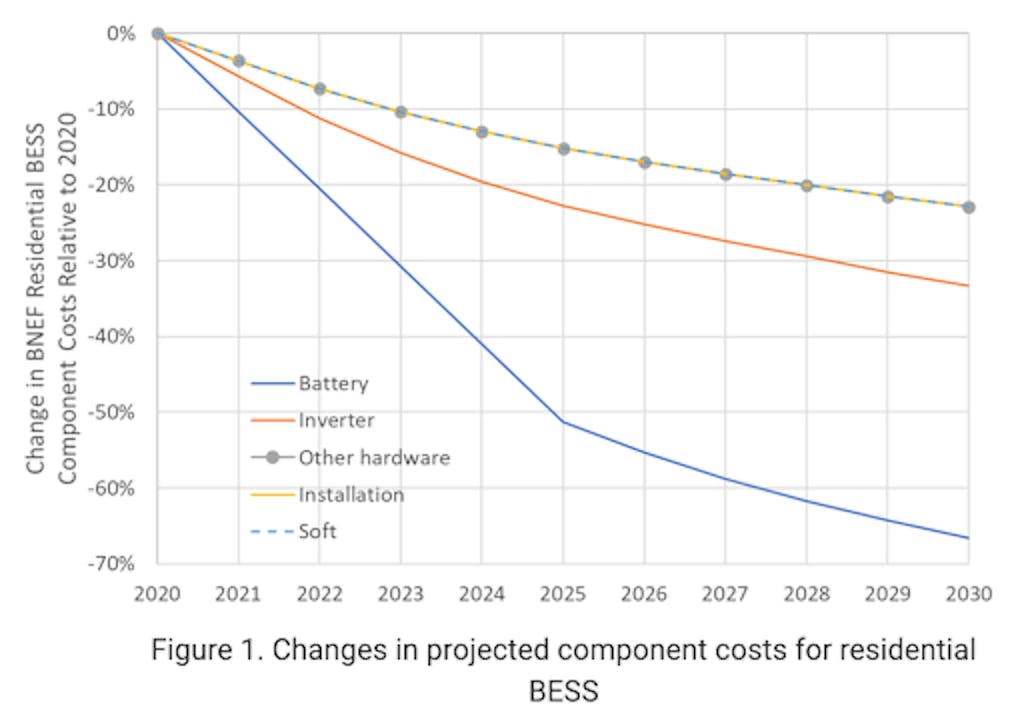
Home battery backups are being paired with home solar panels more frequently than ever, thanks in part to falling costs. Battery prices are expected to continue falling through the end of the decade, according to research from the National Laboratory of the Rockies.
In the US, 14% of new solar systems had energy storage backup included in 2023. In 2025, that number reached 40%, according to the Solar Energy Industries Association.
How a home battery backup system works
Battery backup for home can operate in several different ways, depending on whether or not you have solar panels and if your property is connected to the grid.
- Solar panels with backup batteries: Batteries can be charged with solar power during the day (or with grid power at any time) and then discharged to your home at night to limit your property's consumption of grid electricity. If your battery is fully charged and your solar panels are still producing electricity, the excess power will be sent to the grid and often earn bill credits.
- Off-grid solar batteries: If your home is not connected to the grid, a battery backup is the only way to capture all of the electricity your panels produce throughout the day and use it at night.
- Standalone home batteries: Even without solar, some homeowners find installing battery backups may be worth it to store electricity in case of a grid power outage. Batteries can be used both as an alternative to and in conjunction with other backup generators.
Most home solar batteries are app-integrated, with intuitive, automatic monitoring and management controls to meet your energy needs.
The benefits of home battery backup
Home battery backup has its benefits.
Backup power during outages
Without a battery, grid-tied solar panels shut down during an outage to protect the equipment and workers repairing damaged power lines. Battery backup can temporarily take your home off-grid to run your critical devices with stored energy.
Solar power systems with backup storage give you dependable power in emergency situations. In 2022, a Lawrence Berkeley National Laboratory study found battery backup with solar could be reliable in most areas of the US for most times of the year during a long-term grid outage.
Researchers found solar panels and energy storage would work to power the essentials (refrigeration, interior lighting, a few outlets, and well pumps) for a majority of homes affected by a lengthy power outage. Specifically, they found a 10kWh battery paired with solar could get virtually all homes through a three-day outage, if that home didn’t need its heating or cooling. The same storage size met 86% of the power load for three days if using heating and cooling.
Percentage of home power covered by battery backup in an outage
| Battery storage capacity | 1-day outage (with heating and cooling) | 3 days (without heating and cooling) | 3 days (with heating and cooling) | 10 days (with heating and cooling) |
|---|---|---|---|---|
| 10 kWh | Not in study | 100% | 86% | Not in study |
| 30 kWh | 98% | 100% | 96% | 92% |
According to a 2022 Lawrence Berkeley National Laboratory study.
Greater energy independence
By consuming more of the solar power you generate directly onsite and avoiding more grid electricity, you’re reducing your reliance on your utility.
Expanded solar energy savings
In areas without 1-to-1 net metering policies, like the net billing rates in California, Arizona, and Illinois, energy storage and smart consumption habits may also help you recover the costs of going solar more quickly than systems without a home battery.
Typical payback periods for residential solar under the net billing program for California’s big three utilities, the average payback period is estimated to be 10.7 years according to Wood Mackenzie in 2022. But the payback period of a solar-plus-storage system for a Southern California Edison customer could be just 7.5 years, according to the same 2022 analysis.
Participation in grid-sharing programs
Grid-sharing programs for home battery owners, like the ConnectedSolutions Battery Program in Massachusetts or the Renewable Battery Connect Program in Colorado, pay homeowners directly for discharging stored power to the grid during peak-demand hours.
Although programs vary across the country, participants in ConnectedSolutions with National Grid can earn an average of $1,500 per year, according to the utility.
Virtual power plants (VPPs) — what programs like this are often called — can also use smart thermostats, other smart home devices, and electric vehicles, to ease stress on the grid during peak demand.
See how much you can save by going solar with Palmetto
How much does a home battery backup cost?
Solar backup battery cost is heavily dependent on the storage capacity you choose, and project expenses can be broken down into the following categories.
- Hardware: Home battery backups require additional components: wiring, an inverter, and several small pieces of installation hardware.
- Labor: Battery installations are typically performed in less than a day, and a licensed electrician is usually required for your system to be interconnected to the grid.
- Permitting: Interconnection permits and building inspections will typically add a few hundred dollars to a solar battery installation.
- Overhead: From manufacturers through the supply chain and at the installation level, variable expenses may be incurred in project overhead, marketing costs, and other fees factored into prices.
Battery leasing
If you want a backup battery, but don’t want the upfront cost, battery leasing may be an option. Instead of an upfront payment for the equipment and installation, leasing gets you the same battery and installation for predictable monthly payments, which cover common maintenance or repair issues, too.
Explore Palmetto Energy Backup to see how leased storage could work for you. Palmetto offers the above benefits as well as flexible end of term options.
Financial incentives for home backup batteries
States, cities, and utilities may offer one-time rebates for home backup batteries, with values typically based on the system’s energy storage capacity.
In North Carolina, Duke Energy offers up to a $9,000 total rebate on a solar plus storage system. In California, the California Public Utilities Commission’s Self-Generation Incentive Program gives some customers a rebate of $1,000 per kWh of energy storage installed.
Incentives change and eligibility requirements may be in place. Confirm your own eligibility.
Home battery backup pros and cons
Batteries can be a valuable addition to a home with or without solar, but won’t be cost-effective for every home.
Battery backup pros
Extra solar savings: In places where net billing credits are lower than the utility electricity rate, batteries can increase your savings by using your solar in a more valuable way. Whether a battery can increase your savings is location-dependent.
Emergency electricity: During an outage, batteries can power your essential appliances and devices. Solar panels can refill your battery during an extended outage.
More clean energy: A battery can let you store clean solar power to use at night when the grid’s electricity is often the dirtiest.
VPP participation: You may be able to enroll your battery in a VPP and earn rewards for your participation.
Battery backup cons
Cost: Adding battery storage comes at a cost, but incentives at the state and local level may be available.
Capacity: Batteries are most likely to be cost-effective if they’re sized to only back up the essentials during an outage. You can install enough batteries to power your entire home but it can cost you.
Is a home battery backup right for you?
A home battery backup could be worthwhile if you live in an area with frequent outages. It’s also likely to make more sense in areas without one-to-one net metering programs.
Depending on how highly you value having power through an outage, backup batteries may be worth the cost.
See what you could save by getting storage (with or without solar) with Palmetto. A Palmetto advisor can walk you through whether or not a battery is a good fit for your home and your goals. Reach out for a quote and a conversation today.
See what solar can do for you:
Battery backup FAQs
What is the cost of a backup battery for solar?
A survey of commercial sites gets you estimates starting at $9,000 and growing depending on installation costs and the number of batteries. A battery lease swaps the upfront cost for predictable monthly payments and can have other advantages over purchases.
How long will a backup battery last?
Backup batteries, like your phone’s battery, lose capacity over time. Batteries from major manufacturers often come with a 10-year warranty at which point they’re guaranteed to have at least about 70% of their original capacity.
Is battery backup necessary for home solar?
No. Battery backup is becoming more common, but many residential solar users do not have battery or storage as part of their systems. Without your own storage, grid-tied panels won’t produce electricity during outages.
How long can a backup battery run my home?
A fully-charged 10kWh battery can run 86-100% of a home’s emergency devices for 72 hours, according to one study. The ultimate answer depends on how many devices and systems are using power, especially the heating and cooling, and if the batteries are being recharged during this period.
What happens if I produce more solar power than I need?
If your home is connected to the grid, any excess energy produced goes into the grid, and may earn you credit on your electricity bill. If you have energy storage with your solar power system, any excess energy can charge your battery first. This allows you to use stored power when energy usage exceeds production.
If there is a power outage, will my power go out if I have solar panels?
If you add battery backup to your solar panel system, you’ll have access to backup electricity during an outage. If your solar energy system does not include a home battery, your power will go out in accordance with grid codes and mandatory inverter specifications.
Disclaimer: This content is for educational purposes only. Palmetto does not provide tax, legal, or accounting advice. Please consult your own tax, legal, and accounting advisors.