Air conditioner cost: installation and day-to-day
Last edited
Author
Andrew Blok
Electrification and Solar Writer and Editor

As the cost of electricity rises, so does the cost of keeping your home cool. When it comes time to replace your AC, or install one for the first time, cost should be a consideration.
Two numbers matter: what you'll pay to install a new system, and what you'll pay to run it every summer. Here’s how to think about both.
See how much you can save with a new HVAC system from Palmetto
Air conditioner operating cost
According to the U.S. Energy Information Administration, air conditioning accounts for about 19% of electricity consumption in U.S. homes, making it one of the largest single drivers of your electricity bill.
What that means in monthly dollars depends on your air conditioner size, SEER2 efficiency rating, local electricity rate, climate, and how well your home holds conditioned air. A home in Phoenix will spend far more to cool than one in Minneapolis. A well-insulated home with a high-efficiency unit will spend far less than an older home with leaky ducts and an aging system.
Read more: SEER Rating, HSPF Rating, and Heat Pump Efficiency
Despite all those variables (and many more!), you can get an idea what air conditioning costs at your home in a few different ways.
Use your bills
Compare your summer bill to your winter bill. Most of the increase will be thanks to your air conditioner. If you heat your home with electricity, compare your summer bills to your fall or spring bills, when air conditioning and heating are both at their lowest.
Use technology
A home energy monitor that can track energy consumption by device or circuit (since central air conditioners are almost always on their own circuit from the electrical panel), can help you see specifically how much electricity your air conditioner uses. From there, it’s as simple as multiplying your energy usage by your electricity rate. An AC that used 200 kilowatt-hours at a rate of 21 cents per kilowatt-hour would cost you $42 during that period.
Reducing your AC costs
Electricity costs are high and rising. But the cost to run your AC isn’t completely out of your control. The following can help bring it down.
Changing air filters: A dirty air filter makes your AC work harder to move cool air through your home. Change them when they get dirty.
Sealing ducts: When cool air leaks out of your ducts before it gets where you want it, you need to cool even more air. Plug holes to pay only for the cooling you use.
Air sealing: Aside from your ducts, any cool air that leaks out of your home through leaky windows and doors or poorly insulated walls and attics is wasted energy and money.
Setting your thermostat: Find a more efficient setting or set your thermostat to an energy-saving setting when you leave the house. Read how to find your ideal setting here.
Annual maintenance: Keep your AC in top condition so it operates as efficiently as possible.
Energy efficiency: When it comes time to replace your air conditioner, paying attention to its energy efficiency can deliver savings.
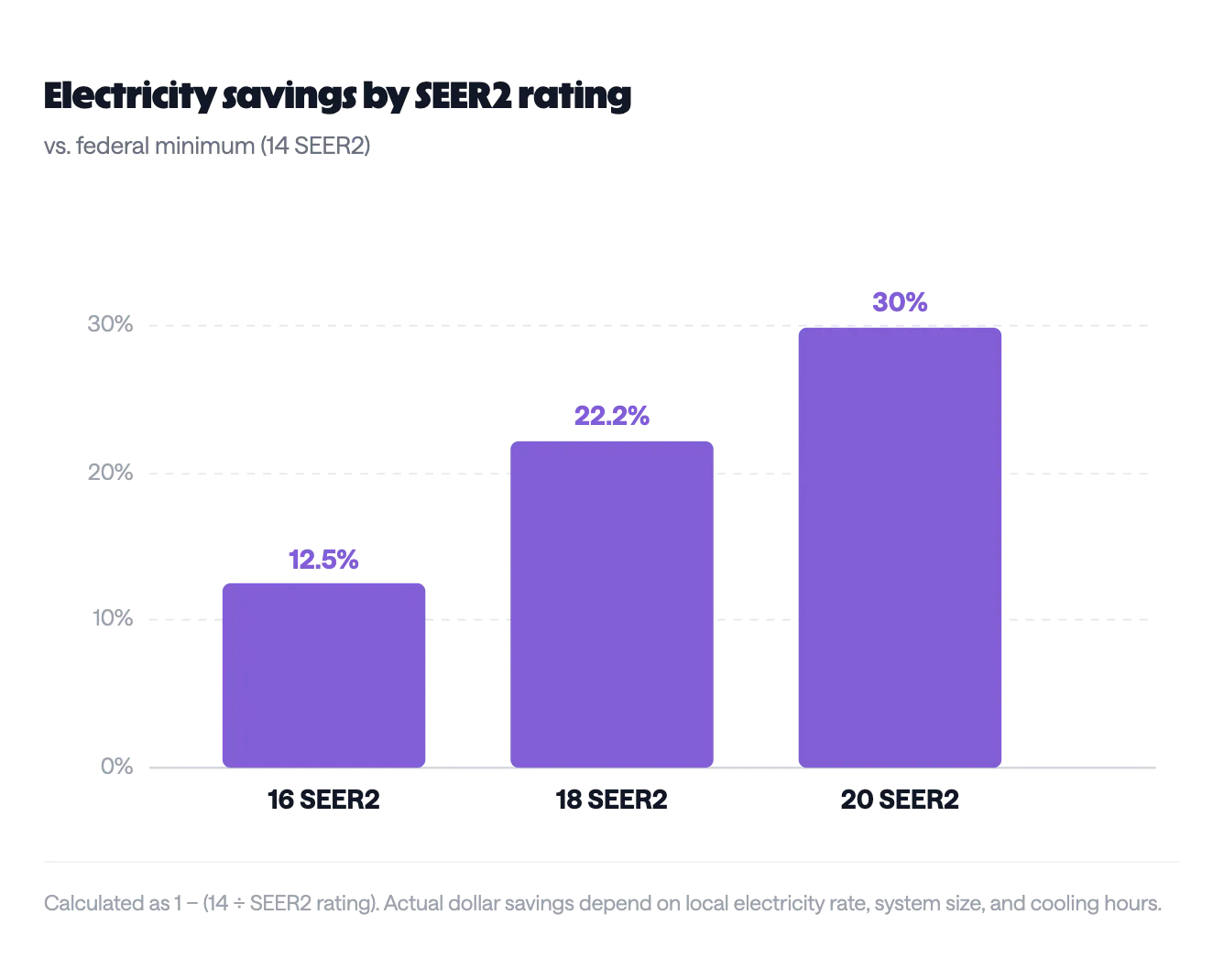
If you're also due for a new furnace, consider a heat pump, which can both cool and heat your home. They’re functionally the same in cooling mode, but the Department of Energy suggests heat pumps can save most Americans on their bills overall, especially when they replace oil, propane, or electric furnaces.
Air conditioner replacement cost
According to a survey of HVAC cost guides and contractor pricing sources, a standard replacement with existing ductwork in good condition typically runs $4,500 to $9,500, with most homeowners landing around $6,500 for a mid-efficiency system. New installs without ductwork can reach $10,000 to $18,000 or more. Quotes on the same job can vary by significant amounts, so getting two or three bids is worthwhile.
| Component | Typical cost range | Notes |
|---|---|---|
| Equipment (condenser + indoor coil) | $1,800–$4,000 | Varies by size, brand, and SEER2 rating |
| Labor | $1,500–$3,000 | Replacements take less time than new installs |
| Electrical work | $300–$2,000 | Only if a new circuit or panel upgrade is needed |
| Ductwork | $500–$7,000+ | New duct systems are a major cost driver |
| Permits and inspections | $100–$500 | Required in most jurisdictions |
For a more detailed breakdown of installation costs, read: Air conditioner installation and installations costs
Leasing an HVAC system to avoid the upfront cost
With the Palmetto Comfort Plan, you trade the upfront installation cost for predictable monthly payments that typically include scheduled maintenance and coverage for common repairs. It's not right for every home, but for eligible homes it can make a high-efficiency system accessible without a large upfront investment.
Curious about your options at your home? Reach out for a free cost estimate today.
See how much you can save with a new HVAC system from Palmetto
Frequently asked questions
How much does a new central air conditioner cost? A standard replacement with existing ductwork typically runs $4,500 to $9,500, with most projects landing around $6,500. New installs without ductwork can reach $10,000 to $18,000 or more.
Is it worth replacing a 15-year-old air conditioner? Often, yes. Older systems are near the end of their typical lifespan, repairs on aging equipment add up, and a new system can be significantly more efficient.
How long does a central air conditioner last? Most systems last 15 to 20 years with regular maintenance. Annual tune-ups and consistent filter changes can help you reach the top of that range.
Does a higher SEER2 rating mean lower operating costs? Generally, yes. How much lower depends on your climate and usage. In a hot climate with a long cooling season, upgrading to a high-efficiency unit can make a meaningful difference over the life of the system.
What time of year is best to replace an air conditioner? Late fall, winter, or early spring, when contractor demand is lower can be a great time to make the swap. You could get faster scheduling and better pricing. Replacing during a heat wave means higher labor costs, longer waits, and potential emergency charges.
Disclaimer: This content is for educational purposes only. Palmetto does not provide tax, legal, or accounting advice. Please consult your own tax, legal, and accounting advisors.