Central air conditioner installation: process and cost
Last edited
Author
Andrew Blok
Electrification and Solar Writer and Editor

On a hot midsummer’s night, central air can feel like a dream. But if your AC isn’t keeping up with the temps (or doesn’t exist at all), you might see a new one on the horizon.
That raises the same basic questions: What actually happens during installation? How long does it take? And, most of all, what does it cost?
Here's what to expect.
See how much you can save with a new HVAC system from Palmetto
Air conditioner installation
Installing a central air conditioner requires a licensed HVAC technician and, depending on your home's electrical setup, a licensed electrician may need to be involved as well.
System sizing
Before anything is ordered, a technician will calculate your home's heating and cooling load accounting for square footage, insulation, ceiling height, window placement, and climate. Getting an air conditioner’s size right matters: an undersized unit will struggle on hot days; an oversized one will cycle on and off too often, wearing out faster and leaving your home feeling humid.
Ductwork inspection
If you have an existing forced-air system, the technician inspects the ducts for leaks, blockages, and proper sizing. Leaky ducts can waste a significant share of your conditioned air before it reaches a room. Repairs happen before the new equipment goes in. Homes without ductwork will need it added (which substantially increases both cost and project time) or opt for a ductless mini-split system.
Electrical inspection
Central air conditioners require a dedicated 240-volt circuit. If you’re not replacing an existing system, or if your electrical panel lacks capacity, an electrician will need to add a circuit or upgrade the panel, a common source of added cost in new installs.
Outdoor unit placement
The outdoor condenser needs a stable, level pad with clearance on all sides for airflow and service access. If one doesn’t exist, it’ll need to be created. Refrigerant lines run from the condenser to the indoor air handler during this step.
Indoor air handler installation
The indoor air handler (sometimes called the evaporator coil) connects to your ductwork and is wired into the dedicated circuit. The technician removes any old system and installs disconnect switches, confirms proper grounding.
System testing
With everything connected, the technician sets the refrigerant charge (refrigerant work requires a special license). Then airflow through each register is checked and the thermostat is confirmed to be communicating with the new unit.
See how much you can save with a new HVAC system from Palmetto
Air conditioner installation cost
According to a survey of HVAC cost guides and contractor pricing sources, a standard replacement with existing ductwork in good condition typically runs $4,500 to $9,500, with most homeowners landing around $6,500 for a mid-efficiency system. New installations without ductwork can reach $10,000 to $18,000 or more, since ductwork alone adds $3,000 to $7,000 for a typical home.
| Component | Typical cost range | Notes |
|---|---|---|
| Equipment (condenser + indoor coil) | $1,800–$4,000 | Varies by size, brand, and efficiency rating |
| Labor | $1,500–$3,000 | Replacements take less time than new installs |
| Electrical work | $300–$2,000 | Only if a new circuit or panel upgrade is needed |
| Ductwork | $500–$7,000+ | New duct systems are a major cost driver |
| Permits and inspections | $100–$500 | Required in most jurisdictions |
Higher-SEER2 units (SEER2 is the federal efficiency rating standard) cost more upfront but typically cost less to run. Getting two or three quotes before committing is worthwhile, as bids can vary dramatically.
Air conditioner operating cost
According to the U.S. Energy Information Administration, air conditioning accounts for about 19% of electricity consumption in U.S. homes.
Your actual cost depends on system size, efficiency rating, local electricity rates, climate, and thermostat habits.
Read more: Recommended thermostat settings for each season
One thing worth knowing if you're also replacing a heating system: a heat pump is a single unit that handles both heating and cooling. It works similarly to a central AC in summer, but because it moves heat rather than generating it, it tends to be more efficient for heating — which can reduce your annual energy costs.
Leasing an HVAC system to avoid the upfront cost
If the upfront cost is a sticking point, consider leasing your HVAC system. With the Palmetto Comfort Plan, you trade the one-time installation cost for predictable monthly payments that typically include scheduled maintenance and common repairs. It's not right for every home, but for eligible homes it can make a high-efficiency system accessible without a large upfront investment. Start by getting a quote tailored to your home today.
See how much you can save with a new HVAC system from Palmetto
Frequently asked questions
How long does a central air conditioner installation take?
A replacement with existing ductwork and wiring typically takes four to eight hours. New installs requiring ductwork or panel work can take two days or more.
How long does a central air conditioner last?
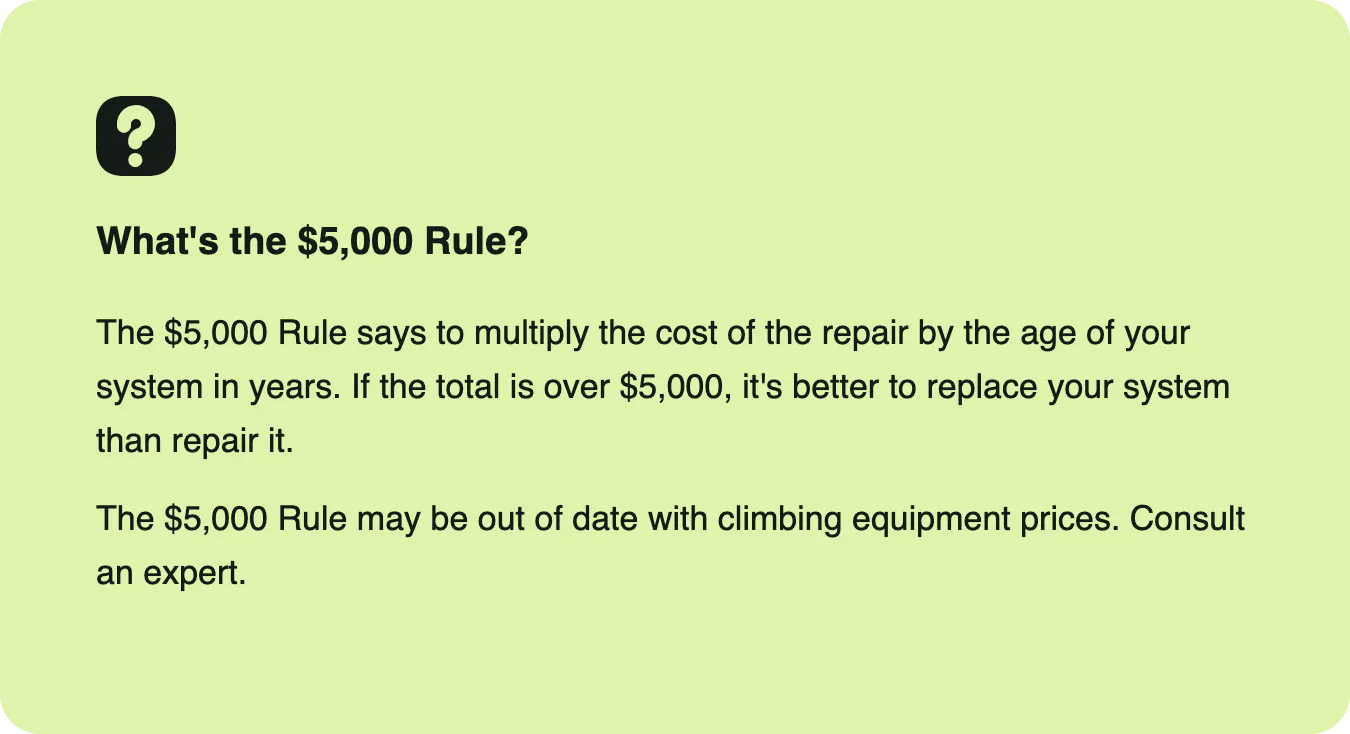
Most systems last 15 to 20 years. Annual tune-ups and regular filter changes are the biggest factors in reaching the top of that range. If your system is near 15 years old and starting to need repairs, replacement is often the more economical path.
Do I need a permit for air conditioner installation?
In most jurisdictions, yes. A licensed contractor should pull the permit as part of the job. Be cautious of anyone who suggests skipping it — it can complicate a home sale and may affect your equipment warranty.
Can a heat pump replace my central air conditioner?
Yes. A heat pump works to cool a home. One clear advantage it has over an air conditioner is that it can heat your home, too, taking a bite out of or completely replacing your need for a furnace or other heating implement.
What's the difference between SEER and SEER2?
SEER was the original efficiency rating for air conditioners. SEER2 is the recently updated standard that uses a revised testing method to better reflect real-world performance. Make sure you’re comparing the same standards when comparing equipment.
Disclaimer: This content is for educational purposes only. Palmetto does not provide tax, legal, or accounting advice. Please consult your own tax, legal, and accounting advisors.