Leasing solar panels vs. buying: which is right for you?
Last edited
Author
Andrew Blok
Electrification and Solar Writer and Editor
Editor
Ryan Barnett
SVP, Policy & New Market Development
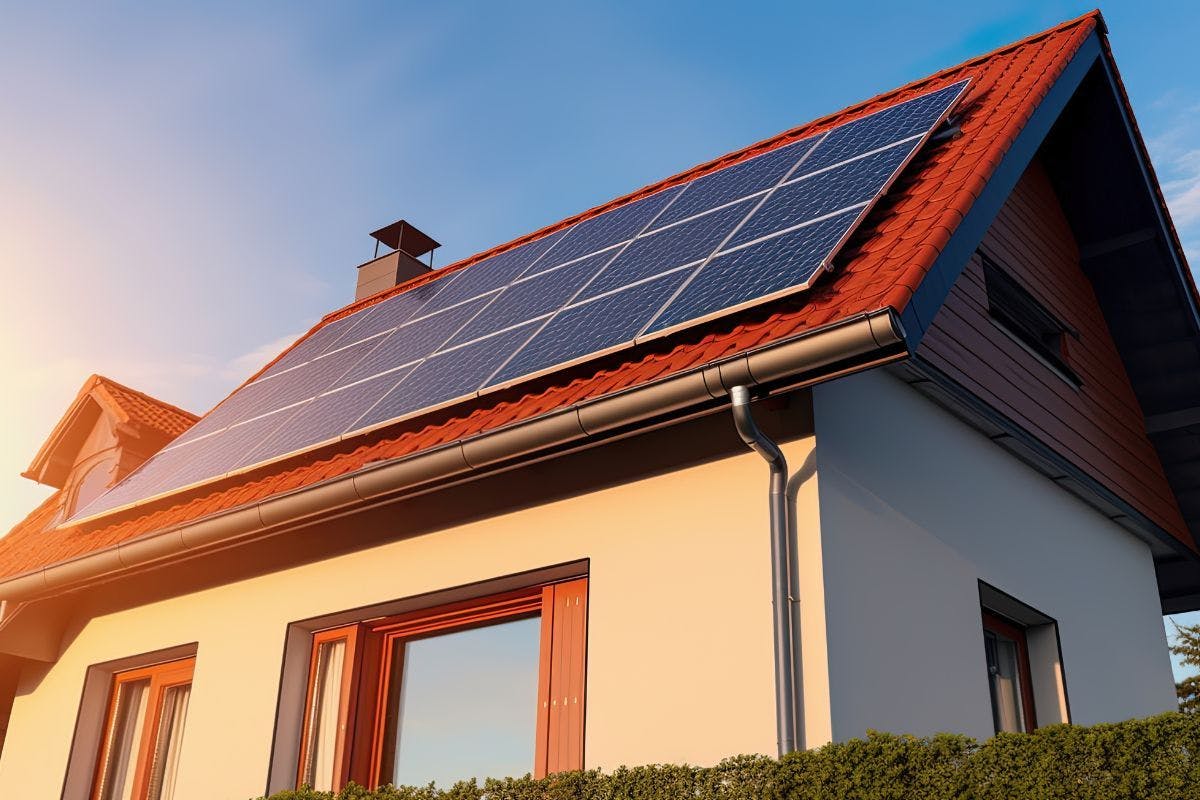
Home solar panels can help you control your electricity bills for 25 years or more, and leasing solar panels is one way to get them without paying upfront. Whether leasing or buying is right for you depends on your financial goals and housing plans. Here's how a solar lease works and how it compares with buying.
What is a solar lease?
With a solar lease, the company that installs your system keeps ownership, and you pay a predictable monthly fee to use it, much like a car or apartment lease. You typically pay nothing upfront, and the company handles installation and maintenance. Your payment doesn’t change with how much electricity you use. (Solar leases often come with an annual escalator: a set percentage by which your monthly payment increases each year).
A solar power purchase agreement (PPA) works like a lease, but you pay a fixed rate for the electricity your panels generate, so your payment can vary from month to month. (With some companies, a PPA is ‘predictable,’ meaning you pay the same amount every month.)
Pros and cons of leased solar panels
Pros
No upfront cost or maintenance: The solar company covers the full cost of installation and is responsible for monitoring and maintenance.
Electricity bill savings: If your new electricity costs and lease payment add up to less than your old utility bill, you save right away.
Tax credit pass-through: Leasing companies can still claim key federal tax credits, and they can use them to lower your lease payments.
Cons
No increase in property value: Because the installer owns the panels, your home likely doesn't gain value from them.
Extra steps when selling: If you sell before the lease ends, you have to involve the company. You can buy out the lease, or the buyer can assume it, but either takes a few extra steps.
Long-term agreement: Leases typically run up to 25 years. If you're wary of a multi-year contract, even with buyout options, leased solar panels may not be for you.
Pros and cons of buying solar panels
Pros
Long-term savings: Solar panel systems can generate electricity for 25 years or more, giving you years of savings once you're through the solar payback period, when your savings equal what you paid. Palmetto installation data shows estimated payback periods from about six years in states like California to 17 in places like Oklahoma. Actual payback periods vary.
Property value and an easier sale: Research has shown that owned solar panels can increase the value of a house, and you won’t have the extra steps of buying out or transferring your lease when you sell.
Incentives for owners: Some state tax credits that lower the cost of solar panel installation can only be claimed by the system's owner. In some states, like New York, homeowners who lease can claim them too.
Cons
Higher upfront cost: The initial expense is higher than with a lease, which can be zero. A solar loan will see you paying interest.
Maintenance: Maintenance is your responsibility, and you pay to fix any issues. Some companies offer real-time system monitoring and maintenance plans.
Insurance: You may need to increase your property coverage, which can mean higher premiums.
Should you lease or buy solar panels?
Consider three things: budget, timing, and ownership.
- Budget: If you don't want to pay cash or get a solar loan, leasing may be your best option, with little or no upfront cost and real electric bill savings.
- Timing: How long you plan to stay matters, because buying or leasing affects your home value and electric bills in the near and long term.
- Ownership: When you lease, the installer owns the system. If you want total control over it, you must buy.
| Buy | Lease | |
|---|---|---|
| Who owns the system | You | The leasing company |
| Upfront cost | Cash, or a loan down payment | Can be zero |
| Monthly payment | None if you pay cash, loan payments if you finance | Fixed monthly lease payment |
| Maintenance | Your responsibility | Typically the leasing company's; confirm in the contract |
| Federal tax credit | None currently available | Goes to the system's owner, with any benefit to you indirect |
| Selling your home | Fewer steps | Extra steps, since you must buy it out or transfer your home’s buyer |
| Contract length | None if paid in cash, the loan term if financed | Often up to 25 years |
Not sure which is right for you? Explore your options or see what solar from Palmetto can do for you.
See how much you can save by going solar with Palmetto
Frequently asked questions
Can I rent solar panels?
You can lease solar panels (typically a multi-year agreement) in most states. Increasingly, you can also lease battery storage or an HVAC system, with or without solar panels.
How much does it cost to buy solar panels?
It depends on system size, incentives, your roof, your financing terms, and whether you're buying battery storage. The average cost of solar panels in the US in 2025 was $2.36 to $3.24 per watt, depending on location, according to a Palmetto analysis of real-world installation data.
Does leasing solar panels provide tax benefits?
It may indirectly. Tax benefits go to the company that owns the panels, which can pass some on through a lower monthly payment, though likely only a portion of the full credit. Some state tax benefits are available to people who lease.
Is a solar lease worth it?
It can be. A solar lease can reduce your overall cost of electricity, especially if your local utility rates rise rapidly, and it can be the best fit for some people. When your lease payment rises faster than your utility’s electricity rate, it can become a worse deal over time.
Disclaimer: This content is for educational purposes only. Palmetto does not provide tax, legal, or accounting advice. Please consult your own tax, legal, and accounting advisors.


